Recipes
Baked Potato Wedges Recipe
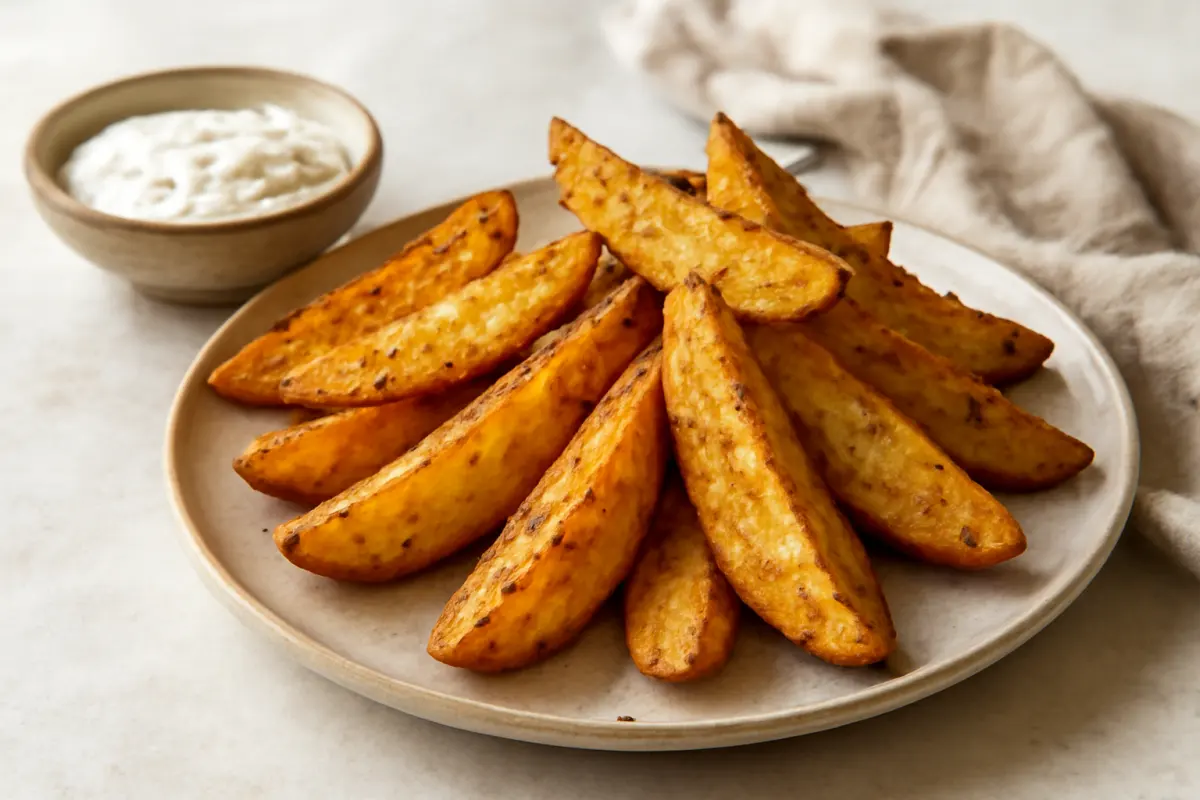
These baked potato wedges are crisp and golden outside, fluffy inside, and easy to make with a handful of everyday ingredients. A hot baking sheet, dry potatoes, and plenty of space help them brown instead of steam.
Overview
These baked potato wedges have crisp, seasoned edges and soft, fluffy centers. The method is straightforward: cut the potatoes evenly, soak and dry them well, then roast them on a preheated baking sheet until deeply golden.
Russet potatoes work especially well because their starchy centers become light and fluffy. Serve the wedges as a side dish, snack, or dipping food with ketchup, ranch dressing, garlic mayonnaise, or baked spinach artichoke dip.
Ingredients
- nes potatoes, 4 medium russet potatoes, about 2 pounds total
- Cold water, enough to cover the cut potatoes
- Olive oil, 2 tablespoons
- Cornstarch, 1 tablespoon
- Garlic powder, 1 teaspoon
- Paprika, 1 teaspoon
- Fine salt, 1 teaspoon, plus more to finish
- Black pepper, 1/2 teaspoon
- Optional: 1/2 teaspoon dried Italian seasoning or 1/4 teaspoon cayenne pepper
- Optional for serving: chopped parsley, grated Parmesan, ketchup, ranch dressing, or another dipping sauce
How to make it
Heat the oven and baking sheet. Place a large, rimmed baking sheet in the oven and heat to 425°F. Let the sheet heat for at least 15 minutes while you prepare the potatoes. A hot surface helps the wedges begin browning as soon as they are added.
Cut the potatoes. Scrub the potatoes and pat them dry. Leave the skins on unless they are damaged. Cut each potato in half lengthwise, then cut each half into 3 or 4 wedges, depending on its size. Aim for wedges about 3/4 inch thick at the widest point so they cook at the same rate.
Soak briefly. Put the wedges in a large bowl and cover them with cold water. Leave them for 20 minutes. This loosens excess surface starch, which helps the finished wedges brown more cleanly.
Dry thoroughly. Drain the potatoes, rinse them once, and spread them on a clean kitchen towel or several layers of paper towel. Pat them very dry. Damp potatoes release steam in the oven and can stay pale and soft.
Season the wedges. Return the dry potatoes to the bowl. Add the olive oil, cornstarch, garlic powder, paprika, salt, black pepper, and any optional dried herbs or cayenne. Toss until every wedge is thinly coated and no dry cornstarch remains visible.
Arrange on the hot sheet. Carefully remove the baking sheet from the oven. Spread the wedges in a single layer with one cut side facing down. Leave space between them; if they touch, use two baking sheets rather than crowding one. Work quickly so the pan stays hot, but use caution because it will be very hot.
Roast and turn. Bake for 25 minutes. Use tongs or a thin spatula to turn each wedge onto its other cut side. Roast for another 15 to 20 minutes, until the edges are deeply golden and the centers can be pierced easily with a fork.
Finish and serve. Taste one wedge and add a little more salt while the potatoes are hot. For extra color, return them to the oven for 3 to 5 minutes, watching closely. Serve immediately, when the edges are crispest.
Expert tips
- Choose evenly sized potatoes. Very thin wedges can burn before thick ones soften. Cut large potatoes into more pieces rather than making unusually thick wedges.
- Do not skip the drying step. Even a short soak is useful only if the potatoes are dried thoroughly afterward.
- Use enough space. A crowded pan traps moisture. Two pans are better than one overloaded pan, though rotate the pans between oven racks halfway through cooking.
- Adjust for different potatoes. Yukon Gold potatoes can be substituted, but their centers will be creamier and their edges may not become quite as crisp. Smaller red potatoes also work; cut them into narrow wedges and begin checking after 30 minutes total.
- For more browning, use convection. If using a convection oven, bake at 400°F and start checking after 30 minutes total. Ovens vary, so use the fork-tender and golden-edge cues rather than time alone.
- If the wedges are soft, keep roasting. Softness usually means they need more time or were crowded on the pan. If the edges are browning too quickly while the centers remain firm, lower the oven to 400°F and continue baking.
Serving and storage
Serve the wedges hot as a side for burgers, sandwiches, grilled chicken, or roasted vegetables. Add dipping sauces just before eating so the potatoes do not become soggy.
Refrigerate cooled leftovers in a covered container within 2 hours of cooking and use them within 3 to 4 days. Reheat in a 425°F oven or air fryer until hot and crisp, usually 8 to 12 minutes in the oven or 4 to 7 minutes in an air fryer. A microwave will warm them quickly but will not restore their crisp texture.
Frequently asked questions
Why are my baked potato wedges not crispy?
The potatoes may have been wet, crowded on the baking sheet, or undercooked. Dry them thoroughly after soaking, coat them lightly, leave space between the wedges, and roast until the edges are deeply golden. A hot baking sheet also helps.
Do I have to soak potatoes before baking wedges?
No, but a 20-minute cold-water soak removes some surface starch and can improve browning. If you skip it, dry the freshly cut wedges very well before seasoning and roasting.
Can I make potato wedges without cornstarch?
Yes. The wedges will still roast successfully with oil and seasonings, although the exterior may be slightly less crisp. Rice flour can be used in the same 1-tablespoon quantity if preferred.
How do I know when potato wedges are done?
The wedges are ready when their edges are golden brown and a fork slides easily into the thickest part. If the outside is brown but the center is firm, reduce the oven to 400°F and continue roasting until tender.
Can I prepare baked potato wedges ahead of time?
You can cut and soak the potatoes up to 2 hours ahead. Keep them covered in cold water in the refrigerator, then drain and dry them very thoroughly just before seasoning and baking. Fully baked wedges are best served immediately.