Desserts
Chocolate Chip Skillet Cookie Recipe
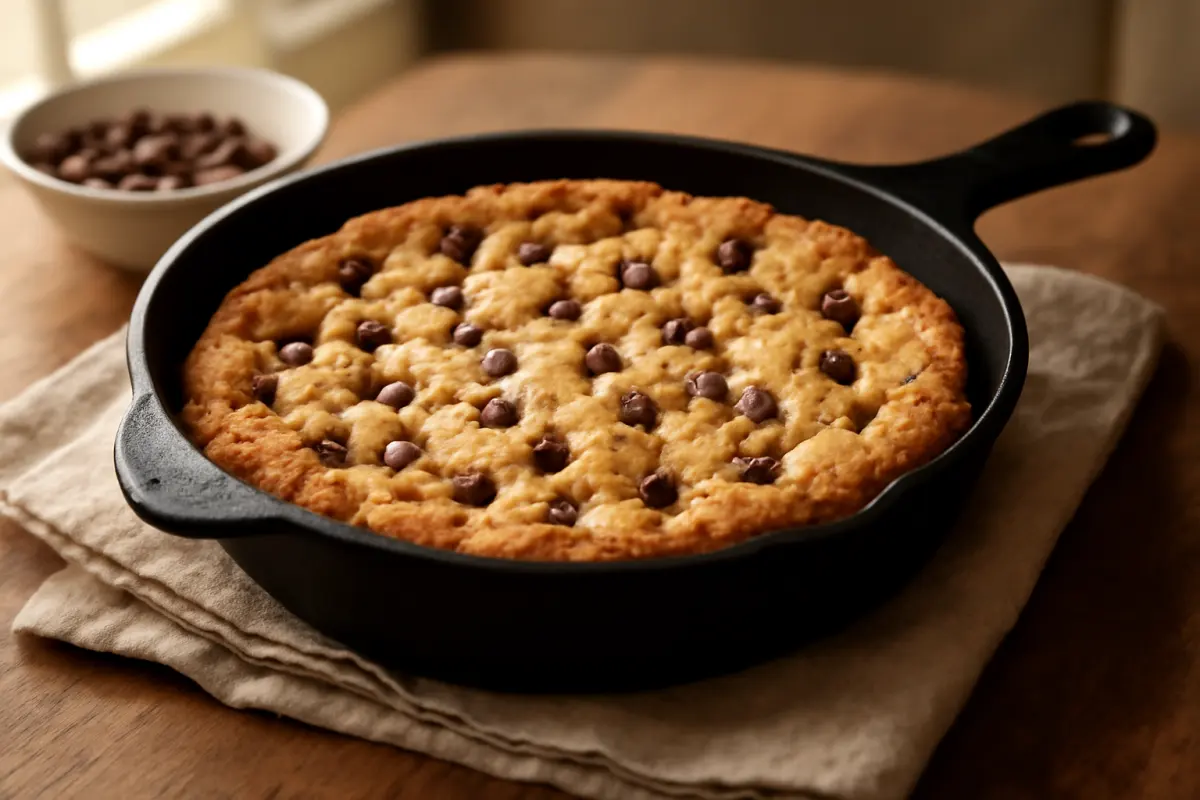
This chocolate chip skillet cookie bakes in one pan with buttery crisp edges, a soft brown-sugar center, and plenty of melted chocolate. Serve it warm in wedges or straight from the skillet with ice cream.
Overview
This chocolate chip skillet cookie has golden, lightly crisp edges and a soft middle that stays pleasantly fudgy without being raw. The dough comes together in one bowl, then bakes directly in a 10-inch oven-safe skillet.
Use a mix of semisweet chocolate chips and chopped chocolate if you like puddles of melted chocolate alongside smaller chips. Let the cookie rest briefly after baking so the center sets enough to slice while remaining warm and soft.
Ingredients
- 170 g (12 tablespoons) unsalted butter, softened to cool room temperature
- 150 g (¾ cup packed) light brown sugar
- 50 g (¼ cup) granulated sugar
- 1 large egg, about 50 g without the shell
- 2 teaspoons vanilla extract
- 220 g (1¾ cups) all-purpose flour, spooned into measuring cups and leveled
- ½ teaspoon baking soda
- ¾ teaspoon fine salt
- 170 g (1 cup) semisweet chocolate chips or chunks
- 1 tablespoon granulated sugar, for the skillet
- Flaky salt, optional, for finishing
How to make it
Heat the oven and prepare the skillet. Set an oven rack in the middle position and heat the oven to 350°F (175°C). Lightly butter a 10-inch cast-iron or other oven-safe skillet, then sprinkle the 1 tablespoon of granulated sugar evenly over the bottom. The sugar helps create a lightly crisp underside; you can skip it if preferred.
Cream the butter and sugars. Put the softened butter, brown sugar, and 50 g of granulated sugar in a large bowl. Beat with a hand mixer on medium speed for 1 to 2 minutes, or stir firmly with a wooden spoon until smooth and creamy. The mixture does not need to become pale or fluffy.
Add the wet ingredients. Beat in the egg and vanilla until fully combined. Scrape down the sides of the bowl so no streaks of butter remain.
Mix the dry ingredients. In a separate bowl, whisk together the flour, baking soda, and salt. Add this mixture to the butter mixture and stir just until no dry flour remains. Do not keep mixing once the dough comes together, or the cookie can become dense.
Add the chocolate. Fold in the chocolate chips or chunks, reserving a small handful for the top if you want a more chocolate-covered finish.
Press the dough into the skillet. Transfer the dough to the prepared skillet and press it into an even layer, reaching almost to the edges. Scatter the reserved chocolate over the top and add a small pinch of flaky salt, if using. The dough should be about ¾ inch thick.
Bake until the edges are set. Bake for 22 to 27 minutes. Start checking at 22 minutes: the edges should be puffed and golden brown, while the center should look set around the outside but still slightly soft and lighter in color in the middle. A toothpick inserted near the edge should come out with a few moist crumbs; a toothpick inserted in the center may show melted chocolate but should not pull out liquid dough.
Rest before serving. Place the skillet on a heatproof surface and let the cookie rest for 10 to 15 minutes. It will continue to set from the residual heat. Serve warm in wedges, or spoon it into bowls and top with ice cream. Remember that the skillet handle remains hot for a while after baking.
Expert tips
- For a softer center: Bake closer to 22 minutes and rest the cookie for the full 15 minutes before cutting.
- For firmer slices: Bake closer to 27 minutes, looking for a deeper golden edge and a center that no longer looks shiny.
- Weigh the flour if possible. Too much flour is the most common reason skillet cookies turn cakey or dry. If measuring by volume, spoon the flour into the cup rather than scooping directly from the bag.
- No cast-iron skillet? Use any 10-inch oven-safe skillet. A lighter-colored pan may need a few extra minutes; a very dark pan can brown the edges more quickly.
- Butter substitution: Salted butter works; reduce the added salt to ½ teaspoon. Softened margarine can also work, although the flavor and spread may differ.
- Chocolate substitutions: Use milk chocolate for a sweeter cookie, dark chocolate for a more bittersweet result, or chopped chocolate bars for larger melted pockets. Avoid replacing the chocolate with watery fillings or fresh fruit, which can make the center unevenly baked.
- If the dough is difficult to spread: Let it sit at room temperature for 5 to 10 minutes. Cold butter makes a stiff dough, while melted butter can cause excessive spreading.
- If the edges brown before the center sets: Loosely cover the skillet with foil for the final few minutes and continue baking until the center looks set around the edges.
Serving and storage
Serve the cookie warm, either in wedges or directly from the skillet. Vanilla ice cream, lightly sweetened whipped cream, or a small pinch of flaky salt pairs well with the warm chocolate.
Cool leftovers completely before covering the skillet or transferring pieces to an airtight container. Keep the cookie at room temperature for up to 3 days. To restore a soft, warm texture, heat an individual slice in the microwave for 10 to 15 seconds. For longer storage, wrap cooled slices tightly and freeze for up to 2 months; thaw at room temperature and warm briefly before serving.
For another chocolate dessert with a chilled, make-ahead texture, try this chocolate panna cotta recipe.
Frequently asked questions
Can I make this chocolate chip skillet cookie without a cast-iron skillet?
Yes. Use a 10-inch oven-safe skillet made from stainless steel, aluminum, or another suitable material. The baking time may vary slightly: begin checking at 22 minutes and use the visual doneness cues rather than relying only on the clock.
Why is my skillet cookie raw in the middle?
It may need a few more minutes, especially if the skillet is smaller or the dough layer is thick. Bake until the edges are golden and set, the center is only slightly soft, and a toothpick near the edge comes out with moist crumbs rather than wet dough. Allowing the cookie to rest for 10 to 15 minutes also helps the center finish setting.
Can I prepare the dough ahead of time?
Yes. Cover the unbaked dough and refrigerate it for up to 24 hours. Let it sit at room temperature for about 20 to 30 minutes so it is easier to press evenly into the skillet, then bake as directed. A chilled, thicker layer may need a few additional minutes.
How do I keep the skillet cookie from becoming dry?
Measure the flour carefully, avoid overmixing once it is added, and do not bake past the point where the center is just set. The cookie will firm as it cools, so taking it out while the middle is still slightly soft gives the best texture.