Recipes
Classic Chicken Pot Pie Recipe
This classic chicken pot pie combines tender chicken and vegetables in a thick, savory cream sauce beneath a golden, flaky pastry crust. Follow the visual cues to keep the filling creamy rather than watery and the pastry crisp rather than soggy.
Overview
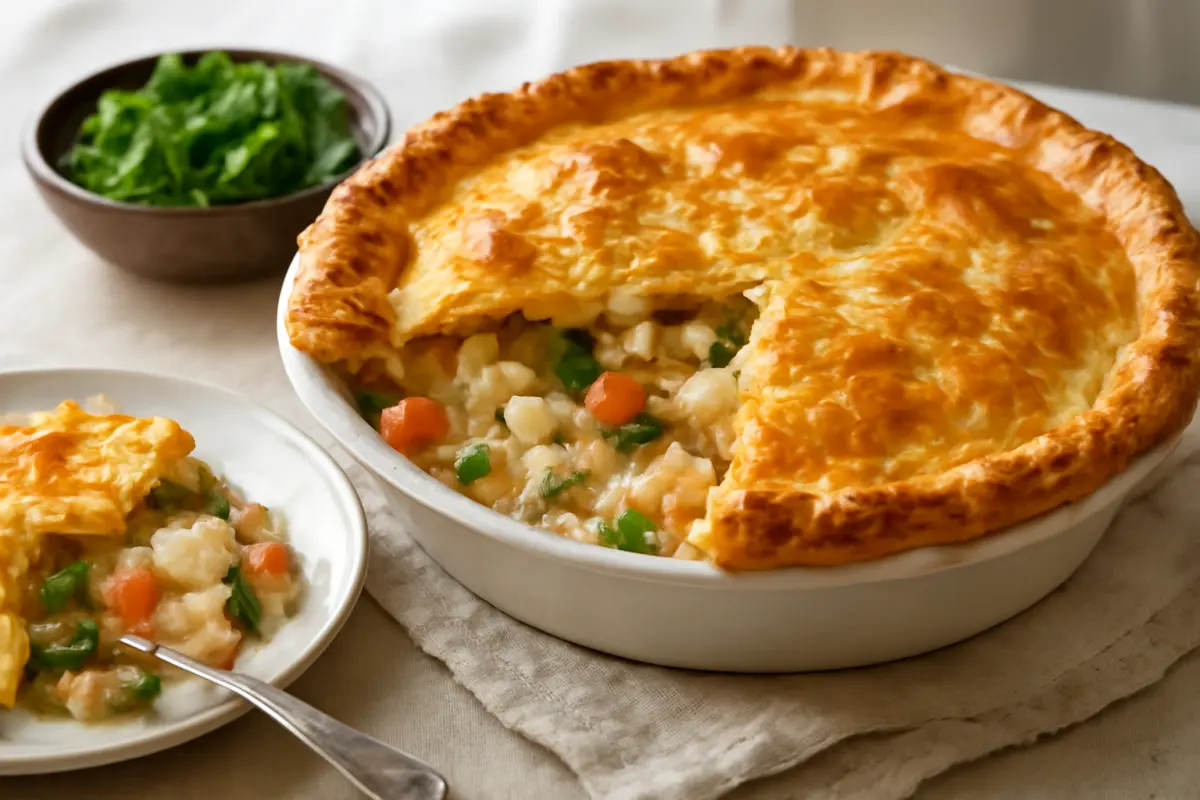
This classic chicken pot pie has a creamy chicken-and-vegetable filling beneath a golden pastry crust. The filling is made on the stovetop first, so you can check its seasoning and thickness before it goes into the oven.
Use cooked chicken, either leftover roast chicken or chicken poached specifically for the pie. A refrigerated pie crust keeps the recipe practical, but homemade pastry also works. Let the finished pie rest before serving so the sauce thickens enough to hold its shape.
Ingredients
- 2 tablespoons unsalted butter
- 1 medium yellow onion, finely diced
- 2 medium carrots, peeled and diced into 1/4-inch pieces
- 2 celery stalks, diced into 1/4-inch pieces
- 2 garlic cloves, minced
- 1/3 cup all-purpose flour
- 2 cups low-sodium chicken broth
- 1 cup whole milk
- 1 teaspoon kosher salt, plus more to taste
- 1/2 teaspoon black pepper
- 1/2 teaspoon dried thyme
- 1/4 teaspoon dried sage
- 3 cups cooked chicken, cut or torn into bite-size pieces
- 1 cup frozen peas, thawed and drained
- 1 refrigerated 9-inch pie crust, chilled
- 1 large egg
- 1 tablespoon water
How to make it
Heat the oven and prepare the dish. Heat the oven to 425°F (220°C). Set a 9-inch deep-dish pie plate on a rimmed baking sheet to catch any bubbling sauce. Keep the pie crust refrigerated until you are ready to cover the filling.
Cook the vegetables. Melt the butter in a large saucepan or Dutch oven over medium heat. Add the onion, carrots, and celery. Cook for 7 to 9 minutes, stirring occasionally, until the onion is translucent and the carrots have started to soften. Add the garlic and cook for 30 seconds, just until fragrant.
Make the roux. Sprinkle the flour over the vegetables and stir constantly for 1 to 2 minutes. The flour should coat the vegetables and lose its raw, powdery appearance without taking on much color.
Build the sauce. Slowly pour in the chicken broth while whisking or stirring continuously to prevent lumps. Add the milk, salt, pepper, thyme, and sage. Bring the mixture to a gentle simmer, then cook for 4 to 6 minutes, stirring often. The sauce is ready when it visibly thickens and coats the back of a spoon; when you draw a line through it with your finger, the line should remain clear.
Add the chicken and peas. Remove the saucepan from the heat. Stir in the cooked chicken and peas. Taste the filling and add more salt or pepper if needed. It should taste slightly more seasoned than you want the finished pie to taste, since the pastry will mellow the filling.
Fill the pie plate. Pour the hot filling into the pie plate and spread it into an even layer. Leave about 1/2 inch of space at the top so the sauce does not overflow. Let the filling stand for 5 minutes; this takes some heat off the pastry and helps prevent a greasy crust.
Cover and vent the pie. Unroll the chilled pie crust over the filling. Trim the edge so about 1 inch hangs over the rim, then fold or tuck the excess under itself and crimp it against the edge of the dish. Cut 4 to 6 small slits in the center of the crust for steam to escape.
Brush with egg wash. Beat the egg with 1 tablespoon water. Brush a thin, even layer over the crust, avoiding puddles around the edges. Place the pie, still on the baking sheet, in the oven.
Bake until golden and bubbling. Bake for 20 minutes at 425°F. Reduce the oven temperature to 375°F (190°C) and continue baking for 20 to 25 minutes. The crust should be deeply golden, and the filling should be visibly bubbling through the vents and around the edges. If the crust browns before the filling bubbles, loosely cover it with foil and continue baking.
Rest before serving. Transfer the pie to a cooling rack and let it rest for at least 15 minutes before slicing. The filling will still be hot, but it should settle into a thick, spoonable sauce rather than run across the plate.
Expert tips
- Use fully cooked chicken. The chicken is added after the sauce is made, so raw chicken will not reliably cook through in this method. Rotisserie chicken, poached chicken, or leftover roasted chicken all work.
- Avoid watery filling. Thaw frozen peas and drain them well. If the sauce still looks thin after simmering, cook it for another 1 to 2 minutes before adding the chicken. Do not rely on the oven to thicken a very loose filling.
- Keep the pastry cold. If the crust becomes soft while you prepare the filling, refrigerate it for 10 to 15 minutes. Cold pastry is easier to crimp and is less likely to slump in the oven.
- Prevent a soggy bottom. Use a deep-dish pie plate rather than a shallow tart pan, avoid overfilling, and bake on a preheated metal baking sheet if your oven tends to brown the top before the base cooks. For an especially crisp base, place the empty pie plate on the hot baking sheet for 5 minutes before adding the filling, but handle it carefully.
- Make realistic substitutions. Replace the peas with 1 cup of thawed frozen mixed vegetables. You can use half-and-half instead of whole milk for a richer sauce, or unsweetened dairy-free milk for a lighter one; avoid sweetened or flavored varieties. For a bottom-and-top crust, line the pie plate with a second crust, add the cooled filling, crimp the top crust, and bake for about 45 to 55 minutes, covering the rim if it browns too quickly.
- If the sauce is lumpy, whisk vigorously while it is hot. For persistent lumps, strain the sauce before adding the chicken and vegetables back in. If the sauce becomes too thick, stir in warm broth 1 tablespoon at a time.
Serving and storage
Serve the pie warm, after its 15-minute resting period. A simple green salad or steamed green beans makes a balanced accompaniment without competing with the creamy filling. For another comforting chicken dinner with a creamy sauce, see this creamy garlic Parmesan chicken recipe.
Refrigerate leftovers in a covered container within 2 hours of cooking. They keep for up to 3 days in the refrigerator. Reheat individual portions in a 350°F (175°C) oven until the center is steaming hot, usually 15 to 25 minutes, or microwave them in short intervals. The pastry will be softer after refrigeration; reheating in the oven helps it regain some crispness. Do not leave the pie at room temperature for extended periods.
Frequently asked questions
Can I make chicken pot pie with rotisserie chicken?
Yes. Remove the skin and bones, then use about 3 cups of bite-size meat. Add it with the peas after the sauce has thickened so the chicken stays tender.
Why is my chicken pot pie filling runny?
The sauce may not have simmered long enough, or the vegetables and peas may have released extra water. Simmer the sauce until it coats a spoon before adding the chicken, drain thawed vegetables well, and let the baked pie rest for at least 15 minutes before slicing.
Can I prepare chicken pot pie ahead of time?
You can make the filling up to 2 days ahead and refrigerate it in a covered container. Cool it completely before topping it with pastry. Bake the assembled pie while the filling is cold, adding extra time as needed until the crust is golden and the filling is bubbling in the center.
Can I freeze chicken pot pie?
For best pastry texture, freeze the cooled filling separately for up to 2 months and thaw it in the refrigerator before topping and baking. An assembled unbaked pie can also be frozen, but the crust may be slightly less crisp after baking. Do not thaw an assembled frozen pie at room temperature.
How do I know when chicken pot pie is done?
Look for a deeply golden crust and filling that bubbles through the vents and around the edges. The center should be visibly hot, not merely warm. Resting the pie afterward allows the sauce to thicken before serving.