Recipes
Creamy Chicken Mushroom Skillet Recipe
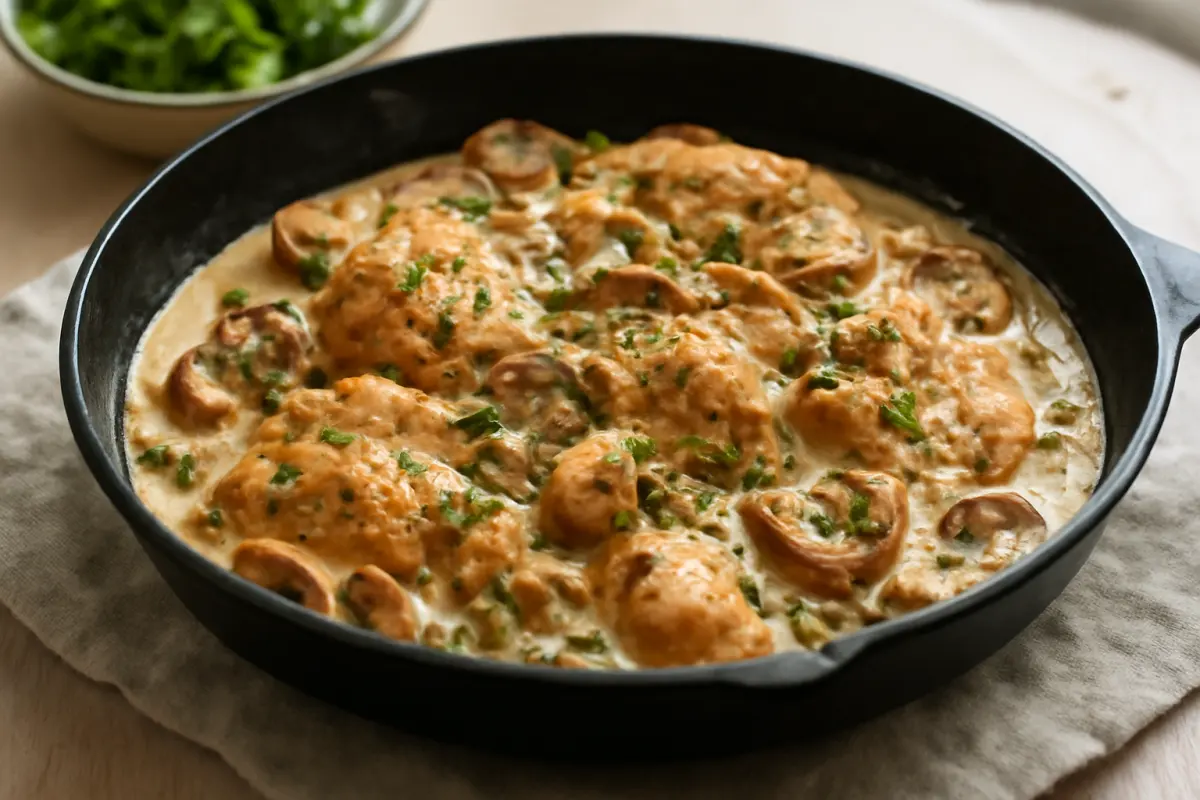
This creamy chicken mushroom skillet combines golden chicken and deeply browned mushrooms in a savory garlic cream sauce. It is a practical one-pan dinner with clear doneness cues and easy substitutions.
Overview
This creamy chicken mushroom skillet is a one-pan dinner built around tender chicken, browned mushrooms, and a silky sauce made with garlic, chicken broth, and cream. The mushrooms are cooked until their moisture evaporates first, so they develop a savory browned flavor instead of making the sauce watery.
Use boneless, skinless chicken thighs for the most forgiving result, or substitute thin chicken breasts. Serve the skillet with mashed potatoes, rice, pasta, or crusty bread to catch the sauce.
Ingredients
- 4 boneless, skinless chicken thighs, about 1½ pounds total
- 1 teaspoon kosher salt, divided
- ½ teaspoon freshly ground black pepper, divided
- ½ teaspoon sweet paprika
- 2 tablespoons olive oil, divided
- 8 ounces cremini or white mushrooms, cleaned and sliced ¼ inch thick
- 1 small yellow onion, finely diced
- 3 garlic cloves, minced
- 1 tablespoon all-purpose flour
- 1 cup low-sodium chicken broth
- ½ cup heavy cream
- 1 teaspoon Dijon mustard
- 1 teaspoon fresh thyme leaves, or ½ teaspoon dried thyme
- 1 tablespoon chopped fresh parsley, for serving
How to make it
Season the chicken. Pat the chicken dry with paper towels. If the thighs are very thick, gently pound them to an even thickness of about ¾ inch. Season both sides with ½ teaspoon of the salt, ¼ teaspoon of the pepper, and the paprika.
Sear the chicken. Heat 1 tablespoon of the olive oil in a large skillet over medium-high heat. When the oil shimmers, add the chicken in a single layer. Cook for 4–5 minutes on the first side, then turn and cook for 3–4 minutes on the second side. The chicken should be deeply golden outside but does not need to be fully cooked yet. Transfer it to a plate.
Brown the mushrooms. Add the remaining 1 tablespoon olive oil to the skillet. Add the mushrooms in a single layer and leave them undisturbed for 2 minutes. Stir and cook for another 4–5 minutes, until they have released their moisture and the cut edges are browned. If the skillet looks crowded, cook the mushrooms in two batches; crowded mushrooms steam rather than brown.
Cook the aromatics. Add the diced onion and cook for 3 minutes, stirring occasionally, until softened. Add the garlic and cook for 30 seconds, just until fragrant. Sprinkle in the flour and stir continuously for 1 minute so it coats the vegetables and loses its raw flour taste.
Build the sauce. Slowly pour in the chicken broth while scraping the browned bits from the bottom of the skillet. Stir in the heavy cream, Dijon mustard, thyme, remaining ½ teaspoon salt, and remaining ¼ teaspoon pepper. Bring the sauce to a gentle simmer; it should look smooth and lightly thickened after 2–3 minutes.
Finish the chicken. Return the chicken and any juices from the plate to the skillet. Reduce the heat to medium-low, cover, and simmer for 6–8 minutes, turning the chicken once. The chicken is done when the thickest piece is no longer pink in the center and reaches 165°F on an instant-read thermometer. Without a thermometer, cut into the thickest piece: the center should be opaque and the juices should run clear.
Check the sauce and serve. Uncover and simmer for 1–2 minutes if the sauce needs to thicken. It should coat a spoon but still pour easily. If it becomes too thick, stir in 1–2 tablespoons of broth. Scatter the parsley over the skillet and serve immediately.
Expert tips
- For chicken breasts: Use two boneless, skinless breasts, about 1¼ pounds total. Slice each horizontally into two thinner cutlets before seasoning so they cook at the same rate as the thighs.
- For a dairy substitution: Use half-and-half for a lighter sauce, but keep the heat at a gentle simmer to reduce the chance of curdling. Full-fat canned coconut milk also works, though it gives the sauce a mild coconut flavor.
- If the sauce is thin: Remove the chicken and simmer the sauce uncovered for 2–4 minutes. Avoid adding extra flour directly to the hot sauce, which can create lumps.
- If the sauce is too thick: Add warm chicken broth, 1 tablespoon at a time, until it reaches a spoon-coating consistency.
- If the chicken is browning too quickly: Lower the heat after the first side browns. The sauce gives the chicken a second cooking stage, so it does not need to be fully cooked during searing.
- For extra flavor: Deglaze with ¼ cup dry white wine before adding the broth. Let it bubble for about 1 minute, then continue with the recipe.
Serving and storage
Serve the skillet over mashed potatoes, egg noodles, rice, or polenta. Crusty bread is also useful for scooping up the mushroom cream sauce. A crisp green salad or steamed green beans makes a fresh side.
Cool leftovers promptly and refrigerate them in a covered container within 2 hours. Store for up to 3–4 days. Reheat gently in a skillet over low heat with a splash of broth or water, stirring occasionally; vigorous boiling can make the cream sauce separate. Freeze only if necessary, as the sauce may become slightly grainy after thawing.
Frequently asked questions
Can I use chicken breasts instead of chicken thighs?
Yes. Slice two boneless, skinless chicken breasts horizontally into four thin cutlets, about 1¼ pounds total. Thin cutlets sear quickly and are less likely to remain undercooked in the center or become dry during the final simmer.
Why is my mushroom sauce watery?
The mushrooms may have been crowded or removed before their moisture evaporated. Cook them in a single layer until the skillet looks mostly dry and the edges are browned. You can also simmer the finished sauce uncovered for a few minutes to reduce it.
Can I make this recipe without heavy cream?
Use half-and-half, although the sauce will be slightly thinner. Full-fat canned coconut milk is another option, but it changes the flavor. Avoid using low-fat milk at a hard boil because it can separate more easily.
What should I serve with creamy chicken mushroom skillet?
Mashed potatoes, rice, egg noodles, polenta, and crusty bread all work well because they absorb the sauce. For another make-ahead chicken dinner, see the chicken and rice casserole recipe.
How do I know when the chicken is done?
The thickest part should reach 165°F on an instant-read thermometer. If you are checking without a thermometer, cut into the thickest piece; it should be opaque in the center with clear juices and no translucent pink flesh.