Recipes
Homemade Cornbread Recipe
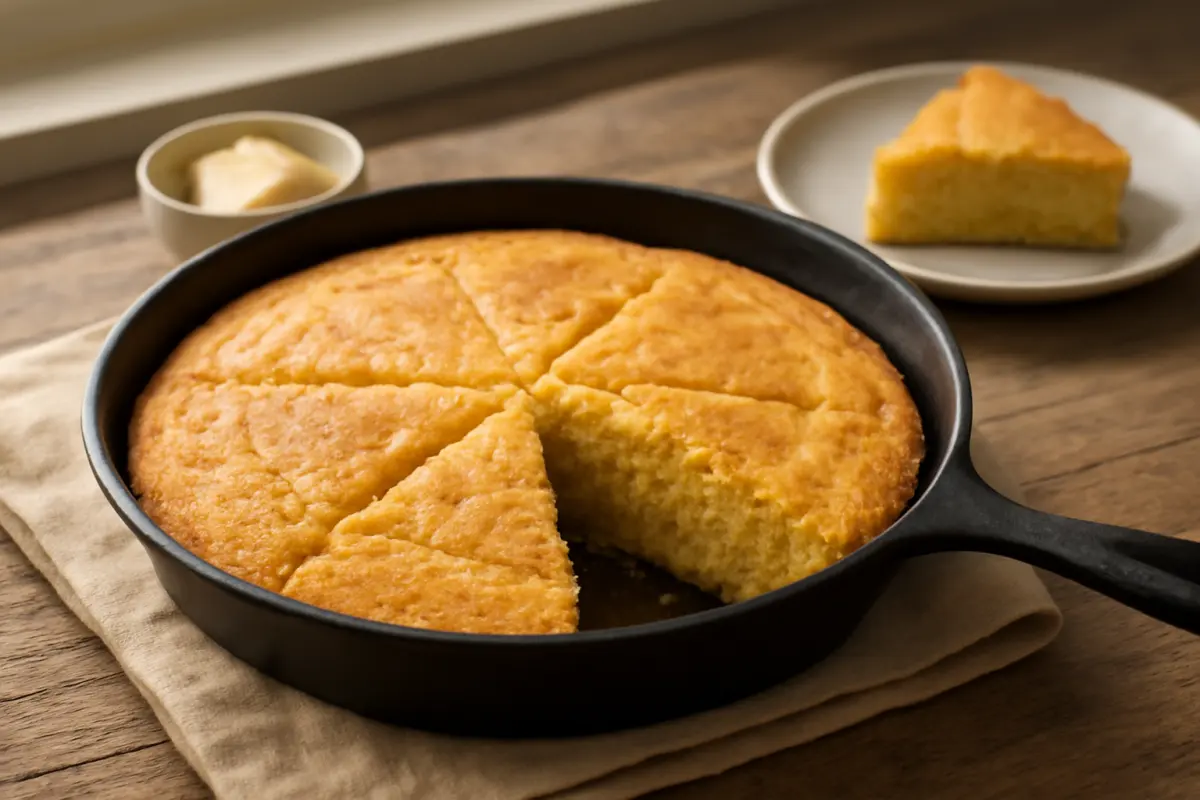
This homemade cornbread is tender in the center, lightly crisp around the edges, and ready in about 30 minutes. Buttermilk adds gentle tang while melted butter gives every slice a rich, buttery crumb.
Overview
This homemade cornbread has a tender, lightly sweet center and golden edges with just enough crispness. It comes together in one bowl and bakes in a square pan, so it is easy to serve alongside soups, stews, chili, or roasted meats.
For the best texture, mix the batter only until the dry ingredients are moistened. A few small lumps are fine; overmixing can make the finished cornbread dense instead of soft.
Ingredients
- 1 cup yellow cornmeal, preferably medium-grind
- 1 cup all-purpose flour
- 1/4 cup granulated sugar
- 2 teaspoons baking powder
- 1/2 teaspoon baking soda
- 3/4 teaspoon fine salt
- 1 large egg
- 1 cup buttermilk, well shaken
- 1/3 cup unsalted butter, melted and cooled for 5 minutes
- 1 tablespoon neutral oil, such as vegetable or canola oil, for the pan
How to make it
Heat the oven and prepare the pan. Position a rack in the center of the oven and heat it to 400°F. Pour the oil into an 8-inch square metal baking pan and tilt the pan to coat the bottom. Place the pan in the heating oven while you mix the batter. The hot, oiled pan helps the edges begin to brown as soon as the batter goes in.
Combine the dry ingredients. In a medium bowl, whisk together the cornmeal, flour, sugar, baking powder, baking soda, and salt. Break up any visible lumps so the leavening is evenly distributed.
Mix the wet ingredients. In a second bowl, whisk the egg and buttermilk until blended. Slowly whisk in the melted butter. The butter should be warm but not hot; if it is very hot, let it cool longer so it does not cook the egg.
Make the batter. Pour the wet mixture into the dry ingredients. Stir with a spatula just until no broad streaks of dry flour remain. The batter will be thick and may still contain a few small lumps. Do not keep stirring to make it perfectly smooth.
Fill the hot pan. Carefully remove the pan from the oven. Pour in the batter; it should sizzle gently when it meets the oil. Spread it into the corners with the spatula, working quickly and carefully because the pan is hot.
Bake. Bake for 18 to 23 minutes, until the top is golden, the center looks set, and a toothpick inserted in the middle comes out with a few moist crumbs but no wet batter. The edges should pull away from the pan slightly, and the center should spring back when pressed lightly.
Rest and serve. Let the cornbread cool in the pan for 10 minutes. Cut it into 9 squares for generous servings or 12 smaller pieces. Serve warm, plain or with softened butter.
Expert tips
- For a less sweet cornbread: Reduce the sugar to 2 tablespoons. Do not remove it entirely unless you are comfortable with a more savory, less tender result.
- For a buttermilk substitute: Stir 1 tablespoon lemon juice or white vinegar into 1 cup milk. Let it stand for 5 minutes before using. The result will be slightly less thick than buttermilk but works well here.
- For a cast-iron version: Use a 9-inch cast-iron skillet instead of the square pan. Heat the oiled skillet in the oven, then bake for about 16 to 21 minutes, checking when the top is golden and the center is set.
- Avoid a dry result: Measure the flour by spooning it into a measuring cup and leveling it, rather than scooping directly from the bag. Too much flour is a common cause of dry cornbread.
- Avoid a dense result: Once the wet and dry mixtures meet, use only a few dozen gentle strokes. Excess mixing develops the flour and knocks out some of the batter's lift.
- If the top browns too quickly: Loosely cover the pan with foil for the final few minutes of baking. Do not cover it tightly, or trapped steam can soften the crust.
- If the center is still wet: Return the pan to the oven for 3 to 5 minutes at a time. A deep golden top does not always mean the middle is finished, so rely on the toothpick and spring-back tests.
Serving and storage
Serve the cornbread warm or at room temperature with butter. It is especially good alongside bean soups, vegetable stews, braised greens, or saucy main dishes that benefit from something crumbly for dipping.
Store completely cooled cornbread in an airtight container at room temperature for up to 2 days. For longer storage, refrigerate it for up to 5 days, or wrap individual pieces tightly and freeze for up to 3 months. Thaw frozen pieces in the refrigerator or at room temperature, then warm them in a 300°F oven until heated through. Refrigerated or frozen cornbread will not have quite the same crisp edges as freshly baked cornbread.
Frequently asked questions
Can I make this cornbread without buttermilk?
Yes. Add 1 tablespoon lemon juice or white vinegar to 1 cup milk, let it stand for 5 minutes, and use it in place of the buttermilk. Plain yogurt thinned with a little milk also works; use 1 cup total so the batter remains pourable but thick.
Why did my cornbread turn out dry?
The most common causes are too much flour, overbaking, or measuring flour by scooping directly from the bag. Spoon the flour into the measuring cup and level it, and begin checking the cornbread at 18 minutes. It is done when a toothpick shows moist crumbs rather than wet batter.
Can I use a different baking pan?
Yes. A 9-inch round cake pan works with a similar baking time. A 9-inch cast-iron skillet usually finishes a few minutes sooner because it heats efficiently. A smaller, deeper pan may need extra time, so use the center-set and toothpick tests rather than the clock alone.
Can I add corn kernels or cheese?
Yes. Fold in up to 1 cup drained corn kernels, 1 cup shredded sharp cheddar, or both before pouring the batter into the pan. Pat canned or thawed frozen corn dry first so it does not add excess moisture.