Recipes
Korean Beef Bulgogi Recipe
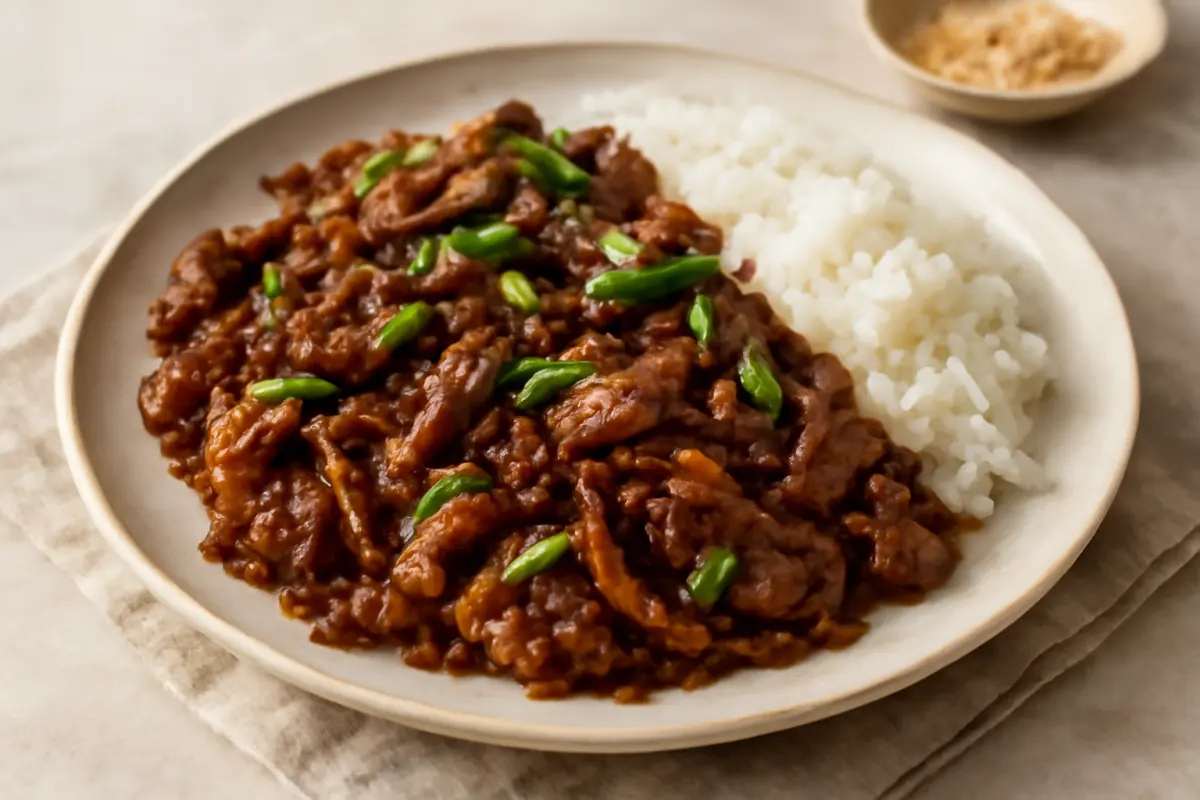
This Korean beef bulgogi recipe uses thin-sliced beef, grated pear, soy sauce, garlic, ginger, and sesame oil for a deeply savory, lightly sweet marinade. Cook the beef in batches for browned edges and juicy centers, then serve it with rice and fresh garnishes.
Overview
This Korean beef bulgogi recipe features thin slices of beef soaked in a savory-sweet marinade made with soy sauce, Asian pear, onion, garlic, ginger, sesame oil, and a little brown sugar. The pear adds sweetness and helps give the beef a tender texture.
For the best browning, cook the marinated beef in a very hot skillet in small batches. The slices should sizzle immediately, develop caramelized edges, and remain juicy rather than steaming in a crowded pan.
Ingredients
- 1 pound boneless ribeye or top sirloin steak, thinly sliced against the grain
- 1/2 small Asian pear, about 4 ounces, peeled and cored
- 1/2 small yellow onion, about 3 ounces, divided
- 3 tablespoons soy sauce
- 1 tablespoon packed light brown sugar
- 1 tablespoon toasted sesame oil
- 1 tablespoon neutral oil, such as canola or avocado oil, for cooking
- 3 garlic cloves, finely grated or minced
- 1 teaspoon freshly grated ginger
- 1/2 teaspoon freshly ground black pepper
- 2 scallions, thinly sliced
- 1 teaspoon sesame seeds, for serving
- Cooked white rice, for serving
- Optional: red pepper flakes or thinly sliced fresh chile, for heat
How to make it
Partially freeze the beef for easier slicing. Place the steak on a plate or tray and freeze it for 30 to 45 minutes, until firm but not frozen solid. Slice it as thinly as possible, about 1/8 inch thick, against the grain. If the slices are very long, cut them into pieces about 2 to 3 inches long.
Make the marinade. Grate the Asian pear and half of the onion into a medium bowl. Add the soy sauce, brown sugar, sesame oil, garlic, ginger, and black pepper. Stir until the sugar is mostly dissolved. The mixture should smell fragrant, with a balance of salty soy sauce, sweet pear, and fresh ginger.
Marinate the beef. Add the sliced beef and toss until every piece is coated. Cover and refrigerate for at least 30 minutes and up to 8 hours. Do not leave the beef at room temperature while it marinates. The pear and onion soften the beef quickly, so an overnight marinade can make the slices too soft.
Prepare the pan and aromatics. Thinly slice the remaining onion. Heat a large cast-iron or stainless-steel skillet over medium-high to high heat for 2 to 3 minutes. The pan is ready when a drop of water evaporates almost immediately. Have the beef, sliced onion, and cooking oil close by before you begin.
Cook the beef in batches. Add about 1 teaspoon of the neutral oil to the hot pan. Lift a portion of beef from the marinade, letting excess liquid drip back into the bowl, and spread it in a single layer. Add a small handful of sliced onion. Cook for 1 to 2 minutes without stirring, until the underside is browned and the edges begin to caramelize. Turn the pieces and cook for another 1 to 2 minutes, until no raw-looking centers remain and the beef reaches a safe internal temperature of 145°F, followed by a 3-minute rest.
Repeat with the remaining beef. Wipe out excess liquid or burnt bits if needed, then add another teaspoon of oil before each batch. Avoid pouring all the leftover marinade into the pan at once; it can make the beef simmer instead of brown. Transfer each cooked batch to a plate while you finish the rest.
Finish and serve. Return all the cooked beef and onions to the pan for 30 seconds, just long enough to warm everything together. Taste a piece and add a pinch of red pepper flakes if you want more heat. Scatter with scallions and sesame seeds, and serve immediately over cooked white rice.
Expert tips
- Choose a tender cut: Ribeye gives the richest result; top sirloin is leaner and still works well. Avoid thick stew meat, which will not become tender in this quick-cooking method.
- Slice against the grain: Look for the long muscle fibers and cut across them, not parallel to them. This makes each bite easier to chew.
- Use a grated pear: Asian pear is ideal, but a ripe Bosc or Bartlett pear works as a substitute. If using pear juice, replace the grated pear with 3 tablespoons juice and add 1 tablespoon finely grated onion.
- Do not crowd the skillet: If the beef releases lots of liquid and turns gray, the pan is overcrowded or not hot enough. Cook smaller batches and let the pan heat again between them.
- Control excess marinade: A little marinade clinging to the beef adds flavor, but dripping liquid will cool the pan. Let the slices drain briefly before they hit the skillet.
- For a grill: Thread the marinated beef loosely onto skewers or use a grill basket. Grill over high heat for about 2 to 3 minutes per side, watching closely because the sugar can char quickly.
Serving and storage
Serve bulgogi hot with rice, sliced cucumber, kimchi, lettuce leaves, or extra scallions. Lettuce leaves can be used as wraps with a spoonful of rice and beef.
Refrigerate leftovers in a shallow airtight container within 2 hours of cooking. They will keep for up to 3 to 4 days. Reheat gently in a skillet over medium heat or in the microwave until steaming hot throughout. For best texture, avoid repeatedly reheating the beef. Cooked bulgogi can also be frozen for up to 2 months; thaw it overnight in the refrigerator before reheating.
Frequently asked questions
What is the best beef for bulgogi?
Thinly sliced ribeye is the most tender and flavorful choice. Top sirloin is a leaner alternative that works well when sliced very thinly against the grain.
How long should beef bulgogi marinate?
Marinate it for at least 30 minutes and up to 8 hours in the refrigerator. Longer marinating is not necessary because the pear and onion can soften the surface of the beef too much.
Why is my bulgogi watery instead of browned?
The pan was likely crowded, not hot enough, or filled with too much marinade. Cook in small batches, let excess marinade drip off, and allow the skillet to become hot again before adding the next batch.
Can I make bulgogi without Asian pear?
Yes. Use half a ripe Bosc or Bartlett pear, or replace the pear with 3 tablespoons pear juice plus 1 tablespoon finely grated onion. The flavor will be slightly different, but the marinade will still work.
Can bulgogi be made ahead?
You can marinate the beef up to 8 hours ahead and keep it refrigerated. For the best browned edges, cook it shortly before serving rather than cooking and reheating it far in advance.