Recipes
Maple Glazed Salmon Recipe
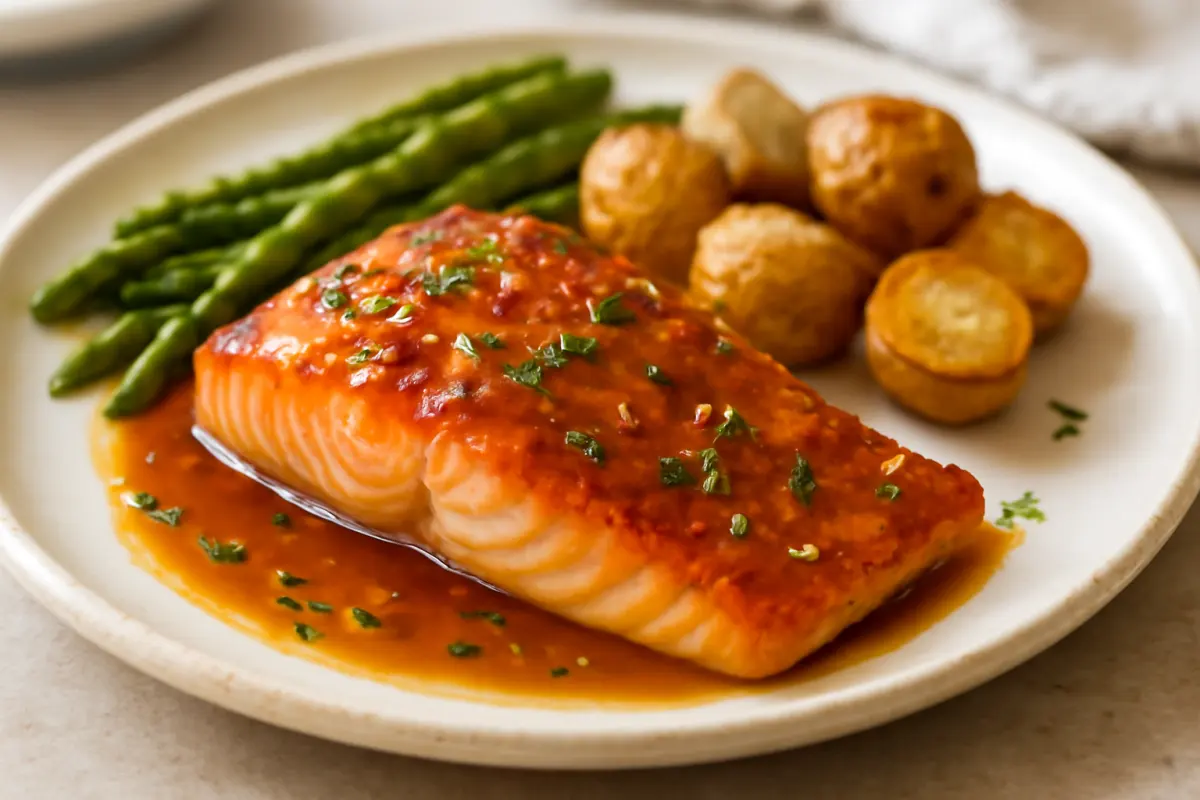
This maple glazed salmon recipe uses pure maple syrup, Dijon mustard, garlic, soy sauce, and rice vinegar for a glossy glaze that balances sweet, salty, tangy, and savory flavors. Brush it on near the end of baking so the salmon stays moist and the glaze caramelizes without burning.
Overview
This maple glazed salmon recipe turns a handful of everyday ingredients into a glossy, savory-sweet dinner. Pure maple syrup provides the sweetness, while Dijon mustard, soy sauce, garlic, and rice vinegar keep the glaze balanced rather than sugary.
The salmon bakes on a lined sheet pan and finishes with two coats of glaze. The thickest part should flake easily and reach 145°F on an instant-read thermometer. Serve it with rice, roasted vegetables, or a crisp salad to catch the extra glaze.
Ingredients
- 4 salmon fillets, 6 ounces each, skin-on or skinless
- 1/3 cup pure maple syrup
- 2 tablespoons low-sodium soy sauce
- 1 tablespoon Dijon mustard
- 1 tablespoon rice vinegar
- 2 garlic cloves, finely grated or minced
- 1 teaspoon toasted sesame oil
- 1/2 teaspoon smoked paprika
- 1/4 teaspoon freshly ground black pepper
- 1/4 teaspoon kosher salt, plus more for the salmon if needed
- 1 tablespoon neutral oil, such as avocado or canola oil
- 2 scallions, thinly sliced, for serving
- 1 teaspoon sesame seeds, for serving, optional
How to make it
Heat the oven and prepare the pan. Set an oven rack in the center position and heat the oven to 425°F. Line a rimmed baking sheet with parchment paper or foil. If using foil, lightly oil it so the glaze does not stick as firmly.
Make the glaze. In a small bowl, whisk together the maple syrup, soy sauce, Dijon mustard, rice vinegar, garlic, sesame oil, smoked paprika, black pepper, and 1/4 teaspoon kosher salt. The mixture should look smooth, with the mustard fully blended into the syrup. Set aside 3 tablespoons of the glaze in a separate bowl for brushing after the salmon cooks; do not return the portion that touches raw fish to the finished dish.
Prepare the salmon. Pat the fillets thoroughly dry with paper towels. Check for pin bones by running clean fingers over the surface and remove any you find with clean tweezers. Rub the salmon all over with the neutral oil, then place the fillets skin-side down on the prepared baking sheet, leaving space between them. If the fillets are skinless, place the smoother side down.
Add the first layer of glaze. Brush the tops and sides of the salmon with the remaining glaze, using enough to coat the surface without pooling around the fillets. Maple syrup can darken quickly, so save most of the glaze for the final minutes rather than applying a thick layer at the start.
Bake until nearly done. Bake for 8 minutes, then brush the tops with another thin layer of the glaze from the bowl used for the raw salmon. Continue baking for 3 to 7 minutes, depending on the thickness of the fillets. The salmon is ready when the center turns opaque, the flesh separates into moist flakes when pressed with a fork, and the thickest part registers 145°F. A 1-inch-thick fillet usually takes about 13 to 15 minutes total; thinner pieces may finish sooner.
Caramelize briefly. For a darker, stickier finish, switch the oven to broil and move the pan about 6 inches from the broiler. Broil for 30 to 60 seconds, watching continuously. Remove the pan as soon as the glaze bubbles and looks lacquered. Skip this step if the glaze is already deeply browned.
Rest and serve. Let the salmon rest on the pan for 3 minutes. Brush with the reserved clean glaze, then scatter with scallions and sesame seeds if using. Serve immediately with the pan juices and any glaze left on the parchment.
Expert tips
- Use pure maple syrup. Pancake syrup can make the glaze unusually sweet and may behave differently under high heat. If you only have pancake syrup, reduce it to 1/4 cup and watch the salmon closely near the end.
- Do not marinate for hours. The vinegar and salt in the glaze can affect the surface texture of the fish. Brushing it on shortly before baking gives better results.
- Choose evenly thick fillets. Pieces of similar thickness finish at the same time. If one fillet is much thinner, remove it early when its center reaches 145°F.
- Prevent burnt glaze. If the tops are browning before the centers are cooked, loosely tent the pan with foil and continue baking. Apply the final coat only after removing the foil.
- For skin that stays less soggy, place the salmon skin-side down directly on a lightly oiled sheet pan rather than on a thick layer of glaze. The skin may still not become crisp because of the syrupy topping, but it will help protect the flesh.
- Substitute carefully. Coconut aminos can replace the soy sauce, though the glaze will be slightly sweeter and less salty. Apple cider vinegar can replace rice vinegar; use 2 teaspoons first, then add more only if needed.
- If the glaze is too thin, simmer a small amount in a saucepan for 2 to 3 minutes until it lightly coats a spoon. Do not simmer the portion reserved for brushing after cooking if it has touched raw fish; use a clean portion instead.
Serving and storage
Serve the salmon with steamed rice, quinoa, roasted broccoli, green beans, or a simple cucumber salad. Spoon any thickened pan glaze over the fish just before eating.
Refrigerate leftovers in a shallow airtight container within 2 hours of cooking. They keep for up to 3 days. Reheat gently in a covered skillet over low heat with a splash of water, or microwave in short intervals until warmed through; high heat can dry the salmon and make the glaze overly sticky. Cold leftovers also work flaked into a salad, grain bowl, or wrap.
Frequently asked questions
Can I use frozen salmon for this maple glazed salmon recipe?
Yes. Thaw the salmon completely in the refrigerator, then pat it very dry before glazing. Excess surface moisture can dilute the glaze and delay browning.
How do I know when maple glazed salmon is done?
The thickest part should be opaque, separate into moist flakes when gently pressed, and reach 145°F on an instant-read thermometer. Begin checking early because thin fillets cook quickly.
Can I make the glaze ahead of time?
Yes. Mix the glaze up to 3 days ahead and refrigerate it in a covered container. Let it sit at room temperature briefly so it is easier to brush, and keep a clean portion separate for serving.
Why did my maple glaze burn?
Maple syrup contains sugars that darken quickly under high heat. Apply only a thin initial coat, add most of the glaze near the end, and watch closely if using the broiler.