Desserts
Peanut Butter Cookies Recipe
These peanut butter cookies have lightly crisp edges, soft centers, and plenty of roasted peanut flavor. The dough comes together in one bowl and bakes in about 10 minutes.
Overview
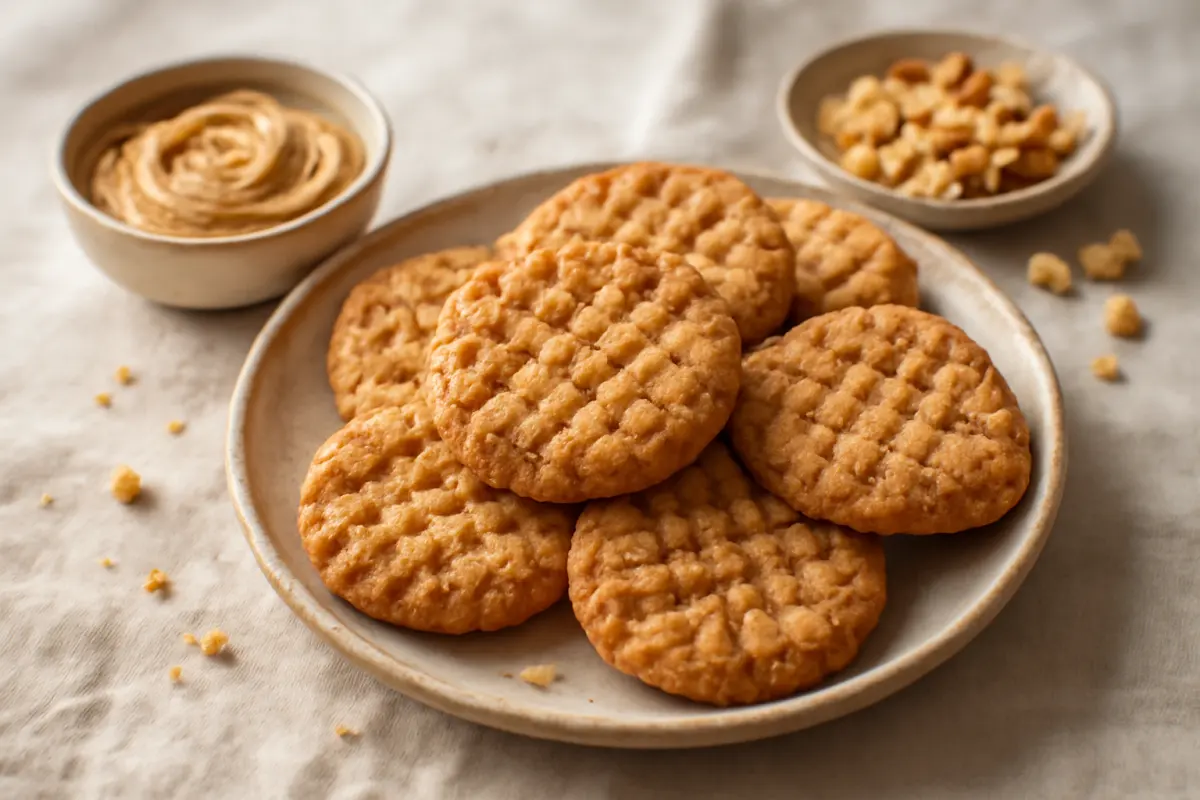
These peanut butter cookies are soft in the middle, lightly crisp around the edges, and easy to make with pantry staples. Creaming softened butter with peanut butter and sugar gives the cookies a tender texture, while a short chill helps the dough hold its shape.
Use conventional creamy peanut butter for the most predictable results. The cookies are ready when the edges look set and lightly golden but the centers still look a little soft; they will finish setting on the baking sheet as they cool.
Ingredients
- 1 cup (226 g) unsalted butter, softened to room temperature
- 1 cup (260 g) creamy peanut butter, conventional shelf-stable style
- 1 cup (200 g) packed light brown sugar
- 1/2 cup (100 g) granulated sugar, plus 2 tablespoons for rolling
- 1 large egg, room temperature if possible
- 2 teaspoons vanilla extract
- 2 1/2 cups (312 g) all-purpose flour, measured by weight or spooned into measuring cups and leveled
- 1 teaspoon baking soda
- 1/2 teaspoon fine salt
How to make it
Prepare the oven and pans. Heat the oven to 350°F (175°C). Line two large baking sheets with parchment paper. If you do not have parchment, use ungreased baking sheets; avoid greasing the pans, which can make the cookies spread too much.
Cream the fats and sugars. In a large bowl, beat the softened butter, peanut butter, brown sugar, and 1/2 cup granulated sugar on medium speed for 2 to 3 minutes, scraping the bowl once or twice. The mixture should look lighter, creamy, and slightly fluffy. If mixing by hand, use a sturdy wooden spoon and beat until the butter is fully blended.
Add the egg and vanilla. Beat in the egg and vanilla until smooth, about 30 seconds. A little separation at this stage is fine, but there should be no visible streaks of egg.
Combine the dry ingredients. In a separate bowl, whisk the flour, baking soda, and salt until evenly distributed. Add the dry mixture to the peanut butter mixture in two additions, mixing on low speed or stirring just until no dry flour remains. Do not overmix; the finished dough should be thick and scoopable.
Chill the dough briefly. Cover the bowl and refrigerate the dough for 20 to 30 minutes. It should feel firmer but still be easy to scoop. If your kitchen is cool and the dough is already firm, you can bake it without chilling; if it feels greasy or sticky, chill it for the full 30 minutes.
Shape the cookies. Scoop the dough into 1 1/2-tablespoon portions, about 30 g each, and roll into balls. Roll each ball in the remaining 2 tablespoons of granulated sugar. Place the balls 2 inches apart on the prepared baking sheets.
Flatten with a fork. Press each dough ball twice with the tines of a fork to make a crisscross pattern, flattening it to about 1/2 inch thick. If the fork sticks, lightly dip it in sugar between cookies.
Bake one sheet at a time. Bake for 10 to 12 minutes, rotating the sheet halfway through if your oven browns unevenly. The edges should be set and lightly golden, while the centers should still look soft and slightly puffy. Do not wait for the centers to look fully baked or the cookies may become dry.
Cool before moving. Let the cookies cool on the baking sheet for 5 minutes. Transfer them to a wire rack and cool completely. They will firm up as they cool while retaining a soft center.
Expert tips
- Use softened, not melted, butter. Properly softened butter should yield when pressed but still hold its shape. Melted butter makes the dough looser and can produce flatter cookies.
- Measure flour carefully. Too much flour is the most common reason peanut butter cookies turn out dry or cakey. Weigh it when possible; otherwise, spoon it into a measuring cup and level the top.
- For thicker cookies, chill longer. Refrigerate the shaped dough balls for 30 to 45 minutes before baking. Bake one test cookie first if you are unsure how much the dough will spread.
- Natural peanut butter needs adjustment. Stirred natural peanut butter can make the dough softer and more prone to spreading. Use a well-mixed brand, chill the dough for at least 45 minutes, and expect a slightly different texture.
- If the cookies spread too much, the butter may have been too warm, the dough may need more chilling, or the baking sheet may have been warm. Cool the sheet completely between batches and chill the remaining dough.
- If the cookies are crumbly, check that the flour was not overmeasured and that the cookies were not baked past the point where the edges turned golden. Letting them cool fully also improves their texture.
- For a slightly crunchier cookie, bake for 12 to 13 minutes, until the centers look set. For softer cookies, remove them when the edges are golden but the centers still look underdone.
Serving and storage
Serve the cookies at room temperature with milk, coffee, or tea. For the cleanest texture, let them cool completely before storing.
Keep cooled cookies in an airtight container at room temperature for up to 5 days. Place parchment between layers if stacking them. You can freeze baked cookies in a sealed freezer container for up to 2 months; thaw them at room temperature. Unbaked dough balls can also be frozen on a tray, then transferred to a freezer bag for up to 2 months. Bake from frozen at 350°F (175°C), adding about 2 to 3 minutes to the baking time and checking for set edges and soft centers.
Frequently asked questions
Why did my peanut butter cookies spread too much?
The butter may have been too warm, the baking sheet may have been hot, or the dough may not have been chilled long enough. Chill the dough for 30 to 45 minutes, use a completely cool baking sheet, and make sure the butter is softened rather than melted.
Should peanut butter cookie dough be chilled before baking?
A 20- to 30-minute chill is helpful because it firms the butter and makes the dough easier to shape. If the dough feels greasy or very soft, chill it for 45 minutes before baking.
How do I know when peanut butter cookies are done?
The edges should look set and lightly golden, while the centers should remain soft and slightly puffy. Leave the cookies on the baking sheet for 5 minutes after baking so they can finish setting.
Can I use natural peanut butter in this recipe?
Yes, but stir it thoroughly before measuring. Natural peanut butter can make the dough softer and cause more spreading, so chill the dough for at least 45 minutes and bake a test cookie first.
Can I freeze peanut butter cookies?
Yes. Freeze baked cookies in an airtight container for up to 2 months, or freeze shaped unbaked dough balls for up to 2 months. Bake frozen dough at 350°F and add about 2 to 3 minutes to the usual baking time.