Recipes
Sesame Soba Noodle Salad Recipe
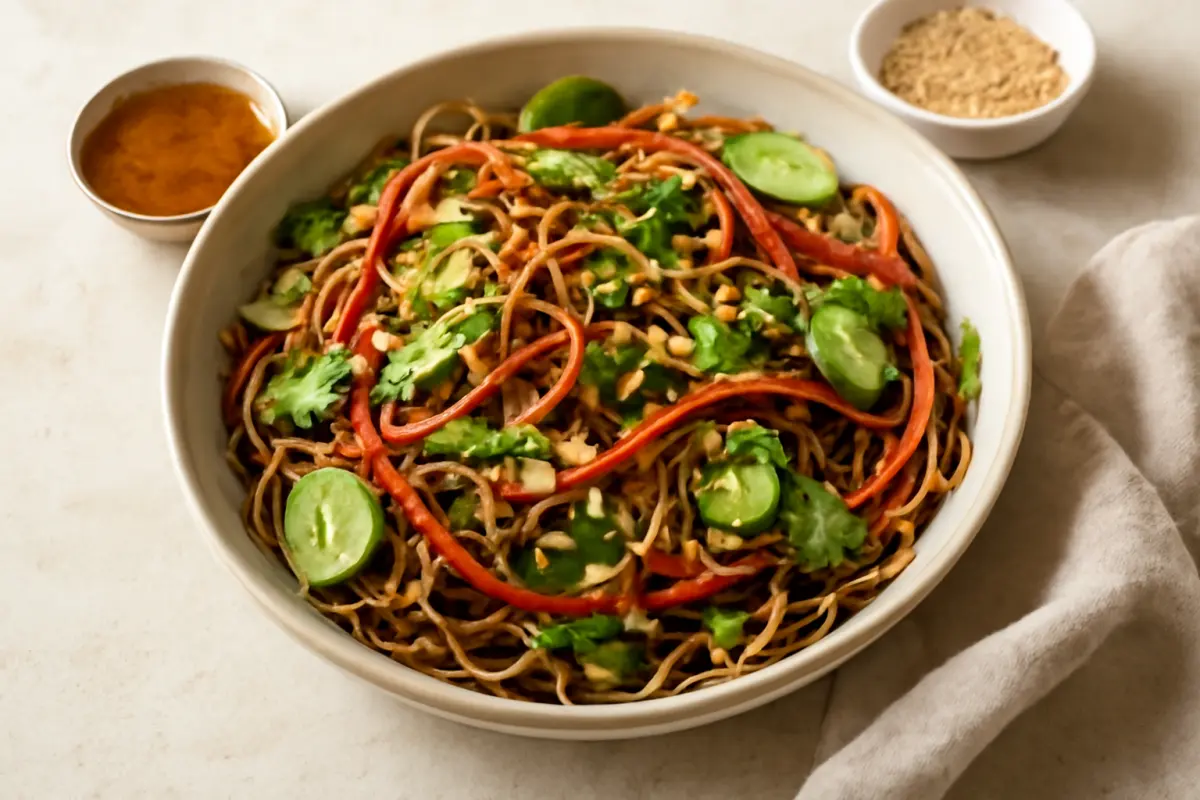
This sesame soba noodle salad combines chilled buckwheat noodles, crunchy vegetables, edamame, and a savory sesame dressing. It is colorful, filling, and easy to prepare ahead.
Overview
This sesame soba noodle salad is a cool, chewy, crunchy dish with plenty of savory-sesame flavor. Soba noodles are tossed with shredded cabbage, carrot, cucumber, scallions, and edamame, then coated in a dressing made with tahini, soy sauce, rice vinegar, ginger, and toasted sesame oil.
The key to noodles that stay springy rather than sticky is rinsing them thoroughly under cold water after cooking. Serve the salad immediately for the crispest vegetables, or refrigerate it for a make-ahead lunch and refresh it with a small splash of water or rice vinegar before serving.
Ingredients
- 8 ounces dried soba noodles
- 1 cup shelled edamame, thawed if frozen
- 1 cup finely shredded red cabbage
- 1 medium carrot, julienned or grated
- 1 small cucumber, halved lengthwise and thinly sliced
- 4 scallions, thinly sliced
- 1/4 cup chopped fresh cilantro, plus more for serving if desired
- 2 tablespoons toasted sesame seeds
- 3 tablespoons tahini
- 2 tablespoons low-sodium soy sauce
- 2 tablespoons unseasoned rice vinegar
- 1 tablespoon pure maple syrup or honey
- 1 tablespoon toasted sesame oil
- 1 tablespoon neutral oil, such as avocado or canola oil
- 1 tablespoon finely grated fresh ginger
- 1 small garlic clove, finely grated or minced
- 1 to 2 tablespoons water, as needed to thin the dressing
- 1/4 teaspoon red pepper flakes, optional
- Lime wedges, for serving, optional
How to make it
Mix the dressing. In a small bowl, whisk together the tahini, soy sauce, rice vinegar, maple syrup or honey, sesame oil, neutral oil, ginger, garlic, and red pepper flakes if using. The mixture will look thick at first. Whisk in 1 tablespoon water, then add the second tablespoon only if needed. The finished dressing should pour easily but still lightly coat a spoon.
Cook the soba. Bring a large pot of water to a full boil. Add the soba noodles and cook according to the package directions, usually 4 to 6 minutes, stirring once or twice so they do not clump. Start checking a noodle 1 minute before the suggested cooking time. It should be tender through the center with a slight spring, not crunchy or mushy.
Rinse and cool the noodles. Drain the soba in a colander and rinse under cold running water, separating the strands with your fingers, until the noodles feel cool and no longer slippery with excess starch. Drain well. For especially loose noodles, shake the colander firmly or blot the bottom with a clean kitchen towel; excess water will dilute the dressing.
Blanch the edamame. If the edamame is frozen, place it in a small saucepan of boiling water for 2 minutes, then drain and rinse briefly under cold water. If it is already thawed, it can go straight into the salad. The beans should be bright green and tender but not soft.
Combine the salad. Add the cooled soba, edamame, cabbage, carrot, cucumber, scallions, and cilantro to a large bowl. Pour over about three-quarters of the dressing and toss gently with tongs until the noodles are evenly coated and the vegetables are distributed. Add more dressing if the bowl looks dry.
Finish and serve. Sprinkle with the sesame seeds and toss once more. Taste and adjust with a little more rice vinegar for sharpness, soy sauce for salt, or water if the dressing has tightened. Serve with lime wedges if desired.
Expert tips
- Do not cook soba in a small pot. Plenty of boiling water gives the strands room to move and helps prevent clumping.
- Rinsing is not optional for this salad: it removes surface starch and stops the noodles from turning gummy as they cool.
- Cut the vegetables fairly thinly so they mix easily with the noodles and do not pull strands out of the bowl.
- If the tahini seizes into a thick paste while whisking, keep adding water 1 teaspoon at a time until the dressing becomes smooth.
- For a gluten-free salad, use soba labeled gluten-free and replace regular soy sauce with certified gluten-free tamari. Not all soba is made entirely from buckwheat.
- For a nut-free version, tahini is already a suitable choice; check the labels of all packaged ingredients if cross-contact is a concern.
Serving and storage
Serve the salad chilled or at cool room temperature as a light main dish or side. It pairs well with grilled tofu, teriyaki tofu, or simply sliced avocado. For another fresh, vegetable-forward salad idea, see this quinoa tabbouleh recipe.
Refrigerate leftovers in a covered container within 2 hours of preparation and use them within 3 days. The noodles absorb dressing as they sit, so stir in 1 to 2 teaspoons of water, rice vinegar, or a little extra sesame dressing before serving to loosen them. Keep any lime wedges and extra sesame seeds separate until serving.
Frequently asked questions
Can I make sesame soba noodle salad ahead of time?
Yes. Prepare it up to 1 day ahead and refrigerate it in a covered container. For the best texture, reserve a little dressing and toss it in just before serving, since soba absorbs sauce as it rests.
Why did my soba noodles turn sticky?
They were likely overcooked, insufficiently rinsed, or left sitting warm after draining. Cook them just until tender, rinse them thoroughly under cold water while separating the strands, and drain them well before tossing.
Can I use vegetables other than cabbage, carrot, and cucumber?
Yes. Thinly sliced bell pepper, snap peas, radishes, bean sprouts, or shelled edamame work well. Keep the total amount of vegetables close to 3 to 4 cups so the dressing coats the salad evenly.
Is soba noodle salad served hot or cold?
It is usually served chilled or at cool room temperature. Letting it sit for about 10 minutes after refrigeration can soften the dressing slightly and bring out its flavor.
Can I make this recipe without tahini?
Use 2 tablespoons smooth peanut butter or sunflower seed butter instead. The flavor will change, but the dressing will remain creamy and savory. Thin it with water until pourable.