Recipes
Spinach Ricotta Ravioli Recipe
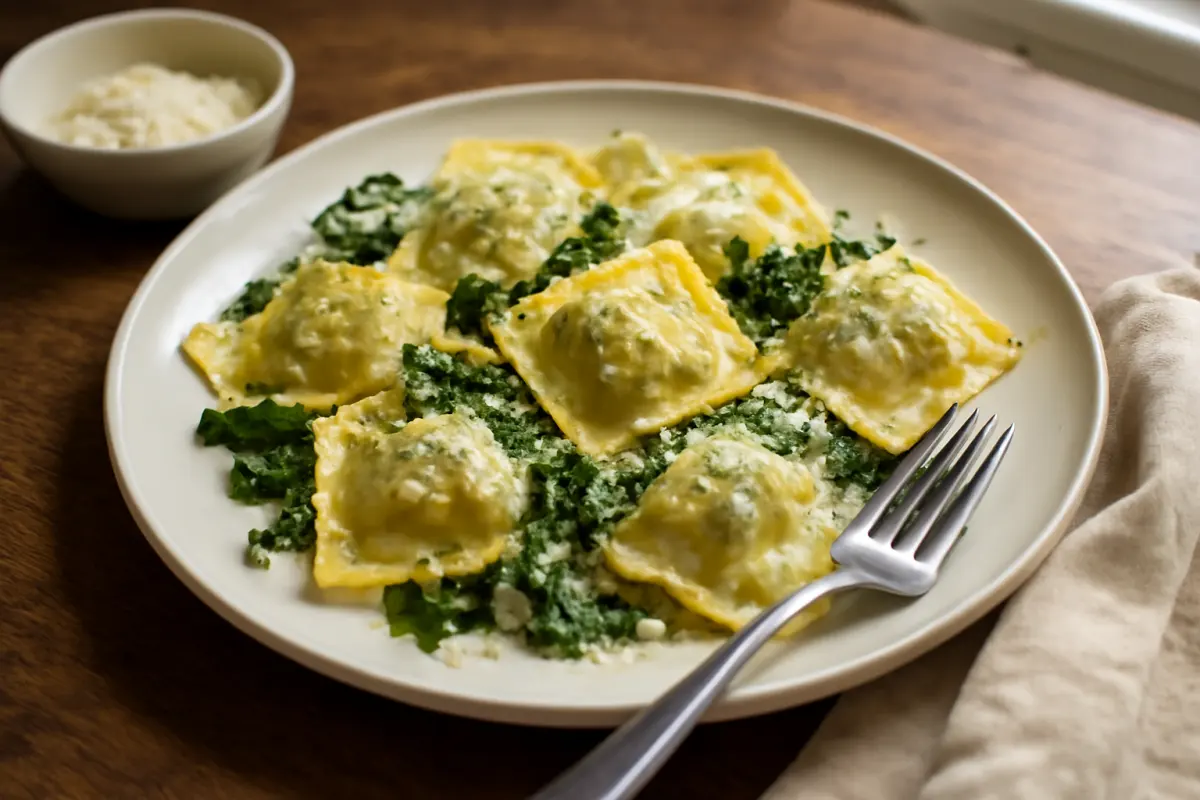
These homemade spinach ricotta ravioli have tender pasta, a creamy spinach-and-cheese filling, and a buttery sage sauce. The recipe includes practical tips for sealing, cooking, and storing ravioli.
Overview
This spinach ricotta ravioli recipe makes tender, homemade pasta parcels filled with creamy ricotta, finely chopped spinach, Parmesan, and a little lemon zest. The filling is flavorful but firm enough to portion and seal without leaking.
Serve the ravioli with brown butter and sage, or use olive oil and grated Parmesan for a simpler finish. The recipe makes about 36 ravioli—enough for four main-course servings or six smaller first-course servings.
Ingredients
- 300 g (2 1/2 cups) Italian-style “00” flour or all-purpose flour, plus more for dusting
- 3 large eggs
- 1 teaspoon olive oil
- 1/2 teaspoon fine salt
- 225 g (8 oz) fresh spinach
- 250 g (about 1 cup) whole-milk ricotta
- 50 g (1/2 cup) finely grated Parmesan, plus more for serving
- 1 large egg yolk
- 1 garlic clove, finely grated
- 1/2 teaspoon finely grated lemon zest
- 1/4 teaspoon fine salt
- 1/8 teaspoon freshly ground black pepper
- 85 g (6 tablespoons) unsalted butter
- 8 fresh sage leaves
- 1 tablespoon lemon juice
- Extra flour or semolina, for the tray
How to make it
Make the pasta dough. Tip the flour onto a work surface and make a wide well in the center. Add the eggs, olive oil, and salt to the well, then beat them with a fork while gradually pulling in flour from the edges. When a shaggy dough forms, knead it for 8–10 minutes. It should become smooth, elastic, and only slightly tacky. If it feels dry or crumbly, wet your hands and continue kneading rather than adding a large amount of water.
Rest the dough. Shape the dough into a ball, wrap it tightly, and leave it at room temperature for 30 minutes. Resting relaxes the dough so it rolls out without springing back. You can refrigerate it for up to 24 hours, but let it sit at room temperature for about 30 minutes before rolling.
Cook and dry the spinach. Put the spinach in a large skillet over medium heat with 1 tablespoon of water. Cover and cook for 2–3 minutes, stirring once, until fully wilted. Transfer it to a sieve or clean kitchen towel and let it cool until comfortable to handle. Squeeze out as much liquid as possible. The spinach should form a compact, fairly dry ball; excess moisture can make the ravioli filling watery and weaken the seals.
Make the filling. Chop the squeezed spinach very finely. Stir it with the ricotta, Parmesan, egg yolk, garlic, lemon zest, salt, and pepper. The mixture should be thick enough to hold a mound on a spoon. If it looks loose, mix in another 1–2 tablespoons of Parmesan. Refrigerate the filling for 20 minutes while you roll the dough.
Roll the pasta. Divide the dough into four pieces and keep three covered while working. Flatten one piece and roll it through a pasta machine on the widest setting. Fold it in half and pass it through again two or three times, then continue reducing the setting one notch at a time until the sheet is about 1 mm thick. It should be thin enough to see the outline of your hand through it but sturdy enough to lift without tearing. Repeat with the remaining dough.
Portion the filling. Lay one pasta sheet on a lightly floured surface. Place rounded teaspoons of filling in two rows, leaving about 4 cm between mounds and at least 2 cm around the edges. For 36 ravioli, use roughly 2 teaspoons of filling per piece; avoid overfilling, which makes sealing difficult.
Seal and cut the ravioli. Brush the exposed pasta lightly with water, then lay a second pasta sheet over the filling. Start at one end and press the pasta around each mound, pushing out trapped air as you go. Press firmly around every mound so the two layers adhere. Cut into squares with a ravioli cutter or sharp knife, then press the edges again with your fingertips or the tines of a fork. Transfer the ravioli to a flour- or semolina-dusted tray in a single layer. Repeat with the remaining dough and filling.
Boil the ravioli. Bring a large pot of water to a gentle boil and salt it generously. Cook the ravioli in batches so the pot is not crowded. Fresh ravioli usually take 3–4 minutes; they are ready when they float and the pasta edges feel tender but still have a slight bite. Lift one out and taste it before removing the batch. Scoop the ravioli out with a slotted spoon and reserve 120 ml (1/2 cup) of pasta water.
Make the sauce. While the ravioli cook, melt the butter in a large skillet over medium heat. Add the sage and cook for 2–3 minutes, swirling the pan, until the butter smells nutty and develops golden-brown specks. Remove the skillet from the heat if the milk solids darken quickly. Stir in the lemon juice carefully; it may sputter.
Finish and serve. Add the cooked ravioli to the skillet and gently toss, adding pasta water 1 tablespoon at a time until the sauce lightly coats the pasta. Serve immediately with the sage, extra Parmesan, and a few grinds of black pepper.
Expert tips
- Ricotta texture matters: If the ricotta looks wet, drain it in a fine sieve for 30–60 minutes before mixing the filling. This reduces leaking and makes the ravioli easier to seal.
- Keep pasta covered: Rolled sheets dry quickly. Cover them with a clean, slightly damp towel while you work, but do not let the towel touch the filling.
- Remove air before sealing: Air pockets expand in boiling water and can split the ravioli. Press from the filling outward before closing each edge.
- If the dough keeps shrinking: Cover it and rest it for another 10–15 minutes. It needs time for the gluten to relax.
- If ravioli split while cooking: The pasta may be too thin, the edges may not be fully sealed, or the filling may be too wet. Seal with less filling and press firmly around each mound.
- Substitutions: Frozen spinach works well if thawed and squeezed very dry. Cottage cheese can replace ricotta if blended until smooth and drained first. Replace sage with parsley or skip the herbs and finish with olive oil, Parmesan, and lemon.
- Avoid a rolling pin-only approach unless necessary: A pasta machine makes consistent thin sheets, but a rolling pin can work if you roll the dough evenly to roughly 1 mm thick.
Serving and storage
Serve the ravioli as soon as they are coated with sauce. A simple green salad or roasted vegetables makes an easy side; a sharp, fresh salad such as this roasted beet salad recipe also balances the buttery sauce.
Uncooked ravioli can be refrigerated on a floured tray, uncovered, for up to 4 hours, then covered once the surface has dried slightly. For longer storage, freeze them in a single layer until firm, transfer them to an airtight freezer bag, and cook directly from frozen. Add about 1–2 minutes to the cooking time and test one for tenderness. Refrigerate cooked leftovers in a covered container for up to 3 days and reheat gently in a skillet with a splash of water or broth.
Frequently asked questions
Can I make spinach ricotta ravioli without a pasta machine?
Yes. Divide the rested dough into small pieces and roll each one with a rolling pin until it is about 1 mm thick. The sheet should be thin but strong enough to lift without tearing. Work with one piece at a time and keep the remaining dough covered.
How do I stop homemade ravioli from opening?
Use a fairly dry filling, leave space around each mound, press out trapped air, and seal the edges firmly. A light brush of water helps the pasta adhere, but too much water can make the edges slippery.
Can I freeze spinach ricotta ravioli?
Yes. Freeze uncooked ravioli in a single layer until solid, then transfer them to a freezer bag or container. Cook them straight from frozen in gently boiling salted water; they usually need 1–2 extra minutes compared with fresh ravioli.
Why is my ravioli filling watery?
Spinach and ricotta both contain moisture. Squeeze cooked spinach very dry, drain wet ricotta, and add Parmesan if the mixed filling is loose. Chilling the filling also makes it easier to portion and seal.
Can I use frozen spinach in the filling?
Yes. Thaw it completely, squeeze it repeatedly in a clean towel or sieve until almost dry, and chop it finely before adding it to the ricotta mixture.