Desserts
Sweet and Sour Chicken Recipe
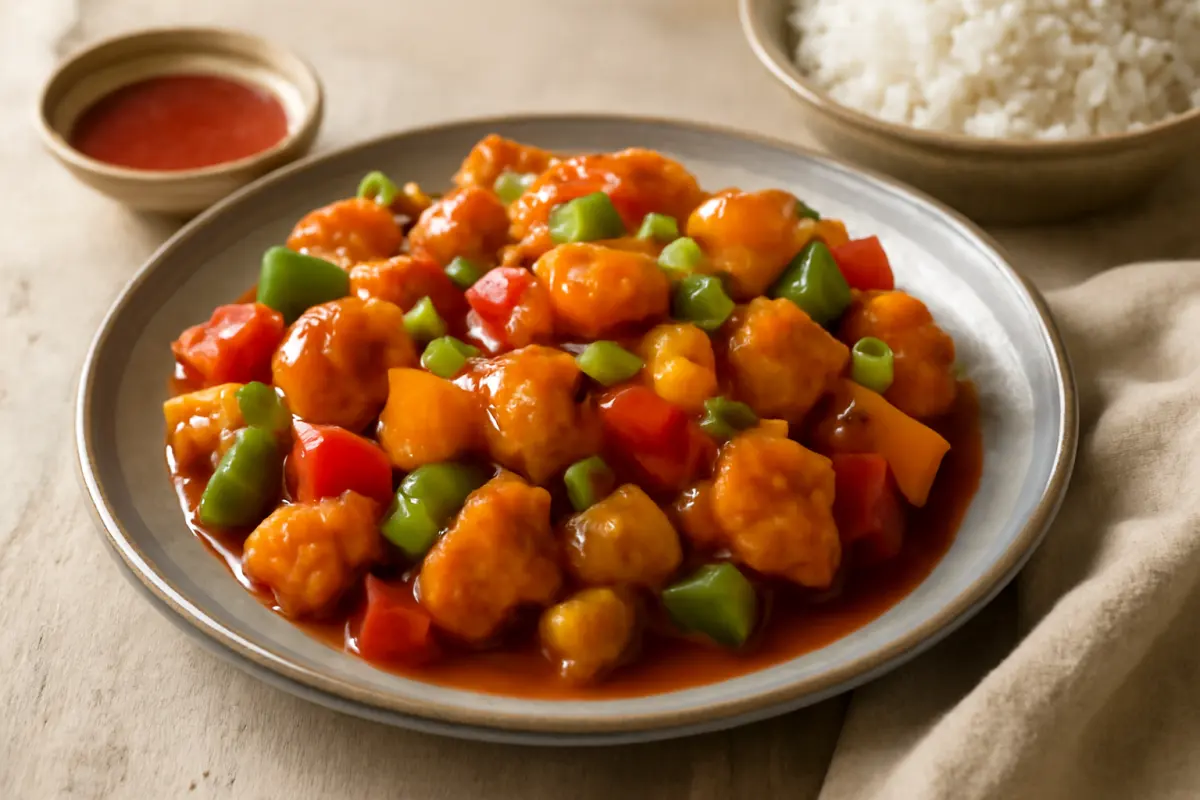
This sweet and sour chicken recipe pairs crisp, golden chicken with tender peppers, juicy pineapple, and a tangy sauce that thickens in the skillet. It is ready in about 45 minutes and works well with steamed rice.
Overview
This sweet and sour chicken recipe makes crisp chicken pieces coated in a glossy sauce balanced with rice vinegar, ketchup, soy sauce, and brown sugar. Bell peppers and pineapple add color, texture, and a little extra sweetness without making the dish heavy.
For the best texture, fry the chicken just until the coating is golden and the meat reaches 165°F (74°C), then toss it with the sauce immediately before serving. The coating will soften slightly as it sits, so have the rice and garnishes ready first.
Ingredients
Serves 4.
- 1 1/2 pounds boneless, skinless chicken thighs or chicken breasts, cut into 1-inch pieces
- 1 teaspoon kosher salt
- 1/2 teaspoon ground black pepper
- 1 large egg
- 1/3 cup cornstarch
- 1/3 cup all-purpose flour
- 1/2 cup neutral oil, such as canola or vegetable oil, for frying
- 1 red bell pepper, cut into 1-inch pieces
- 1 green bell pepper, cut into 1-inch pieces
- 1 small yellow onion, cut into 1-inch pieces
- 1 cup pineapple chunks, drained if using canned pineapple
- 2 garlic cloves, finely chopped
- 1 teaspoon finely grated fresh ginger
For the sauce
- 1/2 cup pineapple juice, reserved from the can or replaced with water
- 1/3 cup rice vinegar
- 1/3 cup ketchup
- 1/4 cup packed light brown sugar
- 2 tablespoons low-sodium soy sauce
- 1 tablespoon cornstarch
- 2 tablespoons cold water
To serve
- 4 cups cooked white rice
- 2 sliced scallions, optional
- 1 tablespoon toasted sesame seeds, optional
How to make it
Mix the sauce. In a medium bowl, whisk together the pineapple juice, rice vinegar, ketchup, brown sugar, and soy sauce. In a small separate bowl, stir the 1 tablespoon cornstarch with 2 tablespoons cold water until smooth. Keep both mixtures nearby.
Season and coat the chicken. Pat the chicken dry with paper towels, then season it with the salt and pepper. Beat the egg in a shallow bowl. In a second shallow bowl, mix the 1/3 cup cornstarch and flour. Dip each chicken piece in the egg, let the excess drip off, and then turn it in the flour mixture. Set the coated pieces on a plate without stacking them.
Heat the oil. Pour the oil into a large, deep skillet and heat over medium-high heat until it reaches about 350°F (175°C). If you do not have a thermometer, drop a pinch of the flour coating into the oil; it should sizzle immediately and rise steadily without browning at once.
Fry the chicken in batches. Add enough chicken to cover the bottom of the skillet in a single layer, leaving space between the pieces. Fry for 3 to 4 minutes per side, turning once, until the coating is golden and the thickest pieces reach 165°F (74°C). Transfer the chicken to a wire rack set over a baking sheet. Fry the remaining chicken, allowing the oil to return to temperature between batches.
Cook the vegetables. Carefully pour off all but 1 tablespoon of oil from the skillet. Return it to medium-high heat. Add the onion and bell peppers and stir-fry for 3 to 4 minutes. The vegetables should be brightly colored and just tender, with a little bite remaining. Add the garlic and ginger and cook for 30 seconds, stirring constantly.
Thicken the sauce. Give the pineapple juice mixture another stir and pour it into the skillet. Bring it to a simmer, then stir the cornstarch slurry once more and add it. Cook for 1 to 2 minutes, stirring, until the sauce bubbles and becomes thick enough to coat the back of a spoon. If it looks lumpy, keep stirring over low heat until smooth.
Finish the dish. Add the pineapple and fried chicken to the skillet. Toss gently for 30 to 60 seconds, just until everything is coated and hot. Do not simmer the chicken for several minutes, or the crisp coating will become soft. Taste the sauce and add a small splash of vinegar for more tang or a teaspoon of brown sugar for more sweetness, if needed.
Serve immediately. Spoon the sweet and sour chicken over cooked rice and finish with scallions and sesame seeds, if using.
Expert tips
- Chicken thighs or breasts: Thighs stay juicy and are forgiving if slightly overcooked. Breasts work well too, but cut them evenly and remove them from the oil as soon as they reach 165°F (74°C).
- For a crisp coating: Dry the chicken thoroughly before seasoning, avoid crowding the skillet, and use a wire rack rather than paper towels after frying. Paper towels can trap steam underneath the chicken.
- For a less sweet sauce: Reduce the brown sugar to 3 tablespoons and use 1/2 cup bell pepper or extra pineapple for balance. For more tang, add 1 tablespoon additional rice vinegar.
- Easy substitutions: Apple cider vinegar can replace rice vinegar, although its flavor is sharper. Use tamari instead of soy sauce for a gluten-free version, and use gluten-free flour in the coating. Cornstarch alone can replace the flour, though the crust will be lighter and more delicate.
- If the sauce is too thin: Simmer it for another minute. If it still does not coat a spoon, mix 1 teaspoon cornstarch with 2 teaspoons cold water and stir in a little at a time.
- If the sauce is too thick: Whisk in 1 tablespoon water or pineapple juice at a time until it loosens. Add liquid gradually so the sauce does not become watery.
- If the chicken browns too quickly: Lower the heat slightly. Oil that is too hot can darken the coating before the chicken cooks through; oil that is too cool produces a greasy, pale crust.
Serving and storage
Serve the chicken as soon as it is coated with the sauce, with steamed white or brown rice. Steamed broccoli, cucumber slices, or a simple green salad make fresh sides without competing with the sauce.
Refrigerate leftovers in a covered container within 2 hours of cooking and use them within 3 to 4 days. Store the chicken and rice separately when possible. Reheat the chicken and sauce in a skillet over medium heat until steaming hot throughout; the coating will not be as crisp as when freshly fried. For better texture, reheat the chicken on a baking sheet at 400°F (200°C) until hot, then warm the sauce separately and combine just before eating. Do not leave leftovers at room temperature for extended periods.
Frequently asked questions
Can I bake the chicken instead of frying it?
Yes. Arrange the coated chicken on a lightly oiled wire rack set over a baking sheet and spray or brush the pieces with oil. Bake at 425°F (220°C) for about 20 to 25 minutes, turning once, until golden and the thickest pieces reach 165°F (74°C). The coating will be lighter and less crisp than fried chicken.
Why did my sweet and sour chicken coating turn soggy?
The most common causes are overcrowding the skillet, draining the chicken on a flat surface where steam collects, or letting the chicken sit in the sauce too long. Fry in batches, use a wire rack, and toss the chicken with the sauce immediately before serving.
Can I make the sauce ahead of time?
Yes. Whisk together the pineapple juice, vinegar, ketchup, brown sugar, and soy sauce and refrigerate it for up to 3 days. Stir the cornstarch slurry separately just before thickening the sauce, since cornstarch settles in liquid.
What can I use instead of pineapple?
Use extra bell pepper and onion for a pineapple-free version. You can also add canned mandarin orange segments at the end, but drain them well and fold them in gently so they do not break apart.
How do I know when the chicken is cooked?
Check the thickest piece with an instant-read thermometer; it should reach 165°F (74°C). The coating should be golden, and the center should be opaque rather than pink.