Recipes
Thai Peanut Noodles Recipe
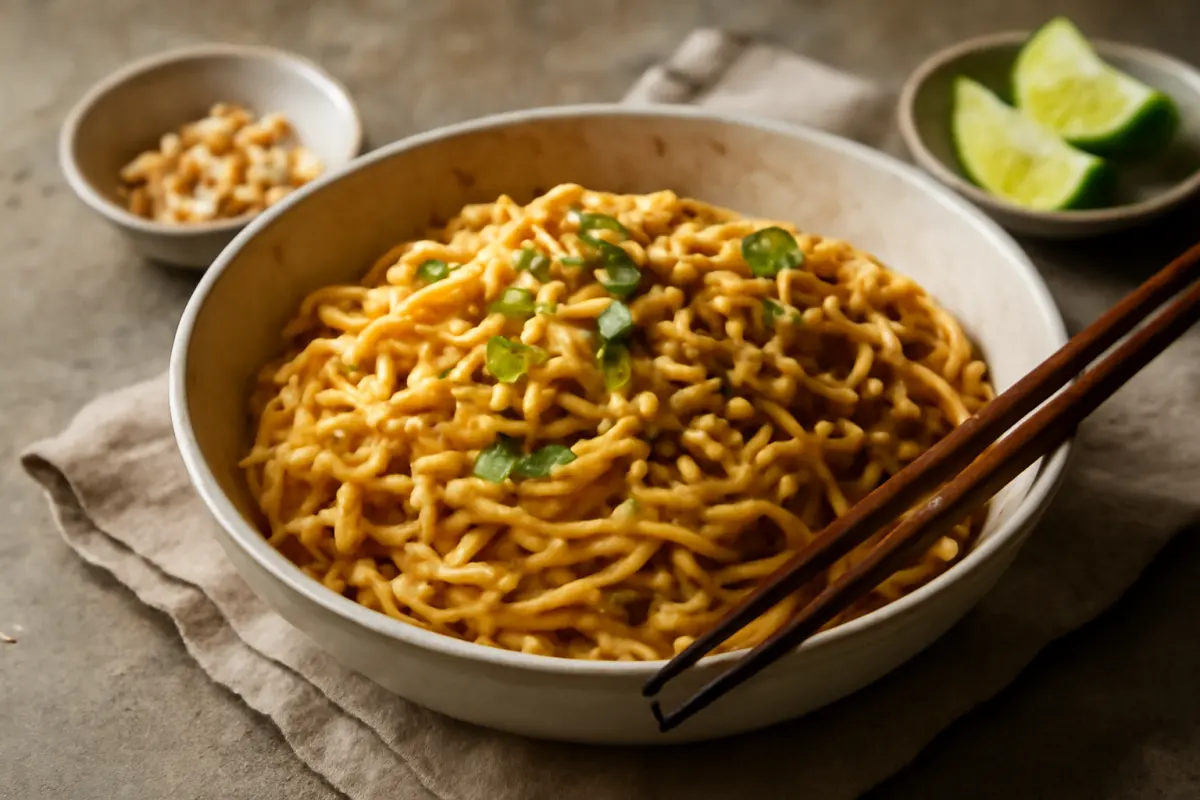
These Thai peanut noodles combine chewy noodles, crunchy vegetables, herbs, and a creamy peanut-lime sauce. The sauce comes together in one bowl, making this a practical 25-minute meal for lunch or dinner.
Overview
This Thai peanut noodles recipe makes four servings of springy noodles coated in a creamy, savory-sweet peanut sauce with lime, garlic, ginger, and a little chili heat. Crisp carrot, bell pepper, and cucumber add freshness and texture, while cilantro and peanuts finish each bowl.
The sauce is mixed separately, then loosened with hot noodle water so it clings without becoming pasty. Use wheat spaghetti for a pantry-friendly version or rice noodles for a gluten-free option; either way, rinse the cooked noodles briefly so they stay loose and easy to toss.
Ingredients
- 12 ounces dried rice noodles or thin spaghetti
- 1/2 cup smooth natural or conventional peanut butter
- 1/4 cup low-sodium soy sauce
- 3 tablespoons fresh lime juice, plus lime wedges for serving
- 2 tablespoons warm water, plus more as needed
- 2 tablespoons maple syrup or packed light brown sugar
- 1 tablespoon toasted sesame oil
- 1 tablespoon rice vinegar
- 1 garlic clove, finely grated or minced
- 1 teaspoon finely grated fresh ginger
- 1/2 teaspoon crushed red pepper flakes, or more to taste
- 1 tablespoon neutral oil, such as canola or avocado oil
- 1 medium carrot, peeled and cut into matchsticks
- 1 red bell pepper, thinly sliced
- 1/2 English cucumber, halved lengthwise and thinly sliced
- 3 green onions, thinly sliced
- 1/2 cup loosely packed fresh cilantro leaves, chopped
- 1/3 cup roasted peanuts, roughly chopped
- 1 tablespoon toasted sesame seeds, optional
How to make it
Prepare the sauce. In a medium bowl, whisk the peanut butter, soy sauce, lime juice, warm water, maple syrup, sesame oil, rice vinegar, garlic, ginger, and red pepper flakes. The sauce should be smooth and thick but pourable. If it looks stiff, whisk in another teaspoon of warm water at a time.
Cook the noodles. Bring a large pot of water to a boil. Cook the noodles according to the package directions until just tender. Start checking one minute before the suggested time; they should be chewy rather than soft or mushy.
Reserve noodle water and rinse. Before draining, scoop out 1 cup of the cooking water. Drain the noodles, then rinse them briefly under cool running water. This removes excess surface starch and stops the cooking. Shake off as much water as possible.
Soften the vegetables slightly. Heat the neutral oil in a large skillet or wok over medium-high heat. Add the carrot and bell pepper and stir-fry for 2 to 3 minutes, until the pepper is brighter in color and the vegetables are still crisp. Add the cucumber and cook for 30 seconds. Turn off the heat.
Toss everything together. Add the drained noodles and about three-quarters of the peanut sauce to the skillet. Toss with tongs while adding reserved noodle water, 1 tablespoon at a time, until the sauce coats the noodles smoothly. You may need 2 to 4 tablespoons, depending on the noodles and peanut butter. Add more sauce if needed.
Finish and taste. Fold in the green onions and cilantro. Taste one noodle and adjust the balance: add lime juice for more sharpness, maple syrup for sweetness, soy sauce for salt, or red pepper flakes for heat. Serve immediately with chopped peanuts, sesame seeds if using, and lime wedges.
Expert tips
- Use the right noodle texture: Rice noodles can turn soft quickly, so drain them as soon as they are pliable and tender. For spaghetti, cook until just al dente.
- Do not skip the noodle water: Peanut butter thickens as it coats the noodles. Starchy cooking water helps create a glossy sauce that spreads evenly instead of clumping.
- Natural peanut butter works, but stir it first: If the oil has separated, mix the peanut butter thoroughly before measuring. Conventional peanut butter usually makes a slightly thicker, sweeter sauce.
- For a gluten-free bowl: Use certified gluten-free rice noodles and tamari instead of standard soy sauce. Check the labels of all packaged ingredients if gluten avoidance is important.
- For a heartier meal: Add 8 ounces of thinly sliced chicken breast, peeled shrimp, or pressed cubed tofu. Cook the protein separately until fully cooked, then toss it with the noodles at the end.
- If the sauce is too salty: Whisk in 1 to 2 tablespoons of water, another tablespoon of peanut butter, and a squeeze of lime. Avoid adding a large amount of sugar at once.
- If the noodles clump: Toss them with a splash of warm water or reserved noodle water. If they have cooled completely, warm them gently in the skillet rather than cooking them again.
Serving and storage
Serve the noodles warm or at room temperature with extra lime wedges, chopped peanuts, and cilantro. They are best soon after tossing, while the sauce is glossy and the vegetables are crisp.
Refrigerate leftovers in a covered container within 2 hours of cooking and use them within 3 to 4 days. The sauce will thicken in the refrigerator, so stir in 1 to 2 teaspoons of warm water before reheating. Reheat gently in a skillet or microwave until hot, stirring once or twice; add fresh cucumber and herbs after reheating if you want to restore the original crunch.
Frequently asked questions
Can I make Thai peanut noodles ahead of time?
Yes. Cook and cool the noodles, mix the sauce, and cut the vegetables up to 1 day ahead. Store each component separately, then toss them together just before serving. If already assembled, loosen the noodles with a splash of warm water because the peanut sauce thickens as it sits.
Why is my peanut sauce too thick?
Peanut butter naturally thickens when it coats noodles. Whisk in warm water or reserved noodle water, 1 teaspoon at a time, until the sauce becomes smooth and pourable. Tossing the noodles while they are still warm also helps distribute it.
Can I use spaghetti instead of rice noodles?
Yes. Thin spaghetti or linguine works well and is easy to find. Cook it just until al dente, reserve some cooking water, and rinse briefly before tossing so the finished noodles do not become gummy.
What can I use instead of peanut butter?
Use an equal amount of smooth almond butter or cashew butter. The flavor will change, and you may need a little extra maple syrup or lime juice to balance the sauce. Sunflower seed butter is a useful peanut-free alternative.