Recipes
Aloo Paratha Recipe
This aloo paratha recipe makes tender, flaky flatbreads filled with spiced mashed potatoes. The method covers smooth dough, dry filling, easy shaping, and the cooking cues that prevent tearing or raw centers.
Overview
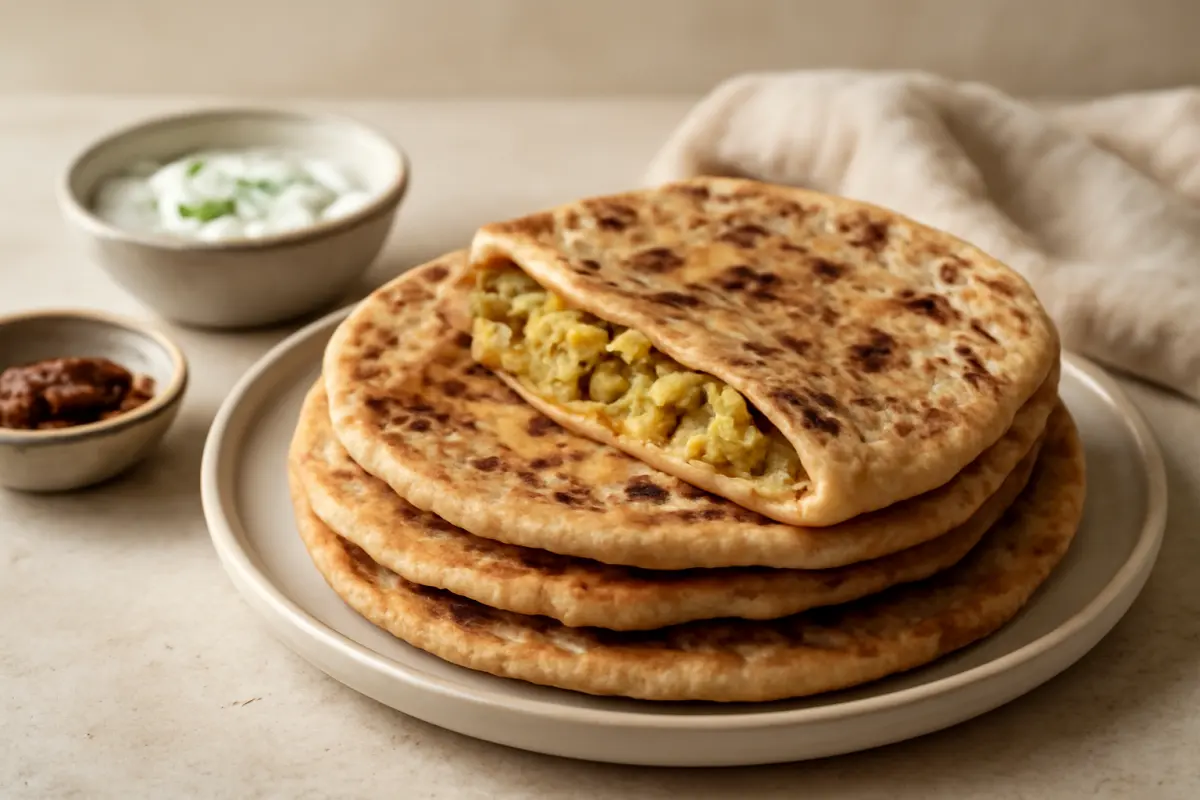
Aloo paratha is a stuffed Indian flatbread with a soft wheat exterior and a savory potato filling seasoned with cumin, coriander, chile, and fresh herbs. It is cooked on a hot skillet until golden spots appear and the layers turn lightly crisp.
The most reliable results come from a smooth dough and a cool, fairly dry filling. Boil the potatoes until tender but not waterlogged, mash them completely, and avoid overfilling the dough. This recipe makes 8 parathas.
Ingredients
- 3 cups (375 g) finely ground whole-wheat flour, plus extra for rolling
- 1 teaspoon fine salt, divided
- 1 tablespoon neutral oil or melted ghee, plus more for cooking
- About 1 1/4 cups (300 ml) warm water, added gradually
- 700 g potatoes, about 5 medium potatoes
- 1 teaspoon cumin seeds
- 1 teaspoon ground coriander
- 1/2 teaspoon Kashmiri chili powder or mild paprika
- 1/4 teaspoon ground turmeric
- 1/2 teaspoon garam masala
- 1/2 teaspoon amchur powder, or 2 teaspoons lemon juice
- 1 small green chile, finely minced, optional
- 2 tablespoons finely chopped cilantro
- 2 tablespoons finely chopped red onion, optional
- 1/2 teaspoon salt for the filling, plus more to taste
How to make it
Cook the potatoes. Scrub the potatoes and place them in a saucepan. Cover with cold water and add 1/2 teaspoon of the salt. Bring to a boil, then cook for 18–25 minutes, depending on size, until a knife slides into the center without resistance. Drain well and let them cool until easy to handle.
Make the dough. Put the flour and remaining 1/2 teaspoon salt in a bowl. Add the oil and rub it through the flour. Pour in 1 cup of warm water and mix with your fingers. Add the remaining water 1 tablespoon at a time until the dough holds together. Knead for 6–8 minutes, until smooth and soft rather than sticky. Cover and rest for 20–30 minutes.
Prepare the filling. Peel the warm potatoes and mash them until no large lumps remain. A smooth filling is less likely to puncture the dough. Stir in the cumin seeds, ground coriander, chili powder, turmeric, garam masala, amchur or lemon juice, green chile, cilantro, onion, and 1/2 teaspoon salt. Taste and adjust the salt. If the mixture feels wet or sticky, spread it on a plate and let it cool uncovered for 10–15 minutes.
Divide the portions. Knead the rested dough briefly and divide it into 8 equal balls. Divide the potato mixture into 8 portions, then roll each portion into a compact ball. Keep both dough and filling covered so they do not dry out.
Fill the dough. Lightly flour the work surface. Roll one dough ball into a 10 cm (4-inch) round, keeping the center slightly thicker than the edge. Place one potato ball in the middle. Bring the edges of the dough up around the filling, pinch them closed, and twist off any thick excess at the top. Press the sealed ball gently flat.
Roll the paratha. Dust the filled dough lightly with flour and roll from the center outward, turning it a quarter turn after each few strokes. Make a round about 18 cm (7 inches) wide and roughly 3–4 mm thick. Use gentle pressure; forcing the rolling pin can push the filling through the dough. If a small crack appears, dust it lightly with flour and continue carefully.
Cook the first side. Heat a heavy skillet or tawa over medium-high heat for 2–3 minutes. Place the paratha on the dry skillet. Cook for 40–60 seconds, until the top changes from glossy to matte and small bubbles begin to appear underneath.
Cook with fat. Flip the paratha and brush the cooked side with about 1 teaspoon ghee or oil. Cook for 45–60 seconds, until the underside has scattered golden-brown spots. Flip again, brush the second side with another teaspoon of fat, and press the edges gently with a spatula. Cook until both sides are browned and the paratha feels cooked through, usually another 60–90 seconds.
Finish the batch. Transfer the cooked paratha to a plate and cover it with a clean tea towel or place it in a covered container. Wipe away any loose flour from the skillet if it begins to burn. Roll and cook the remaining parathas, adjusting the heat so they brown steadily without blackening before the center is hot.
Expert tips
- Use potatoes that have been drained thoroughly. A wet filling is the most common reason parathas split during rolling.
- If the filling is lumpy, press it through a potato ricer or mash it while still warm. Large pieces create weak spots in the dough.
- Do not use excessive flour while rolling; it can make the surface dusty and prevent even browning. Brush off extra flour before cooking.
- If the dough springs back, cover it and rest it for another 10 minutes. The gluten needs time to relax.
- If the paratha browns before the center feels cooked, lower the heat to medium and cook it a little longer. A very hot skillet can scorch the outside while leaving a cool filling.
- For a sharper filling, use amchur. For a fresher, more lemony flavor, use lemon juice and add it after the potatoes have cooled slightly.
Serving and storage
Serve aloo paratha hot with plain yogurt, pickle, or a fresh chutney. It can also be served with a small bowl of dal or another vegetable dish, such as this aloo gobi recipe.
Cool leftover parathas completely before refrigerating them in an airtight container for up to 3 days. Separate them with parchment if stacking. Reheat in a dry skillet over medium heat until hot and flexible, or warm them in a covered skillet with a few drops of water. For longer storage, freeze cooled parathas in a stack separated by parchment for up to 2 months; reheat from frozen in a covered skillet, turning occasionally, until hot throughout.
Frequently asked questions
Why does my aloo paratha break while rolling?
The filling may be too wet, the dough may be too thin around the edges, or too much filling may be packed inside. Cool and dry the potato mixture, keep the center of the dough slightly thicker, and roll with gentle strokes from the center outward.
How do I stop the potato filling from coming out?
Seal the dough completely around a compact ball of filling before flattening it. Avoid overfilling, pinch away any thick knot of dough at the top, and dust lightly rather than heavily while rolling.
Can I make aloo paratha without green chile?
Yes. Leave it out for a mild paratha. You can add a little extra ground coriander, chopped cilantro, or a pinch of black pepper for flavor without much heat.
Can I prepare aloo paratha ahead of time?
You can make the dough and filling a day ahead and refrigerate them separately in covered containers. Let both sit at room temperature for about 15 minutes before shaping. Cooked parathas keep for up to 3 days in the refrigerator.
Why is my paratha raw or doughy in the middle?
The skillet may be too hot, the paratha may be too thick, or it may not have been cooked long enough after browning. Roll it evenly, use medium to medium-high heat, and cook until the surface has golden spots and the center feels firm rather than soft.