Recipes
Creamy Lemon Garlic Salmon Recipe
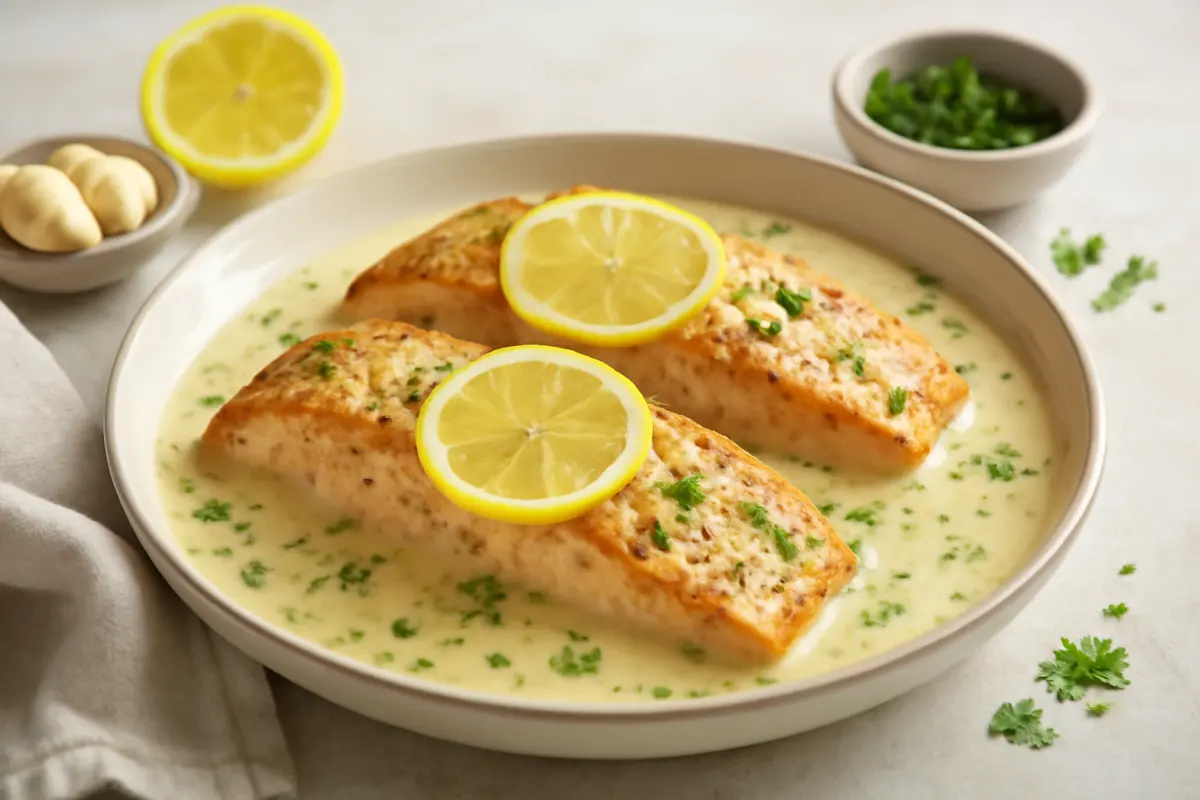
This creamy lemon garlic salmon pairs golden-seared salmon with a smooth garlic cream sauce brightened with lemon and finished with Parmesan. It is an easy skillet dinner with clear doneness cues and practical substitutions.
Overview
This creamy lemon garlic salmon recipe makes tender, golden salmon in a silky skillet sauce with garlic, lemon, Parmesan, and a little baby spinach. The salmon is seared first, then returned to the pan so it finishes gently without overcooking.
Serve it with rice, pasta, crusty bread, or roasted vegetables. Keep the sauce at a gentle simmer rather than a hard boil so the cream stays smooth and the lemon flavor remains bright.
Ingredients
- 4 salmon fillets, 6 ounces each, skin-on or skinless
- 1 teaspoon kosher salt, divided
- 1/2 teaspoon freshly ground black pepper, divided
- 2 tablespoons olive oil
- 2 tablespoons unsalted butter
- 5 garlic cloves, finely minced
- 1/2 cup low-sodium chicken broth or vegetable broth
- 1 cup heavy cream
- 1/2 cup finely grated Parmesan cheese
- 1 tablespoon fresh lemon juice
- 1 teaspoon finely grated lemon zest
- 2 cups lightly packed baby spinach
- 2 tablespoons chopped fresh parsley, plus more for serving
- Lemon wedges, for serving
How to make it
Prepare the salmon. Pat the salmon dry with paper towels. Season both sides with 3/4 teaspoon of the salt and 1/4 teaspoon of the pepper. Let the fillets sit while you prepare the pan; drying the surface helps them brown instead of steam.
Sear the salmon. Heat the olive oil in a large, deep skillet over medium-high heat. When the oil shimmers, place the salmon in the pan, skin-side down if it has skin. Cook for 4 to 5 minutes, until the underside is deeply golden and the salmon releases easily from the pan. Flip and cook for 2 to 3 minutes more. The centers should still look slightly translucent because they will finish in the sauce. Transfer the salmon to a plate.
Cook the garlic. Reduce the heat to medium and add the butter. Once melted, add the garlic and cook for 30 to 45 seconds, stirring constantly, until fragrant but not browned. If the garlic starts to darken, lower the heat immediately; browned garlic can make the sauce taste bitter.
Deglaze the skillet. Pour in the broth and scrape the browned bits from the bottom of the pan. Simmer for 2 minutes, until the liquid has reduced slightly.
Build the cream sauce. Stir in the heavy cream, remaining 1/4 teaspoon salt, and remaining 1/4 teaspoon pepper. Bring the mixture to a gentle simmer, then cook for 3 to 4 minutes, stirring occasionally. It should lightly coat a spoon, but it does not need to be thick yet.
Add Parmesan, lemon, and spinach. Lower the heat and stir in the Parmesan a little at a time until smooth. Add the lemon juice, lemon zest, spinach, and parsley. Stir for 1 to 2 minutes, just until the spinach wilts. Avoid boiling after adding the cheese and lemon, which helps keep the sauce creamy rather than grainy or separated.
Finish the salmon. Nestle the salmon into the sauce, spooning some over the top. Cover the skillet and cook over low heat for 3 to 5 minutes, depending on the thickness of the fillets. The salmon is ready when the thickest part flakes easily with a fork and the center is opaque, or when it reaches 145°F on an instant-read thermometer.
Taste and serve. Taste the sauce and add another small squeeze of lemon or a pinch of salt if needed. Serve immediately with the sauce spooned over the salmon and lemon wedges on the side.
Expert tips
- Use similarly sized fillets. Pieces with comparable thickness will finish at the same time. Very thick fillets may need an extra 1 to 2 minutes in the covered skillet.
- Do not crowd the pan. If the salmon pieces touch, sear them in batches so the surface can brown properly.
- Keep the sauce gentle. A rolling boil can cause the cream and Parmesan to separate. Lower the heat before adding the cheese.
- Adjust a thin sauce carefully. Remove the salmon and simmer the sauce uncovered for 1 to 2 additional minutes. Add the salmon back only after the sauce has thickened slightly.
- If the sauce is too thick, stir in 1 tablespoon of broth at a time until it reaches a spoon-coating consistency.
- For a lighter substitution, use half-and-half instead of heavy cream, but simmer it more gently and for less time because it thickens less readily. Evaporated milk also works, though the sauce will be less rich.
- For dairy-free salmon, replace the butter with additional olive oil and use an unsweetened dairy-free cooking cream. Omit the Parmesan or add 2 tablespoons of nutritional yeast for a savory finish.
- For frozen salmon, thaw it completely and pat it very dry before cooking. Wet fillets will not sear well and may release enough water to thin the sauce.
Serving and storage
Serve the salmon with rice, cooked pasta, mashed potatoes, crusty bread, or steamed green beans. The sauce is especially good with something that can catch it, such as roasted garlic mashed potatoes.
Refrigerate leftovers in a covered container within 2 hours of cooking and use them within 3 days. Store the salmon and sauce together, then reheat gently in a covered skillet over low heat with a splash of broth or cream. Avoid boiling the sauce, and stop heating as soon as the salmon is hot throughout.
Frequently asked questions
Can I use salmon without the skin?
Yes. Skinless salmon works well and follows the same cooking method. Sear the first side until golden and it releases easily, then turn it carefully with a thin spatula so the fillets do not break.
Why did my creamy salmon sauce separate?
The pan was likely too hot, especially after the Parmesan and lemon were added. Keep the sauce at a gentle simmer, lower the heat before stirring in the cheese, and avoid boiling the finished sauce.
Can I make this recipe with another fish?
Thick cod, halibut, or trout fillets can work, although cooking time will vary with thickness. Cook the fish until it flakes easily and is opaque in the center, then finish it briefly in the sauce.
What can I use instead of Parmesan?
Pecorino Romano gives a sharper, saltier flavor, so reduce the added salt slightly. For a sauce without cheese, omit it and simmer the cream and broth a little longer to thicken.
Can I add vegetables to the skillet?
Yes. Baby spinach is added near the end because it wilts quickly. For firmer vegetables such as sliced mushrooms or asparagus, cook them in the skillet before searing the salmon, then remove them and return them with the salmon at the end.