Recipes
Apple Cider Donuts Recipe
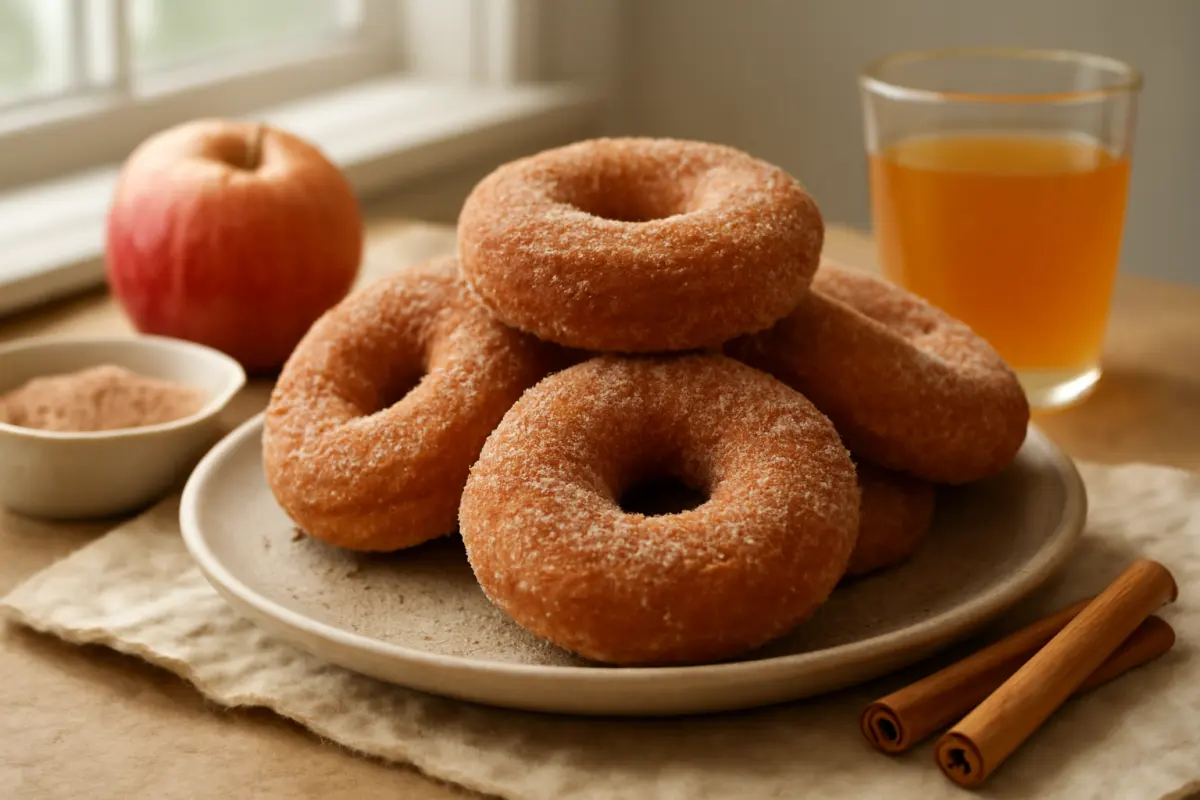
These apple cider donuts are tender, warmly spiced, and coated in cinnamon sugar while still warm. Reducing the cider concentrates its flavor, while a short chill makes the soft dough easier to roll and cut.
Overview
These apple cider donuts are tender inside, lightly crisp at the edges, and coated in cinnamon sugar while they are still warm. Reducing the cider before mixing concentrates its apple flavor without adding too much liquid to the dough.
The dough is soft and slightly sticky, so chill it before rolling and handle it with a light touch. Fry the donuts in neutral oil until deeply golden, then toss them in the coating while the surface is still warm enough for the sugar to cling.
Ingredients
- 1 1/2 cups (360 ml) apple cider
- 3 cups (360 g) all-purpose flour, plus extra for the work surface
- 2 teaspoons baking powder
- 1/2 teaspoon baking soda
- 1 1/2 teaspoons ground cinnamon
- 1/4 teaspoon ground nutmeg
- 3/4 teaspoon fine salt
- 1/2 cup (113 g) unsalted butter, softened
- 3/4 cup (150 g) granulated sugar
- 2 large eggs, at room temperature
- 1 teaspoon vanilla extract
- 1/2 cup (120 ml) buttermilk
- 6 to 8 cups neutral frying oil, such as canola, peanut, or vegetable oil
For the coating
- 1 cup (200 g) granulated sugar
- 2 teaspoons ground cinnamon
How to make it
Reduce the cider. Pour the apple cider into a small saucepan and bring it to a steady simmer over medium heat. Cook uncovered for 15 to 20 minutes, stirring occasionally, until 1/2 cup remains. Pour it into a heatproof measuring cup and cool until lukewarm or room temperature. Do not add hot cider to the dough.
Mix the dry ingredients. In a medium bowl, whisk together the flour, baking powder, baking soda, cinnamon, nutmeg, and salt. Set aside.
Cream the butter and sugar. In a large bowl, beat the softened butter and 3/4 cup sugar with a hand mixer or stand mixer on medium speed for 2 to 3 minutes, until lighter in color and smooth. Beat in the eggs one at a time, then mix in the vanilla.
Finish the dough. Add the dry ingredients in three additions, alternating with the buttermilk and reduced cider. Mix on low speed just until no dry streaks remain. The dough should be soft and tacky but not pourable. Stop mixing as soon as it comes together; overmixing can make the donuts dense.
Chill the dough. Cover the bowl and refrigerate for at least 1 hour, or up to 8 hours. Chilling firms the butter and makes the dough easier to roll.
Prepare the coating and oil. Stir the 1 cup sugar and 2 teaspoons cinnamon together in a shallow bowl. Line a baking sheet with parchment or paper towels. Pour the oil into a heavy, deep pot, leaving at least 3 inches of space at the top, and heat it to 350°F (175°C). Use a clip-on thermometer if possible.
Roll and cut. Lightly flour the work surface and turn out the chilled dough. Pat or roll it to 1/2 inch thick. Cut out 3-inch rounds, then cut 1-inch centers from each round. Transfer the donuts and holes to a lightly floured tray. Gather scraps once, chill them for 10 minutes if they have softened, and cut again.
Fry in batches. Fry 2 or 3 donuts at a time, depending on the size of your pot. Cook for about 60 to 90 seconds on the first side, then turn with tongs or a spider strainer and cook for another 60 to 90 seconds. They should be evenly golden brown, puffed, and cooked through in the center. Keep the oil between 350°F and 365°F; let it return to temperature between batches.
Coat while warm. Transfer each donut to the lined tray for about 15 seconds to drain, then toss it in the cinnamon sugar. Turn to coat all sides. Fry the donut holes for about 45 to 60 seconds per side, then drain and coat them as well.
Serve. Serve the donuts warm or at room temperature. They are best on the day they are fried, when the edges are crisp and the centers are soft.
Expert tips
- The dough is too sticky to roll: Chill it for another 20 to 30 minutes rather than adding a large amount of flour. Extra flour can make the donuts heavy.
- The donuts brown before the centers cook: The oil is too hot or the dough is thicker than 1/2 inch. Lower the heat and check the oil temperature before continuing.
- The donuts absorb oil: The oil temperature has likely dropped below 350°F, or too many donuts were added at once. Fry smaller batches and wait for the oil to recover.
- No buttermilk: Use 1/2 cup plain yogurt thinned with 1 to 2 tablespoons milk, or make a substitute by adding 1 1/2 teaspoons lemon juice to a measuring cup and filling it to 1/2 cup with milk. Let it stand for 5 minutes.
- No apple cider: Apple juice can be used, but simmer it the same way and expect a milder, less spiced-apple flavor. Do not skip the reduction.
- Use a thermometer for the oil: A pale donut with a greasy surface usually indicates oil that is too cool; a dark exterior with a doughy center usually means it is too hot.
Serving and storage
Serve the donuts with coffee, tea, or more warmed apple cider. Store completely cooled donuts in an airtight container at room temperature for up to 2 days. The coating will soften over time. Rewarm them briefly in a 300°F (150°C) oven before serving, if desired.
For longer storage, freeze uncoated donuts in a sealed freezer bag for up to 2 months. Thaw at room temperature, warm them in a low oven, and toss with cinnamon sugar just before serving. Cool used frying oil completely before straining and storing or discarding it according to local guidance; never pour oil down a drain.
Frequently asked questions
Can I bake these apple cider donuts instead of frying them?
This dough is designed for frying, and baking it will produce a different, more cake-like result. For the intended crisp edges and tender center, fry the donuts in oil at 350°F to 365°F.
How much reduced cider should I have before mixing the dough?
You should have exactly 1/2 cup of reduced cider. If you have less, add a little fresh cider to reach 1/2 cup; if you have more, continue simmering until the volume is correct.
Why did my apple cider donuts turn out dense?
Common causes are overmixing, adding too much flour while rolling, or using baking powder or baking soda that is no longer active. Mix only until the flour disappears and keep the rolled dough about 1/2 inch thick.
Can I make the dough ahead of time?
Yes. Cover and refrigerate the dough for up to 8 hours. Let it sit for 5 to 10 minutes if it is very firm, then roll, cut, and fry it while chilled.
How do I know when the donuts are cooked?
They should be evenly golden, puffed, and feel springy when gently pressed. A cut donut should have a soft, fully set crumb rather than a wet line through the center.