Recipes
Baked Apple Fritters Recipe
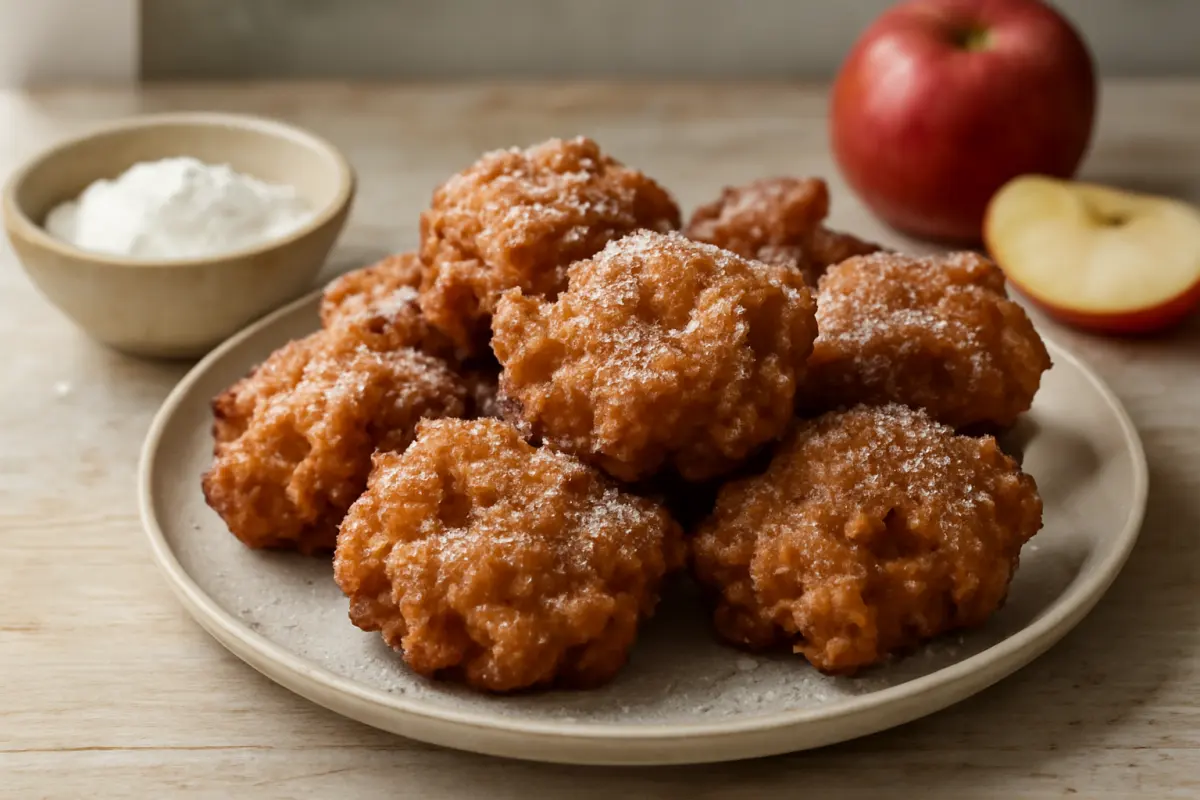
These baked apple fritters are tender, warmly spiced, and packed with small pieces of apple. A quick vanilla glaze adds the familiar fritter finish without deep-frying.
Overview
These baked apple fritters have a soft, lightly cakey center, crisp golden edges, and plenty of tender apple in every bite. The batter comes together with melted butter, buttermilk, cinnamon, and a small amount of nutmeg for a warm, bakery-style flavor.
Bake the fritters in a hot oven until the tops are set and the edges are golden, then brush or drizzle them with a simple vanilla glaze while they are still slightly warm. Use a firm, crisp apple and cut it into small pieces so it softens during baking without making the batter watery.
Ingredients
Makes 10 fritters.
- 1 medium firm apple, about 170 g (6 oz), peeled, cored, and cut into 6 mm (1/4-inch) dice
- 1 tablespoon lemon juice
- 180 g (1 1/2 cups) all-purpose flour
- 75 g (1/3 cup plus 1 tablespoon) granulated sugar
- 1 1/2 teaspoons baking powder
- 1/4 teaspoon baking soda
- 1 teaspoon ground cinnamon
- 1/4 teaspoon ground nutmeg
- 1/2 teaspoon fine salt
- 1 large egg, room temperature if possible
- 120 ml (1/2 cup) buttermilk
- 45 g (3 tablespoons) unsalted butter, melted and cooled for 5 minutes
- 1 teaspoon vanilla extract
- Cooking spray or 1 teaspoon neutral oil, for the baking sheet
For the glaze
- 120 g (1 cup) powdered sugar
- 1 1/2 tablespoons milk, plus more as needed
- 1/2 teaspoon vanilla extract
- Pinch of fine salt
How to make it
Heat the oven to 200°C (400°F). Lightly grease a large, rimmed baking sheet or line it with parchment and lightly spray the parchment. Leave space between the fritters so hot air can circulate around them.
Put the diced apple in a small bowl and toss it with the lemon juice. The pieces should be no larger than 6 mm (1/4 inch); larger chunks can stay firm while the fritter around them is already baked.
In a medium bowl, whisk together the flour, sugar, baking powder, baking soda, cinnamon, nutmeg, and salt. Break up any small lumps of baking powder or brown-looking pockets of cinnamon.
In a second bowl, whisk the egg, buttermilk, melted butter, and vanilla until smooth. The butter should be warm or cool, not hot enough to cook the egg.
Pour the wet mixture into the dry ingredients. Stir with a spatula just until no dry flour remains. The batter should be thick and sticky rather than pourable. Fold in the apple, along with any lemon juice left in the bowl, using only a few strokes. Do not keep mixing once the apple is distributed; overmixing can make the fritters dense.
Scoop 10 portions onto the prepared baking sheet, using about 2 heaped tablespoons of batter for each. Leave at least 5 cm (2 inches) between portions. Use damp fingertips or the back of a spoon to shape each mound into a rough 7 cm (2 3/4-inch) round about 2 cm (3/4 inch) high. They do not need to be perfectly smooth.
Bake for 12 to 16 minutes, rotating the sheet halfway through. The fritters are done when the tops look set, the edges are golden brown, and a toothpick inserted into the thickest part comes out with a few moist crumbs but no wet batter. If you have an instant-read thermometer, the centers should be about 93°C (200°F). The bottoms should be lightly browned, not pale and doughy.
Let the fritters cool on the baking sheet for 5 minutes, then transfer them to a rack. Cooling briefly allows the centers to finish setting while keeping the edges from becoming soggy.
Make the glaze while the fritters cool. Whisk the powdered sugar, milk, vanilla, and salt in a small bowl. It should fall from the whisk in a smooth ribbon. Add milk 1/2 teaspoon at a time if it is too thick; add 1 tablespoon powdered sugar if it is too thin.
Drizzle the glaze over the warm fritters or dip their tops into the glaze. Let them stand on the rack for 10 to 15 minutes, until the glaze is slightly set. Serve the same day for the best texture.
Expert tips
- Choose a firm apple such as Granny Smith, Honeycrisp, Pink Lady, or Braeburn. Very soft apples can release more liquid and make the centers heavy.
- Measure the flour by spooning it into a dry measuring cup and leveling it, or weigh it. Too much flour makes the fritters dry and difficult to shape.
- Do not replace the buttermilk with plain water. If needed, mix 1/2 cup milk with 1 1/2 teaspoons lemon juice or white vinegar, let it stand for 5 minutes, and use it in the batter.
- If the batter spreads immediately, chill it for 15 minutes before scooping. This usually means the butter was still very warm or the apple released extra moisture.
- If the fritters brown before the centers are baked, lower the oven to 190°C (375°F) and continue baking for 2 to 4 minutes. An overly dark underside usually means the baking sheet is dark or the fritters are too close to the lower heating element.
- For a less sweet finish, omit the glaze and dust the cooled fritters with powdered sugar. For a stronger apple flavor, add 1/4 teaspoon apple pie spice, but keep the cinnamon in the recipe.
Serving and storage
Serve the fritters warm or at room temperature with coffee, tea, or a glass of milk. The glaze will remain soft rather than crunchy, which is normal for an oven-baked fritter.
Store completely cooled fritters in an airtight container at room temperature for up to 2 days. Place parchment between layers if they are glazed. For longer storage, freeze the unglazed fritters in a single layer until firm, then transfer them to a freezer container for up to 2 months. Thaw at room temperature and warm them in a 160°C (325°F) oven for 5 to 8 minutes before glazing. Do not leave the fritters in a warm, humid oven after reheating, or the glaze and edges can become sticky.
Frequently asked questions
Can I make baked apple fritters without buttermilk?
Yes. Make a quick substitute by stirring 1 1/2 teaspoons lemon juice or white vinegar into 1/2 cup milk. Let it stand for 5 minutes, then use the mixture in place of the buttermilk.
Why are my baked apple fritters dense?
The most common causes are overmixing, too much flour, or apple pieces that are too large. Stir the batter only until the flour disappears, measure the flour carefully, and dice the apple into 1/4-inch pieces.
Can I use applesauce instead of diced apples?
Not as a direct replacement. Applesauce adds much more moisture and changes the structure of the batter. For the best result, use peeled diced apple; if you want applesauce flavor, replace no more than 2 tablespoons of the buttermilk with unsweetened applesauce and expect a softer fritter.
How do I keep baked apple fritters from becoming soggy?
Bake them until the centers are fully set, cool them on a wire rack rather than leaving them on the hot baking sheet, and glaze them shortly before serving. Avoid sealing them in a container while they are still warm.
Can I freeze baked apple fritters?
Yes. Freeze them unglazed in a single layer, then transfer them to an airtight freezer container for up to 2 months. Thaw at room temperature, warm in a 325°F oven for 5 to 8 minutes, and add fresh glaze.