Recipes
Classic Beef Pot Roast Recipe
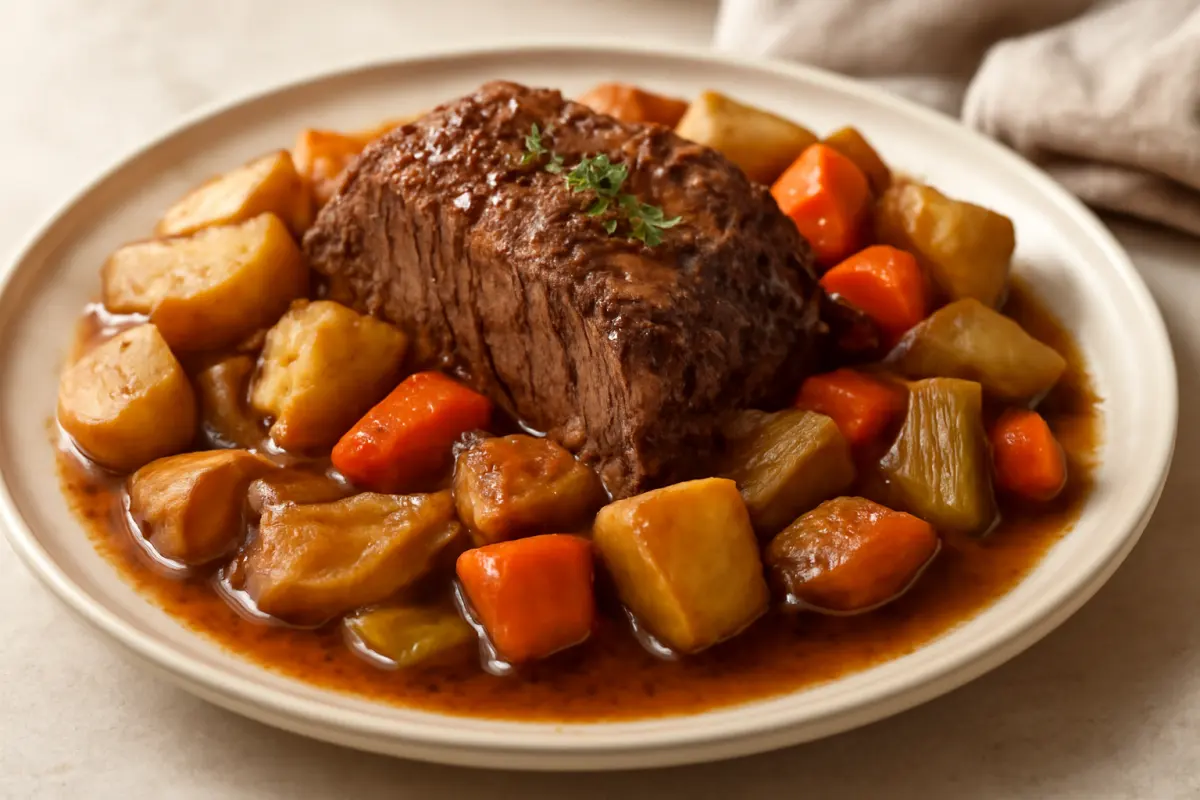
This classic beef pot roast slowly braises chuck roast with onions, carrots, potatoes, herbs, and beef broth until the meat is fork-tender and the vegetables are deeply savory.
Overview
This classic beef pot roast uses a well-marbled chuck roast, browned first for a deeper flavor, then gently braised with onions, carrots, potatoes, herbs, and beef broth. The covered oven method gives the roast time to become tender while creating a rich cooking liquid for gravy.
Plan for about 3½ to 4 hours from start to finish. The roast is ready when a fork slides into the thickest part with very little resistance—not simply when it reaches a particular cooking time.
Ingredients
- 1 beef chuck roast, 3 to 4 pounds, preferably 2 to 3 inches thick
- 2 teaspoons kosher salt, plus more to taste
- 1 teaspoon freshly ground black pepper
- 2 tablespoons neutral oil, such as canola or avocado oil
- 1 large yellow onion, cut into 8 wedges
- 4 medium garlic cloves, finely chopped
- 2 tablespoons all-purpose flour
- 2 cups low-sodium beef broth
- 1 cup dry red wine or additional beef broth
- 2 tablespoons tomato paste
- 2 teaspoons Worcestershire sauce
- 3 sprigs fresh thyme, or 1 teaspoon dried thyme
- 2 sprigs fresh rosemary, or ½ teaspoon dried rosemary
- 2 bay leaves
- 1 pound carrots, peeled and cut into 2-inch pieces
- 1½ pounds Yukon Gold potatoes, halved or quartered if large
- 2 tablespoons chopped fresh parsley, for serving
How to make it
Heat the oven and season the roast. Position a rack in the lower-middle of the oven and heat it to 325°F. Pat the chuck roast dry with paper towels, then season all over with the salt and pepper. Drying the surface helps it brown instead of steam.
Brown the beef. Heat the oil in a large oven-safe Dutch oven over medium-high heat. When the oil shimmers, add the roast. Sear for 4 to 5 minutes per side, including the shorter edges, until a deep brown crust forms. Move the roast to a plate. If the pot begins to smoke heavily, lower the heat slightly; the browned bits should be dark brown, not black.
Cook the onion and garlic. Add the onion wedges to the pot and cook for 3 to 4 minutes, turning once, until they pick up brown color. Stir in the garlic and cook for 30 seconds, just until fragrant. Sprinkle in the flour and stir for 1 minute so it coats the onions and loses its raw taste.
Build the braising liquid. Pour in the wine, if using, and scrape the bottom of the pot with a wooden spoon to loosen the browned bits. Let it bubble for 2 minutes. Stir in the broth, tomato paste, and Worcestershire sauce. The liquid should be blended and lightly thickened, with no visible lumps of tomato paste.
Start the braise. Return the roast and any juices on the plate to the pot. Add the thyme, rosemary, and bay leaves. The liquid should come about one-third to halfway up the sides of the roast; do not fully submerge it. Bring the liquid to a gentle simmer, then cover the pot and transfer it to the oven.
Cook until nearly tender. Braise for 2 hours. Turn the roast over, cover again, and continue cooking for 45 minutes. A fork should begin to enter the meat but still meet some resistance at this stage.
Add the vegetables. Arrange the carrots and potatoes around the roast, pushing them partly into the liquid. Cover and return the pot to the oven for 45 to 75 minutes, until the vegetables are tender and a fork slides easily into the thickest part of the roast. If the meat is not tender, continue cooking in 20-minute increments. Tough pot roast usually needs more time, not a higher oven temperature.
Rest the roast. Transfer the beef to a cutting board and loosely tent it with foil. Let it rest for 15 to 20 minutes. Remove and discard the herb stems and bay leaves. If the potatoes or carrots are tender before the beef, lift them out with a slotted spoon and cover them while the roast finishes.
Finish the gravy. Skim excess fat from the surface of the cooking liquid. For a smooth gravy, strain the liquid into a saucepan, or leave the onions in for a more rustic texture. Simmer over medium heat for 5 to 10 minutes, until slightly reduced. Taste and adjust with salt and pepper. If you prefer a thicker gravy, mix 1 tablespoon cornstarch with 1 tablespoon cold water, stir it into the simmering liquid, and cook for 1 to 2 minutes.
Slice and serve. Cut the roast across the grain into thick slices, or break it into large pieces if it is very tender. Spoon the gravy over the beef and vegetables, then scatter with parsley.
Expert tips
- Use chuck roast rather than a very lean cut. Its connective tissue softens during the long, moist cooking process and helps keep the finished meat succulent.
- Do not crowd the roast with vegetables during browning. Sear the beef by itself so the surface develops a proper crust.
- Keep the braising liquid at a gentle simmer. Vigorous boiling can make the outside of the meat tighten before the center becomes tender.
- If using a slow cooker, brown the beef and onions first, then cook on LOW for 8 to 9 hours. Add the potatoes and carrots at the beginning if they are large; add smaller pieces halfway through so they do not become mushy.
- For a wine-free pot roast, replace the wine with an equal amount of beef broth. The dish will still have plenty of flavor from the browned beef, tomato paste, and Worcestershire sauce.
Serving and storage
Serve the pot roast with the vegetables and plenty of gravy. Crusty bread, buttered egg noodles, or a simple green salad also work well alongside it.
Cool leftovers promptly in shallow containers and refrigerate them within 2 hours. Store the beef, vegetables, and gravy in airtight containers for up to 4 days. Reheat gently in a covered saucepan or Dutch oven with a splash of broth until steaming hot throughout. Freeze the beef and gravy for up to 3 months; potatoes may soften after thawing, so add freshly cooked potatoes when reheating if texture matters.
Frequently asked questions
Why is my pot roast still tough after several hours?
It likely needs more braising time. Chuck roast can remain firm for much of the cooking process before its connective tissue softens. Keep the pot covered and continue cooking at 325°F in 20-minute increments until a fork slides into the thickest part with little resistance.
Can I make pot roast without red wine?
Yes. Replace the 1 cup of wine with 1 cup of additional low-sodium beef broth. For extra brightness, you can add 1 teaspoon of balsamic vinegar to the finished gravy, then taste before adding more.
Should the roast be completely covered with liquid?
No. The broth should reach about one-third to halfway up the roast. The covered pot traps steam while the exposed top browns gently, and fully submerging the beef is unnecessary.
Can I prepare classic pot roast ahead of time?
Yes. Cook it completely, cool it in its gravy, and refrigerate it for up to 4 days. Reheat it gently, then skim off any solidified fat before serving. The flavor often becomes more developed after resting overnight.
How do I keep the vegetables from becoming mushy?
Cut the carrots and potatoes into fairly large pieces and add them after the roast has braised for 2 hours. If they become tender before the meat, remove them with a slotted spoon and return them to the pot when you reheat the gravy.