Recipes
Baked Macaroni and Cheese Recipe
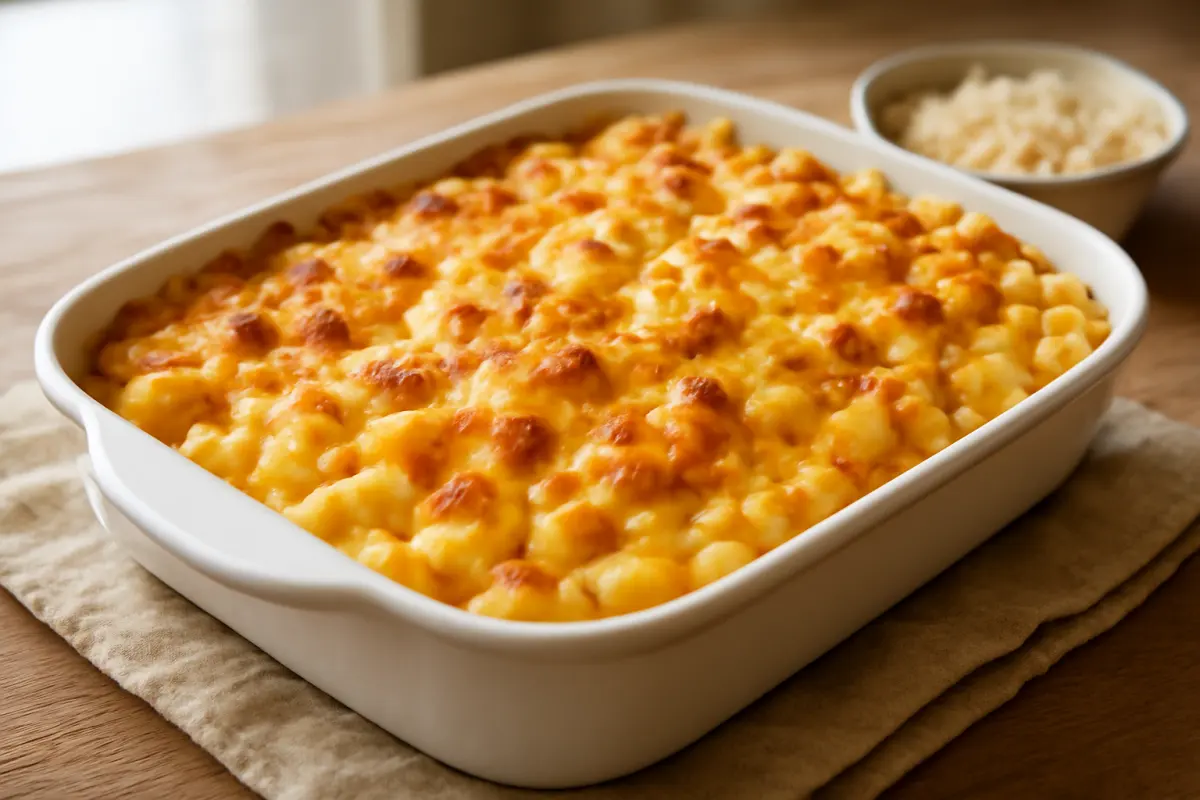
This baked macaroni and cheese has a creamy cheddar sauce, tender pasta, and a crisp, buttery breadcrumb topping. The pasta is slightly undercooked before baking so it stays pleasantly firm rather than soft.
Overview
This baked macaroni and cheese combines elbow macaroni with a smooth cheddar-based sauce and a golden breadcrumb topping. A small amount of mustard adds balance to the cheese without making the dish taste strongly of mustard.
The recipe serves 6 as a main dish or 8 as a side. Cook the pasta just short of fully tender, and take the sauce off the heat before adding the cheese; these two steps help keep the finished casserole creamy instead of dry or grainy.
Ingredients
- 12 ounces elbow macaroni
- 4 tablespoons unsalted butter, divided
- 1/3 cup plain dry breadcrumbs or panko
- 1/4 cup all-purpose flour
- 3 cups whole milk, warmed
- 1 cup half-and-half, warmed
- 1 teaspoon Dijon mustard
- 1/2 teaspoon kosher salt, plus more for the pasta water
- 1/4 teaspoon freshly ground black pepper
- 1/4 teaspoon garlic powder
- 2 cups shredded sharp cheddar cheese, about 8 ounces
- 1 cup shredded Monterey Jack cheese, about 4 ounces
- 1/2 cup finely grated Parmesan cheese, about 2 ounces
How to make it
Heat the oven and prepare the baking dish. Set an oven rack in the center position and heat the oven to 375°F. Lightly butter a 9-by-13-inch baking dish with 1 tablespoon of the butter.
Make the topping. Melt the remaining 3 tablespoons of butter in a small skillet over medium heat. Add the breadcrumbs and cook for 2 to 3 minutes, stirring often, until they are lightly golden and smell toasty. Transfer them to a bowl and set aside. They will continue browning in the oven.
Boil the macaroni. Bring a large pot of water to a boil and salt it generously. Add the macaroni and cook according to the package directions, stopping 2 minutes before the shortest suggested cooking time. The pasta should be flexible but still have a firm, chalky center when bitten. Drain well; do not rinse it.
Make the white sauce. While the pasta cooks, melt the remaining 3 tablespoons of butter in a large saucepan over medium heat. Whisk in the flour and cook for 1 minute, whisking constantly. The mixture should look smooth and foamy, not brown.
Add the dairy gradually. Slowly pour in the warm milk and half-and-half while whisking. Add the mustard, salt, pepper, and garlic powder. Continue cooking for 5 to 7 minutes, whisking frequently, until the sauce is thick enough to coat the back of a spoon. If you draw a line through the sauce with your finger, the line should remain visible for a moment.
Melt in the cheese. Remove the saucepan from the heat. Add the cheddar, Monterey Jack, and Parmesan a handful at a time, whisking after each addition until smooth before adding more. Do not boil the sauce after adding the cheese, or it may turn oily or grainy.
Combine the pasta and sauce. Add the drained macaroni to the cheese sauce and stir gently until every piece is coated. Taste a spoonful and adjust the salt if needed. The mixture should look slightly looser than the texture you want to serve because the pasta will absorb sauce in the oven.
Assemble and bake. Scrape the macaroni into the prepared baking dish and spread it into an even layer. Sprinkle the toasted breadcrumbs over the top. Bake for 20 to 25 minutes, until the edges are bubbling and the topping is a deeper golden brown.
Rest before serving. Let the macaroni and cheese rest for 10 minutes. The sauce will thicken slightly, and the portions will hold together more easily while remaining creamy underneath the crust.
Expert tips
- Shred the cheese yourself when possible. Pre-shredded cheese can contain coatings that make the sauce less smooth. Use a box grater and let refrigerated cheese sit at room temperature for about 15 minutes before adding it.
- Do not overcook the pasta. Fully tender pasta can become soft after 20 to 25 minutes in the oven. If you prefer a softer casserole, cook it only 1 minute short of al dente rather than cooking it completely.
- Avoid a grainy sauce. Keep the heat at medium while making the white sauce, remove the pan from the burner before adding cheese, and add the cheese gradually. If the sauce becomes too thick, whisk in 2 tablespoons of warm milk at a time before combining it with the pasta.
- Prevent a dry casserole. Measure the pasta accurately, drain it well, and bake only until the edges bubble. A longer bake will evaporate more sauce.
- Use a substitute cheese carefully. Gruyère can replace the Monterey Jack for a nuttier flavor. Mild cheddar can replace sharp cheddar, but the finished dish will taste less assertive. Avoid replacing all the cheese with mozzarella, which can become stretchy and bland rather than making a balanced sauce.
- If the topping browns too quickly, loosely cover the dish with foil for the remainder of the bake. Keep the foil above the breadcrumbs so it does not stick.
Serving and storage
Serve after the 10-minute rest, while the center is still creamy and the topping is crisp. It works as a main dish with a green salad or roasted vegetables, or as a side with roasted or grilled meat.
Refrigerate leftovers in a covered container within 2 hours of baking. They will keep for up to 4 days. Reheat individual portions in the microwave in short intervals, stirring between intervals when possible, or reheat a covered baking dish at 325°F until hot throughout. Add a splash of milk before reheating if the sauce has tightened in the refrigerator. The breadcrumb topping will be softer after storage; uncover the dish for the last few minutes in the oven to help it crisp again.
Frequently asked questions
Can I assemble baked macaroni and cheese ahead of time?
Yes. Assemble the pasta and sauce in the baking dish, but keep the breadcrumb topping separate. Cover and refrigerate for up to 24 hours. Let the dish sit at room temperature for 20 to 30 minutes, add the topping, and bake at 375°F. It may need 10 to 15 extra minutes because it starts cold; bake until the center is hot and the edges are bubbling.
Why did my cheese sauce turn grainy?
The sauce was likely overheated after the cheese was added, or the cheese was added too quickly. Remove the pan from the heat before adding cheese and whisk it in gradually. For the smoothest result, shred cheese from a block rather than using pre-shredded cheese.
Can I use a different pasta shape?
Yes. Shells, cavatappi, fusilli, or small penne work well because they hold the sauce. Use 12 ounces and cook the pasta about 2 minutes short of the package directions before baking.
How do I keep baked macaroni and cheese creamy?
Use the full amount of sauce, slightly undercook the pasta, and avoid overbaking. The casserole is ready when the edges bubble and the topping is golden, usually after 20 to 25 minutes. Rest it for only 10 minutes before serving.