Desserts
Baked Ricotta Cheesecake Recipe
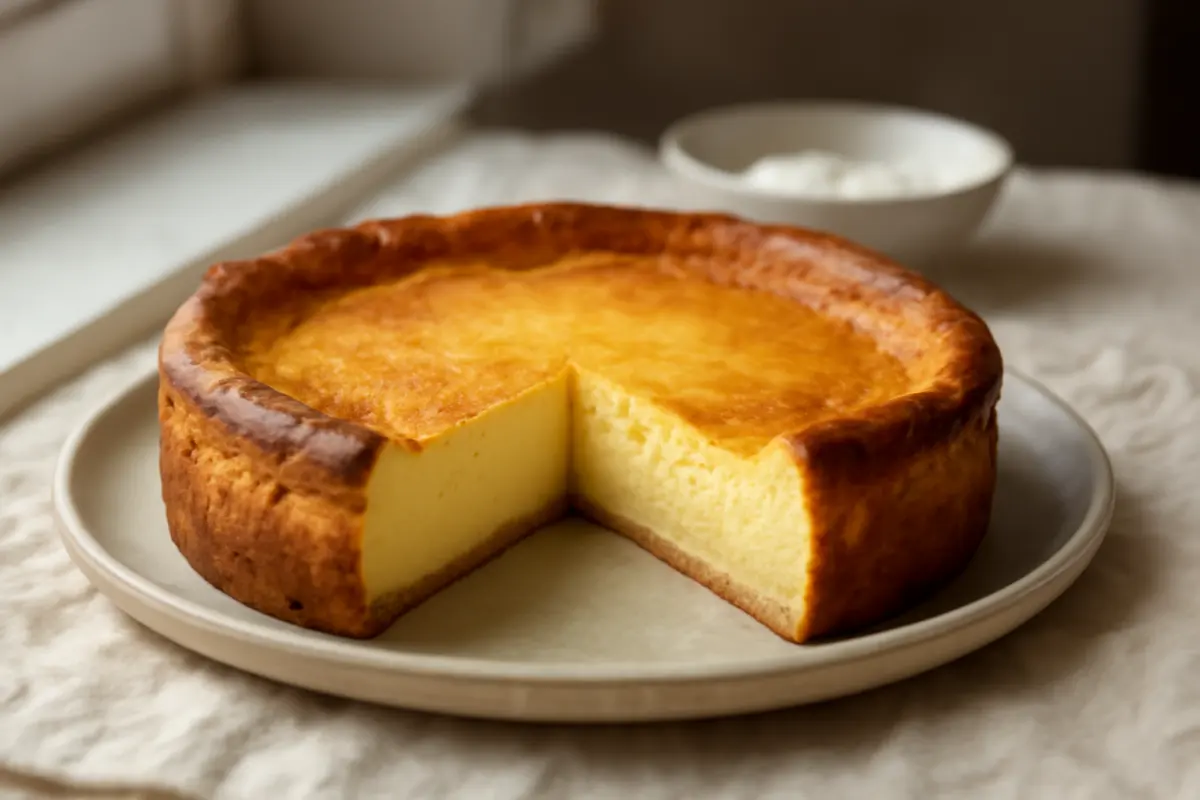
This baked ricotta cheesecake has a crisp biscuit crust, a creamy ricotta filling, and a gentle lemon-vanilla flavor. Draining the ricotta and cooling the cheesecake slowly help create a smooth, sliceable center without overbaking.
Overview
This baked ricotta cheesecake combines creamy ricotta with cream cheese for a lighter, softly textured filling that still slices neatly. Lemon zest and vanilla add brightness, while a simple biscuit crust gives each slice a buttery, lightly crisp base.
For the smoothest result, use full-fat ricotta and drain it before mixing. The cheesecake is done when the edges look set but the center still has a small, controlled wobble. It will firm as it cools and chills.
Ingredients
- 200 g (about 7 oz) plain digestive biscuits or graham crackers
- 85 g (6 tablespoons) unsalted butter, melted, plus extra for the pan
- 500 g (about 17 1/2 oz) whole-milk ricotta
- 450 g (16 oz) full-fat cream cheese, softened
- 180 g (scant 1 cup) granulated sugar
- 3 large eggs, room temperature
- 2 large egg yolks, room temperature
- 2 tablespoons plain all-purpose flour
- Finely grated zest of 1 large lemon
- 2 teaspoons vanilla extract
- 1/4 teaspoon fine salt
- 120 ml (1/2 cup) sour cream, room temperature
- Boiling water, for the water bath
How to make it
Drain the ricotta. Place the ricotta in a fine-mesh sieve lined with cheesecloth or a clean, thin kitchen towel. Set it over a bowl and refrigerate for at least 1 hour, or up to overnight. Press it gently with the back of a spoon before using. This removes excess liquid without drying the ricotta out.
Prepare the pan and oven. Grease the base and sides of a 23 cm (9-inch) springform pan. Wrap the outside of the pan tightly with two layers of wide aluminum foil, bringing the foil up the sides so water cannot seep in. Heat the oven to 160°C (325°F).
Make the crust. Crush the biscuits into fine crumbs in a food processor, or place them in a sealed bag and roll over them with a rolling pin. Stir the crumbs with the melted butter until evenly moistened. Tip the mixture into the pan and press it firmly over the base, using the bottom of a glass to compact it. Bake for 10 minutes, then set the crust aside to cool slightly.
Smooth the cheeses. Beat the drained ricotta and softened cream cheese on low to medium speed until smooth, about 1 to 2 minutes. Scrape the bowl once or twice. Avoid whipping the mixture; too much air can make the cheesecake puff and then sink or crack as it cools.
Add the flavorings and dry ingredients. Beat in the sugar, flour, lemon zest, vanilla, and salt just until combined. The flour helps the filling set and makes it a little more forgiving if the ricotta retains some moisture.
Add the eggs gradually. Mix in the eggs one at a time, followed by the egg yolks. Stop mixing as soon as each addition disappears. Fold or mix in the sour cream on low speed until no streaks remain. Scrape the bottom of the bowl to make sure there are no pockets of ricotta or cream cheese.
Fill the pan. Pour the filling over the crust and smooth the top. Tap the pan lightly on a folded kitchen towel two or three times to release large air bubbles. Do not knock it hard, or the crust may crack.
Bake in a water bath. Set the foil-wrapped springform pan inside a larger roasting pan. Put both pans in the oven, then carefully pour boiling water into the roasting pan until it reaches about halfway up the sides of the springform pan. Bake for 65 to 80 minutes.
The cheesecake is ready when the edges are visibly set and slightly puffed, while the center has a gentle wobble when the pan is nudged. It should not look liquid or ripple broadly. If using an instant-read thermometer, aim for about 65°C (150°F) in the center; the temperature will rise slightly as it rests.
Cool slowly. Turn off the oven, prop the door open a few centimeters, and leave the cheesecake inside for 30 minutes. Remove it from the water bath, take off the foil, and cool on a rack for another 1 to 2 hours. Run a thin knife around the edge while it is still slightly warm to help prevent the cooling cake from pulling and cracking.
Chill before slicing. Cover the cooled cheesecake and refrigerate it for at least 6 hours, preferably overnight. To serve, release the springform sides and cut with a sharp knife wiped clean between slices. For especially neat cuts, dip the knife in hot water and dry it before each slice.
Expert tips
- Use full-fat dairy. Reduced-fat ricotta or cream cheese contains more water and can produce a softer filling. If reduced-fat ricotta is your only option, drain it overnight.
- Bring ingredients to room temperature. Cold cream cheese can leave small lumps, and beating longer to remove them incorporates extra air.
- Do not overbake. A fully firm center in the oven usually means the cheesecake will be dry or slightly crumbly once chilled. Look for the small center wobble instead.
- Prevent a soggy crust. Use two intact foil layers, or place the springform pan inside a slightly larger cake pan before putting it in the water bath. The second pan provides extra protection from leaks.
- If the top browns too quickly, loosely cover it with foil during the final 20 to 30 minutes. Do not press the foil onto the filling.
- If you cannot use a water bath, place a roasting pan filled with boiling water on the oven rack below the cheesecake. The bake may be a little less even, so watch the center closely near the end.
- For a gluten-free crust, use certified gluten-free biscuits or graham-style crackers and replace the all-purpose flour with a gluten-free 1-to-1 flour blend.
Serving and storage
Serve the cheesecake chilled or let it stand at room temperature for 20 to 30 minutes for a softer texture. It is good plain, with fresh berries, or with a spoonful of lightly sweetened whipped cream. For a frozen dessert pairing, a small scoop of homemade strawberry ice cream works well with the lemon and ricotta.
Refrigerate leftovers in an airtight container or tightly covered with plastic wrap for up to 4 days. Keep the cheesecake chilled except when serving. Individual slices can be frozen, well wrapped, for up to 1 month; thaw them overnight in the refrigerator. The crust may soften slightly after freezing, but the filling will remain sliceable.
Frequently asked questions
Why is my baked ricotta cheesecake grainy?
Ricotta can be naturally coarse, especially if it has not been drained or blended smoothly. Drain it well, use room-temperature dairy, and beat the ricotta with the cream cheese until smooth before adding the eggs. A slightly textured finish is normal with some ricotta, but large curds usually indicate that the mixture needed more smoothing before the eggs were added.
How do I know when ricotta cheesecake is done?
The edges should look set and may be slightly puffed, while the center should wobble gently as one piece when the pan is nudged. It should not slosh or ripple like liquid. The cheesecake will continue setting during its slow cooling and several hours in the refrigerator.
Can I make this cheesecake without a water bath?
Yes. Bake it on the center rack and put a separate roasting pan filled with boiling water on the rack below. This will add moisture to the oven, although the cheesecake may be more likely to brown, puff, or crack than one baked directly in a water bath.
Why did my cheesecake crack?
Common causes include overbaking, too much air beaten into the filling, or a sudden temperature change. Mix only until combined, remove the cheesecake when the center still has a small wobble, and cool it gradually in the switched-off oven before refrigerating.
Can I use cottage cheese instead of ricotta?
Yes, but the texture will be different. Use full-fat cottage cheese, drain it well, and blend it until smooth before measuring 500 g. Cottage cheese can contain more liquid, so overnight draining is helpful.