Recipes
Beef Nihari Recipe
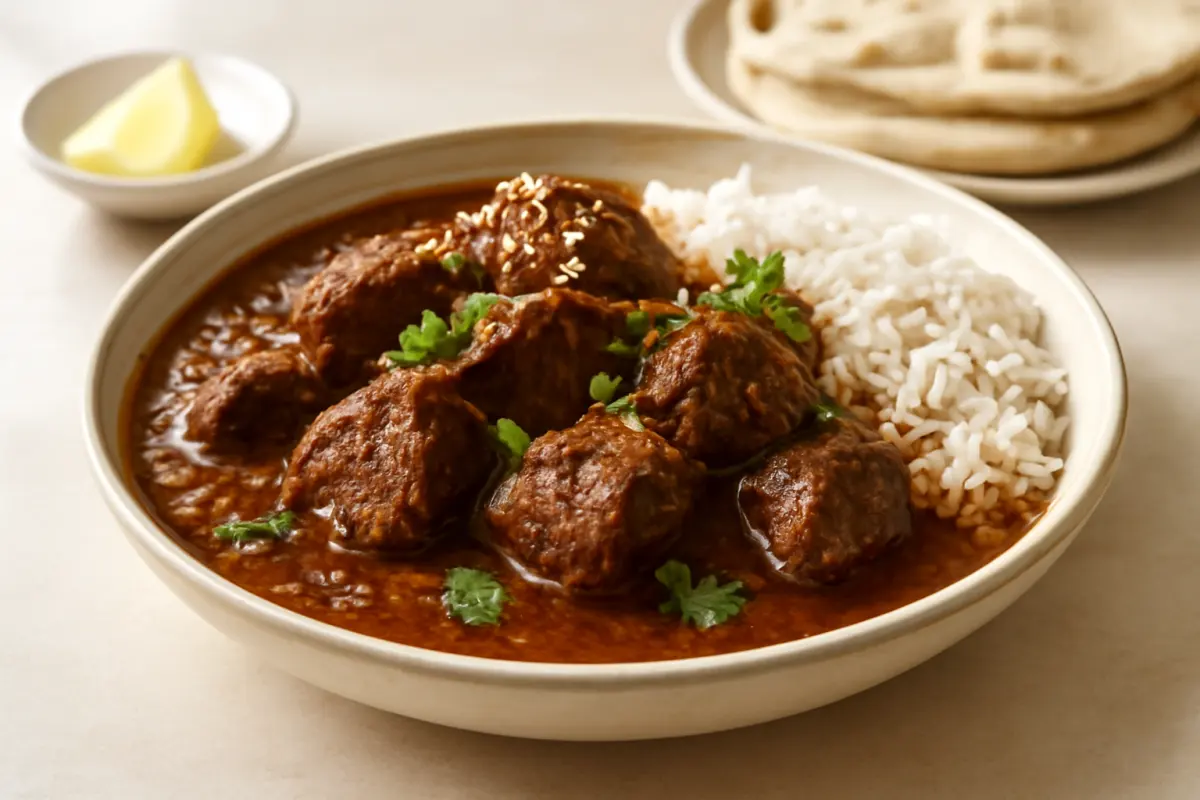
This beef nihari recipe uses bone-in beef shank, toasted whole spices, ginger, garlic, and a small flour slurry to create tender beef in a rich, glossy broth. Cook it slowly for the best texture, then finish with fresh ginger, cilantro, green chile, and lemon.
Overview
Beef nihari is a slow-cooked stew made with beef, aromatic spices, and a thick, silky broth. Bone-in beef shank works especially well because the meat becomes tender while the broth gains body from the connective tissue around the bone.
This version uses a homemade nihari spice blend and gives you both stovetop and pressure cooker timings. The finished stew should be richly savory, gently spicy, and thick enough to coat a spoon without becoming pasty.
Ingredients
- 1.5 kg beef shank or beef shin, cut into 5–7 cm pieces, preferably with some bone
- 4 tablespoons neutral oil or ghee
- 1 large onion, thinly sliced, about 200 g
- 2 tablespoons ginger-garlic paste
- 2 teaspoons fine salt, plus more to taste
- 1 teaspoon Kashmiri chili powder or mild paprika
- 1/2 teaspoon turmeric
- 1.5 liters hot water, plus extra if needed
- 3 tablespoons plain flour
- 120 ml cold water, for the flour slurry
Nihari spice blend
- 2 teaspoons coriander seeds
- 1 teaspoon fennel seeds
- 1 teaspoon cumin seeds
- 1/2 teaspoon black peppercorns
- 4 green cardamom pods
- 4 cloves
- 1 small cinnamon stick, about 5 cm
- 1 bay leaf
- 1/2 teaspoon ground nutmeg
- 1/4 teaspoon ground mace, optional
To serve
- 3 tablespoons finely julienned fresh ginger
- 1/2 cup chopped fresh cilantro
- 2 green chilies, thinly sliced, optional
- 1 lemon, cut into wedges
- Warm naan, roti, or puri
How to make it
Prepare the spice blend. Place the coriander seeds, fennel seeds, cumin seeds, peppercorns, cardamom, cloves, cinnamon, and bay leaf in a dry skillet. Toast over medium-low heat for 2–3 minutes, shaking the pan often, until fragrant. Do not let the spices darken significantly. Cool for a few minutes, then grind them to a coarse powder. Stir in the nutmeg and mace.
Brown the beef. Pat the beef dry with paper towels. Heat the oil or ghee in a large heavy pot over medium-high heat. Brown the beef in two or three batches, turning the pieces so several sides develop a deep brown surface. Transfer the beef to a plate. Avoid crowding the pot; crowded beef will steam instead of brown.
Cook the onion. Reduce the heat to medium and add the sliced onion to the same pot. Cook for 8–10 minutes, stirring occasionally, until soft and golden brown. If the onion starts catching, add 1–2 tablespoons of water and scrape the browned bits from the base.
Build the masala. Add the ginger-garlic paste and cook for 1 minute, stirring constantly. Add the ground spice blend, chili powder, turmeric, and salt. Stir for 30 seconds, then add about 120 ml of the hot water. Scrape the base of the pot until the spices and browned bits form a smooth, thick paste.
Add the beef and water. Return the beef and any juices to the pot. Pour in the remaining hot water and bring the liquid to a gentle boil. The beef should be mostly submerged. Cover the pot, reduce the heat to very low, and simmer for 3–3 1/2 hours.
Check for doneness. Stir every 30–40 minutes and add a little hot water if the liquid level drops too far. The beef is ready when a fork slides into the thickest piece with very little resistance and the meat begins to separate around the bone. If it is still chewy, cover the pot and continue cooking in 20–30-minute intervals.
Thicken the broth. Whisk the flour with the cold water in a bowl until completely smooth. Remove the beef from the pot temporarily if it makes whisking difficult. Stir the slurry into the simmering broth in a slow stream, whisking continuously to prevent lumps. Simmer uncovered for 8–12 minutes. The broth should lightly coat a spoon; it will thicken a little more as it stands.
Finish and adjust. Return the beef to the pot and simmer for 5 minutes. Taste and adjust the salt. If the nihari is too thick, add hot water a few tablespoons at a time. If it is too thin, simmer uncovered for another 5–10 minutes. Skim excess oil from the surface if you prefer a lighter finish, or stir some of it back in for a richer texture.
Use the pressure cooker instead. Complete steps 1–4 in a pressure cooker or electric pressure cooker. Add the beef and 1 liter of hot water, then seal and cook at high pressure for 45 minutes. Let the pressure release naturally for 15 minutes before opening. Check the beef and cook under pressure for another 10 minutes if it is not fork-tender. Make the flour slurry and finish uncovered using steps 7–8.
Serve. Ladle the nihari into warm bowls. Scatter over the julienned ginger, cilantro, and green chile, then serve with lemon wedges and warm naan, roti, or puri. Add lemon gradually so its acidity brightens the broth without masking the spice.
Expert tips
- Beef shank, shin, or chuck can be used. Shank with bone gives the broth the fullest body, while boneless chuck is a practical substitute with a slightly less gelatinous sauce.
- Keep the simmer gentle. A hard boil can make the outside of the beef tighten before the connective tissue softens.
- Grind the toasted spices fairly finely, but do not worry if a little texture remains. Whole spices left in the pot can make the finished stew unpleasant to bite into.
- Add the flour slurry only after the beef is tender. Thickening earlier can make it harder to judge the cooking liquid and may cause the bottom to catch.
- If using regular paprika instead of Kashmiri chili powder, add a pinch of cayenne if you want more heat rather than increasing the paprika substantially.
- For deeper flavor, cool the finished nihari, refrigerate it overnight, and reheat it gently the next day. Stir in a splash of water if the broth sets very firmly when chilled.
Serving and storage
Serve nihari hot with naan, roti, or puri and fresh garnishes added at the table. Refrigerate leftovers in a covered container within 2 hours of cooking and use them within 3–4 days. Reheat gently in a saucepan until steaming hot throughout, adding a little water to loosen the broth.
For longer storage, freeze cooled nihari in airtight containers for up to 3 months. Thaw it in the refrigerator, then reheat gently and adjust the consistency before serving.
Frequently asked questions
What cut of beef is best for nihari?
Bone-in beef shank or beef shin is the traditional-style choice for a rich, full-bodied broth and tender meat. Beef chuck also works well if shank is unavailable; cut it into large pieces so it does not break apart too early.
Why is my beef still tough after several hours?
It usually needs more time rather than higher heat. Keep the pot covered at a very gentle simmer and continue cooking in 20–30-minute intervals until a fork slides into the meat easily. If the liquid is low, add hot water.
Can I make nihari without wheat flour?
Yes. Leave out the flour slurry and reduce the broth uncovered until it reaches the consistency you want. The sauce may be less silky, but the dish will still be flavorful. Do not substitute cornflour or cornstarch in the same quantity; if using it, mix 1 tablespoon with 2 tablespoons cold water and add it near the end.
How spicy is this beef nihari recipe?
It has mild-to-moderate heat from the chili powder, with optional green chilies added at serving. Use mild paprika for a gentler version, or add a pinch of cayenne for more heat.
Can I make beef nihari ahead of time?
Yes. The flavor and texture hold up well when made a day ahead. Chill it promptly, refrigerate it in a covered container, and reheat gently the next day with a splash of water if the broth has thickened.