Recipes
Cherry Clafoutis Recipe
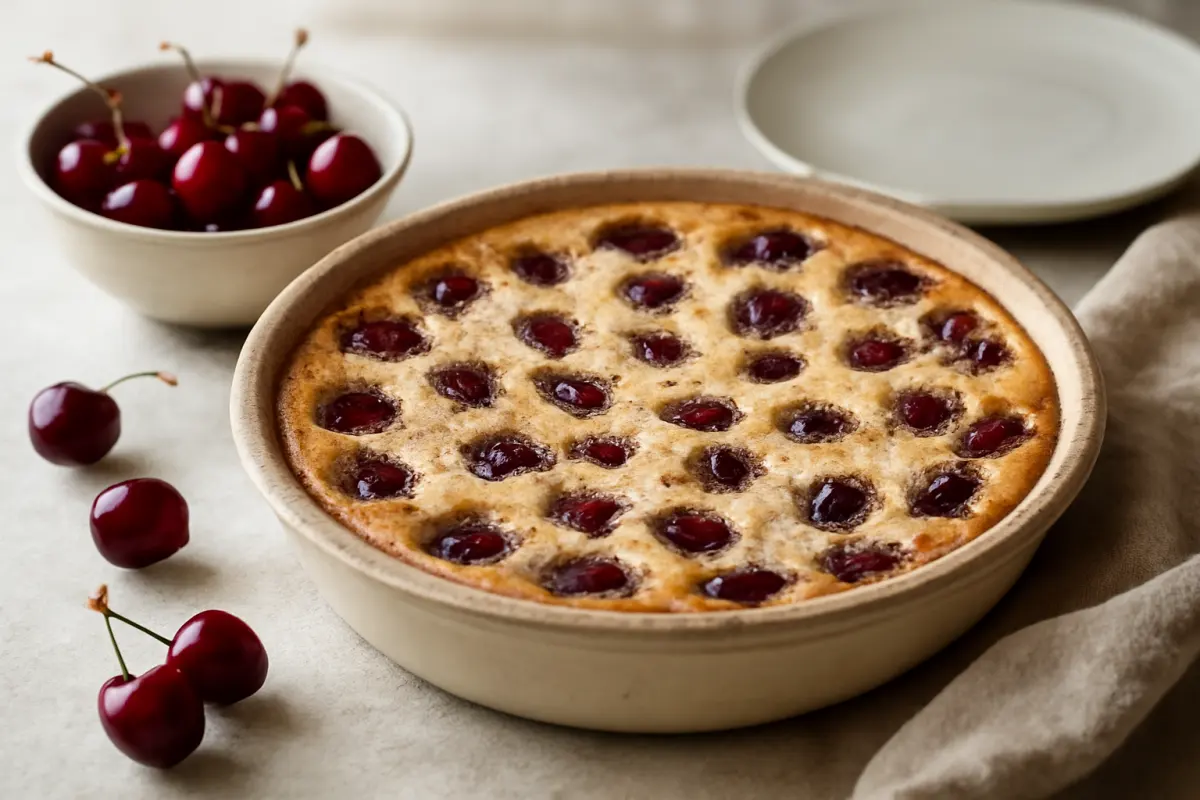
This cherry clafoutis has jammy baked cherries surrounded by a tender, lightly sweet custard with golden edges. The batter takes minutes to whisk together, making it an easy dessert for fresh or frozen cherries.
Overview
Cherry clafoutis is a simple French dessert made by baking cherries in a lightly sweet, egg-rich batter. The finished texture sits between a tender custard and a soft pancake: the edges puff and brown, while the center stays delicate and slightly wobbly when hot.
This version uses pitted cherries for easier serving and eating. It is best served warm or at room temperature, either plain or with a spoonful of softly whipped cream. Allow time for the batter to rest while the oven heats; this helps the flour hydrate and gives the baked custard a smoother texture.
Ingredients
- 450 g (1 lb) fresh sweet cherries, pitted; about 3 cups once pitted
- 1 tablespoon unsalted butter, for greasing the baking dish
- 2 tablespoons granulated sugar, for the dish and cherries
- 3 large eggs, at room temperature
- 90 g (½ cup plus 1 tablespoon) granulated sugar
- 240 ml (1 cup) whole milk
- 120 ml (½ cup) heavy cream
- 1 teaspoon pure vanilla extract
- ½ teaspoon finely grated lemon zest
- 90 g (¾ cup) plain all-purpose flour
- ¼ teaspoon fine salt
- 1 tablespoon confectioners’ sugar, for serving, optional
How to make it
Prepare the cherries and dish. Rinse the cherries and dry them thoroughly. Remove the stems and pits, then set the cherries aside. Heat the oven to 180°C (350°F). Butter a 23 cm (9-inch) round baking dish or a similar 1.5-litre baking dish. Sprinkle the base and sides with 1 tablespoon of the granulated sugar.
Arrange the fruit. Spread the pitted cherries in an even layer in the prepared dish. If the cherries are especially tart, sprinkle them with the remaining 1 tablespoon of sugar. Let them stand while you make the batter. If they release a lot of juice, briefly blot the surface with a paper towel; excess liquid can make the custard take longer to set.
Whisk the wet ingredients. In a large bowl, whisk the eggs and 90 g (½ cup plus 1 tablespoon) granulated sugar for about 1 minute, until the mixture is smooth and slightly lighter. Whisk in the milk, cream, vanilla, and lemon zest.
Add the flour and salt. Add the flour and salt to the bowl. Whisk just until no dry streaks remain. The batter should be thin and pourable, similar to crêpe batter. Do not keep whisking once it is smooth, since excessive mixing can make the clafoutis less tender.
Rest the batter. Set the batter aside for 10 to 15 minutes while the oven finishes heating. Give it one gentle stir before pouring. This short rest is optional, but it helps prevent small floury lumps.
Bake. Pour the batter slowly over the cherries. Transfer the dish to the oven and bake for 35 to 45 minutes, rotating it once after 25 minutes if your oven browns unevenly. The edges should be puffed and golden brown, and the center should look set around the edges but still have a gentle wobble when the dish is nudged. A skewer inserted into the custard should come out mostly clean, with a few moist crumbs rather than liquid batter.
Cool briefly and serve. Let the clafoutis cool in the dish for 15 to 20 minutes. It will sink as it cools; this is normal. Dust with confectioners’ sugar just before serving, if desired. Cut into wedges and serve warm or at room temperature.
Expert tips
- Use ripe, firm cherries. Very soft cherries release more juice and can leave wet pockets in the custard. Sweet cherries such as Bing or Rainier work well; sour cherries are also suitable but may need the extra tablespoon of sugar.
- Frozen cherries work with one adjustment. Do not thaw them first. Use 450 g frozen pitted cherries straight from the freezer, add them to the dish, and expect the clafoutis to need about 5 to 10 extra minutes in the oven. The fruit may release more juice, so the center can take longer to set.
- Avoid an underbaked center. If the edges are dark but the middle is still visibly liquid, loosely cover the dish with foil and continue baking in 5-minute increments. The center should wobble like softly set jelly, not ripple like raw batter.
- Avoid overbaking. A completely firm center while the clafoutis is still in the oven usually means it will become rubbery after cooling. Remove it when the middle has only a slight wobble; residual heat will finish the setting.
- For a richer finish, replace the cream. You can use 360 ml (1½ cups) whole milk instead of the milk-and-cream combination for a lighter custard. For a richer result, use 240 ml (1 cup) heavy cream and 120 ml (½ cup) whole milk.
- Pitting is optional but serving is easier without the stones. Some traditional versions leave the pits in for their almond-like aroma, but pitted cherries make the dessert safer and simpler to eat. If you leave pits in, warn everyone before serving and expect less fruit in each spoonful.
- A metal or ceramic dish changes the timing. A shallow metal pan may bake a few minutes faster, while a deep ceramic dish may need longer. Use the visual cues—golden edges and a softly wobbly center—rather than relying only on the clock.
Serving and storage
Serve the clafoutis warm or at room temperature, dusted with confectioners’ sugar. A spoonful of lightly whipped cream or vanilla ice cream makes it a richer dessert. For another fruit-forward dessert idea, see this peach ice cream recipe; a baked fruit dessert with a crisp topping is also covered in this peach oatmeal crisp recipe.
Cover leftover clafoutis and refrigerate it within 2 hours of baking. It will keep for up to 3 days in the refrigerator. Rewarm individual portions in a 160°C (325°F) oven for 10 to 15 minutes, or eat them chilled. The custard will become firmer after refrigeration, so let portions stand at room temperature for about 15 minutes before serving if you prefer a softer texture.
Frequently asked questions
Can I make cherry clafoutis with frozen cherries?
Yes. Use 450 g of frozen pitted cherries without thawing them first. Add roughly 5 to 10 minutes to the baking time, and rely on the visual cue that the center should be softly wobbly rather than liquid. Thawed cherries can make the batter watery unless they are drained and patted dry.
Why is my clafoutis watery in the middle?
It may need more baking time, or the cherries may have released excess juice. Continue baking in 5-minute increments, covering the top loosely with foil if it is already deeply browned. Next time, dry fresh cherries thoroughly and avoid adding thawed frozen fruit without draining it.
Does cherry clafoutis need to be refrigerated?
Yes. Because it contains eggs and dairy, refrigerate leftovers within 2 hours. Keep them covered for up to 3 days and rewarm gently, or serve chilled.
Can I use plant-based milk in clafoutis?
Unsweetened, unflavored plant-based milk can replace the whole milk in equal quantity. The custard may be slightly less rich. For the closest texture, use an unsweetened barista-style oat milk or add the specified heavy cream rather than replacing all the dairy.
How do I know when cherry clafoutis is done?
The edges should be puffed and golden, while the center should look set but retain a gentle wobble when the dish is nudged. A skewer should come out mostly clean with a few moist crumbs, not coated in runny batter.