Recipes
Roasted Garlic Hummus Recipe
This roasted garlic hummus is creamy, lemony, and gently sweet from a whole bulb of slow-roasted garlic. Blend it smooth for dipping with pita, vegetables, or warm flatbread.
Overview
This roasted garlic hummus recipe combines chickpeas, tahini, lemon juice, and a whole bulb of roasted garlic for a dip with mellow, lightly sweet garlic flavor. Roasting softens the garlic and removes the sharp raw bite, so the finished hummus tastes rounded rather than harsh.
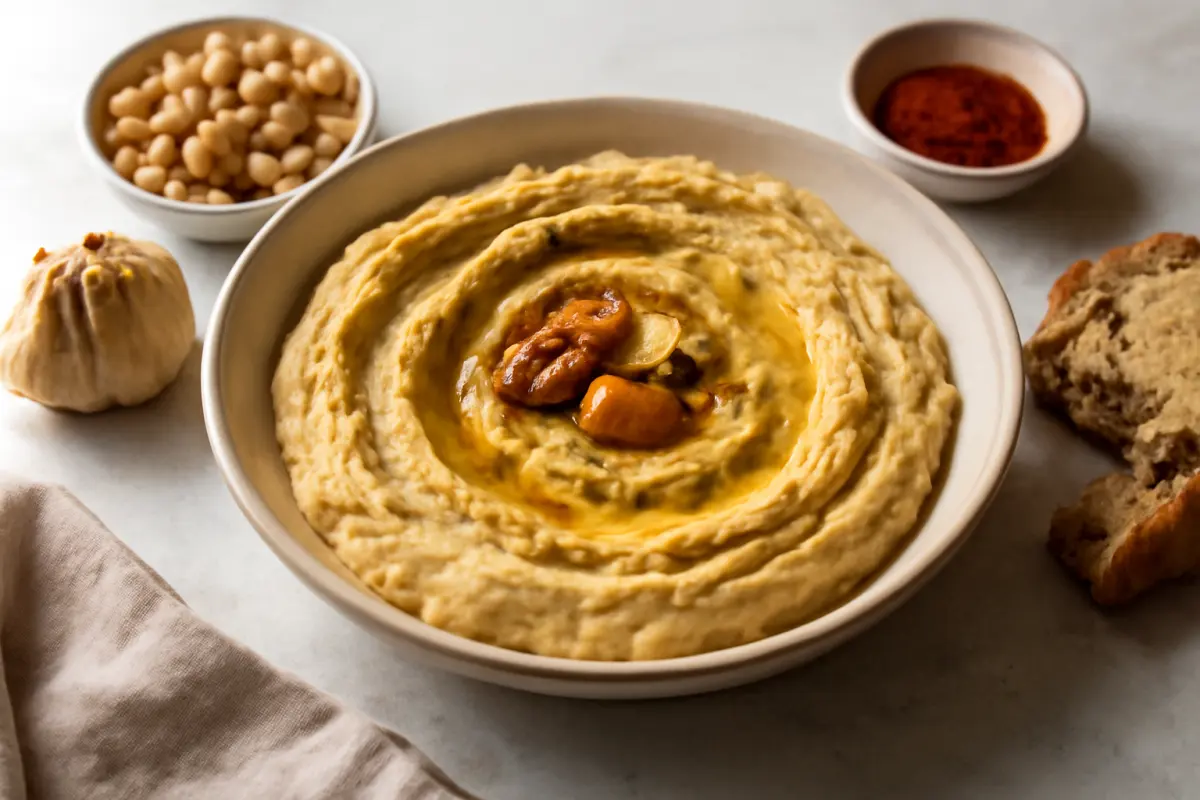
For the smoothest texture, blend the chickpeas with tahini, lemon juice, and ice-cold water before adding the roasted garlic and olive oil. The hummus is ready when it looks creamy and holds soft ridges from the blade.
Ingredients
- 1 large head of garlic, about 3 to 3 1/2 ounces
- 1 teaspoon extra-virgin olive oil, for roasting the garlic
- 1 can (15 ounces) chickpeas, drained and rinsed, or 1 1/2 cups cooked chickpeas
- 1/3 cup tahini, stirred well before measuring
- 3 tablespoons fresh lemon juice
- 1/2 teaspoon fine salt, plus more to taste
- 1/4 teaspoon ground cumin
- 1/4 cup ice-cold water, plus 1 to 2 tablespoons more if needed
- 2 tablespoons extra-virgin olive oil, for blending or serving
- 1 tablespoon chopped fresh parsley, optional, for serving
- 1/4 teaspoon smoked paprika, optional, for serving
How to make it
Roast the garlic. Heat the oven to 400°F (200°C). Slice about 1/4 inch from the top of the garlic head to expose the cloves, leaving the bulb intact. Place it on a small piece of foil, drizzle with 1 teaspoon olive oil, and wrap it loosely. Roast for 35 to 45 minutes, until the cloves are completely soft and lightly golden. Let the garlic cool until comfortable to handle.
Prepare the garlic. Unwrap the bulb and squeeze the softened cloves from the papery skin into a small bowl. Discard the skin. If the cloves are still firm in the center, return the wrapped bulb to the oven for 5 to 10 minutes before continuing.
Start the hummus base. Add the chickpeas, tahini, lemon juice, salt, cumin, and ice-cold water to a food processor. Blend for 1 minute, stop to scrape down the sides, then blend for another 1 to 2 minutes. The mixture should begin to look pale and creamy rather than grainy.
Add the roasted garlic. Add the roasted garlic cloves and blend for 30 seconds. Taste the hummus. Add the olive oil and blend for another 30 to 60 seconds, or until the dip is smooth and thick enough to mound softly on a spoon.
Adjust the texture and seasoning. If the hummus is too thick or feels slightly gritty, blend in cold water 1 tablespoon at a time. Add more lemon juice for brightness, salt for a fuller savory flavor, or a little more tahini for a richer sesame taste. Blend after each addition so you can judge the final texture accurately.
Serve. Spoon the hummus into a shallow bowl. Make a shallow swirl with the back of a spoon, drizzle with the remaining olive oil if desired, and finish with parsley or smoked paprika. Serve immediately with pita, flatbread, crackers, or sliced vegetables.
Expert tips
- Use fully softened garlic. The cloves should squeeze out like a paste. Partly roasted garlic can leave firm pieces in the hummus and a less mellow flavor.
- Blend longer than seems necessary. A total of 3 to 4 minutes of processing, with pauses to scrape the bowl, gives the chickpeas time to break down.
- Keep the water cold. Ice-cold water loosens the hummus without making it oily or warm during blending.
- Make it without tahini if needed. Substitute 3 tablespoons of smooth unsweetened sunflower-seed butter. The flavor will be different, but the consistency will remain creamy.
- Use cooked chickpeas for a softer texture. If cooking from dry, cook them until very tender, with the skins beginning to split. Canned chickpeas are a convenient option; rinse them well to remove excess canning liquid.
- If the hummus tastes flat, adjust in small amounts. Usually a pinch more salt or 1 teaspoon lemon juice is more useful than adding a large amount of olive oil.
Serving and storage
Serve roasted garlic hummus at room temperature or slightly chilled. It works as a dip, sandwich spread, or part of a platter with warm pita, cucumbers, carrots, and roasted vegetables. For more hummus variations, see these hummus recipes, or use the method in this canned chickpea hummus recipe as a simpler base.
Transfer leftovers to an airtight container and refrigerate within 2 hours of making them. The hummus keeps for up to 4 days in the refrigerator. The surface may firm up as it chills; stir in 1 to 2 teaspoons of cold water before serving to restore a softer texture. Do not leave it at room temperature for extended periods, especially when serving outdoors.
Frequently asked questions
Can I use jarred roasted garlic instead of roasting a whole bulb?
Yes. Use about 2 tablespoons of well-drained jarred roasted garlic, then taste before adding more because the flavor and salt level vary by brand.
Why is my roasted garlic hummus grainy?
The chickpeas may need more blending, or the hummus may need a little more cold water. Scrape down the processor bowl and blend for another 1 to 2 minutes, adding water 1 tablespoon at a time.
Can I make this hummus without a food processor?
A high-powered blender can work, but you may need to stop and scrape the sides more often. Add the water gradually and use the tamper if your blender has one. A fork or potato masher will make a rustic, noticeably chunky hummus.
How much roasted garlic should I use?
One large roasted garlic bulb gives this recipe a clear but mellow garlic flavor. For a milder dip, start with half the bulb, blend, and add more to taste.
Can roasted garlic hummus be frozen?
Yes. Freeze it in an airtight container for up to 3 months, leaving a little space for expansion. Thaw it in the refrigerator, then stir vigorously and add a splash of cold water or olive oil if the texture seems stiff.