Recipes
Chicken Korma Recipe
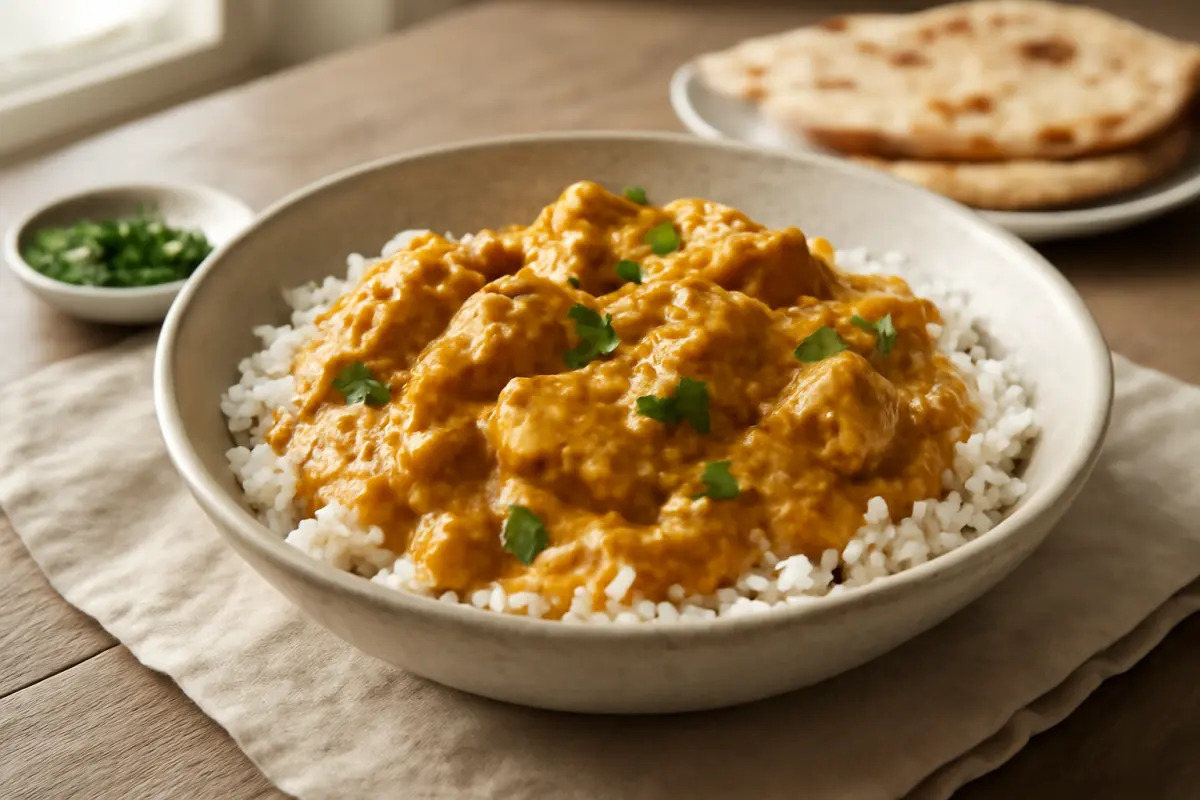
This chicken korma uses tender chicken thighs, yogurt, cashews, and fragrant whole spices to make a mild, creamy curry with a rich sauce. The method explains how to prevent split yogurt, keep the chicken tender, and adjust the consistency to suit rice or naan.
Overview
This chicken korma is a gently spiced curry with a creamy, nutty sauce rather than a hot, tomato-heavy gravy. Boneless chicken thighs stay tender as they simmer with yogurt, cashews, ginger, garlic, cardamom, cinnamon, and a little cream.
The key is to cook the yogurt slowly. Stir it in over low heat, then add it gradually to the onion and spice base so it blends into the sauce instead of curdling. Serve the finished korma with basmati rice, naan, or roti.
Ingredients
- 700 g boneless, skinless chicken thighs, cut into 4 cm pieces
- 180 g plain full-fat yogurt, whisked until smooth
- 2 tablespoons lemon juice
- 1 teaspoon fine salt, divided
- 1/2 teaspoon ground turmeric
- 2 tablespoons neutral oil or ghee
- 1 medium yellow onion, finely sliced, about 150 g
- 2 tablespoons raw cashews
- 4 garlic cloves, finely grated or minced
- 20 g fresh ginger, finely grated
- 1 green cardamom pod, lightly crushed
- 1 small cinnamon stick, about 5 cm
- 3 cloves
- 1 bay leaf
- 1 teaspoon ground coriander
- 1/2 teaspoon ground cumin
- 1/2 teaspoon mild chili powder or paprika
- 250 ml water or unsalted chicken stock, plus more if needed
- 80 ml double cream or heavy cream
- 1/2 teaspoon garam masala
- 1 tablespoon chopped fresh cilantro, for serving
- 1 tablespoon toasted sliced almonds, optional, for serving
How to make it
Marinate the chicken. Put the chicken in a bowl with 120 g of the yogurt, the lemon juice, 1/2 teaspoon of the salt, and the turmeric. Stir until every piece is coated. Cover and refrigerate for 30 minutes, or for up to 8 hours. Let it sit at room temperature for about 15 minutes before cooking.
Make the cashew paste. Cover the cashews with 3 tablespoons of just-boiled water and leave them for 10 minutes. Drain, then blend or pound them with 2 tablespoons of fresh water until as smooth as possible. A few tiny pieces are fine, but a smooth paste gives the sauce its most even texture.
Soften the onion. Heat the oil or ghee in a wide, heavy-based saucepan over medium heat. Add the sliced onion and cook for 8–10 minutes, stirring often, until soft and pale golden. Do not let it become dark brown; deeply browned onion will make the korma taste sharper and darker.
Bloom the whole spices. Add the cardamom, cinnamon, cloves, and bay leaf. Cook for 30 seconds, until they smell fragrant. Add the ginger and garlic and cook for another 1 minute, stirring constantly so they do not scorch.
Cook the chicken. Add the marinated chicken and raise the heat to medium-high. Cook for 4–5 minutes, turning the pieces, until the outside loses its raw pink color. The chicken does not need to be cooked through at this stage.
Add the ground spices and yogurt. Stir in the coriander, cumin, chili powder or paprika, and the remaining 1/2 teaspoon salt. Reduce the heat to low. Add the remaining 60 g yogurt one tablespoon at a time, stirring well after each addition. Keep stirring for about 2 minutes, until the yogurt is incorporated and the mixture looks smooth and glossy.
Build the sauce. Stir in the cashew paste and gradually pour in the water or stock while scraping the bottom of the pan. Bring the curry just to a gentle simmer. You should see a few small bubbles, not a rapid boil.
Simmer until tender. Cover loosely and cook for 18–22 minutes over low heat, stirring every few minutes. The chicken is ready when a piece is tender enough to cut easily with a spoon or fork and the sauce coats the chicken without looking watery. If the pan dries before the chicken is tender, add water 2 tablespoons at a time.
Finish the korma. Stir in the cream and garam masala. Simmer uncovered for 2–3 minutes, until the sauce is silky and thick enough to cling to the chicken. Taste and add a little more salt if needed. Remove the cinnamon stick, bay leaf, and any visible cloves before serving.
Serve. Spoon the korma into a warm serving dish and scatter over the cilantro and toasted almonds, if using. Serve immediately with basmati rice, naan, or roti.
Expert tips
- Prevent split yogurt: Use full-fat yogurt, whisk it smooth, and add it over low heat in small amounts. Avoid adding cold yogurt to a fiercely hot pan.
- For a smoother sauce: Blend the soaked cashews with 1–2 tablespoons extra water until completely smooth. You can also blend the cooked onion mixture before returning it to the pan, but remove the whole spices first.
- For a thicker korma: Simmer uncovered for a few extra minutes after adding the cream. Do not rely on high heat, which can make the sauce oily and toughen the chicken.
- For more heat: Add 1 finely chopped green chili with the ginger and garlic, or increase the chili powder by 1/4 teaspoon.
- For a dairy-free version: Replace the yogurt with 120 g unsweetened, thick coconut yogurt and replace the cream with 80 ml full-fat coconut milk. The flavor will be slightly more coconut-forward.
- If using chicken breast: Cut it into larger 4–5 cm pieces and simmer only until just cooked through, usually 10–14 minutes. Breast meat becomes dry more quickly than thigh meat.
- If the sauce looks oily: Turn off the heat and stir in 1–2 tablespoons warm water. The sauce may also look more unified after standing for 5 minutes before serving.
Serving and storage
Serve the korma with basmati rice, naan, or roti. A fresh, sharp side such as sliced cucumber with lemon can balance the creamy sauce.
Cool leftovers promptly, transfer them to a covered container, and refrigerate within 2 hours. Eat within 3 days. Reheat gently in a saucepan over low heat until steaming hot throughout, adding a splash of water if the sauce has thickened. Avoid repeated reheating. The korma can be frozen in an airtight container for up to 2 months, although the yogurt-based sauce may be slightly less smooth after thawing; thaw it in the refrigerator and reheat gently.
Frequently asked questions
Can I make chicken korma without cashews?
Yes. Replace the cashews with 2 tablespoons ground almonds, or omit them and use an extra 60 ml cream for a less nutty sauce. The curry will be slightly thinner without a nut paste.
Why did my yogurt curdle in the korma?
The pan was probably too hot, the yogurt was added too quickly, or a low-fat yogurt was used. Lower the heat, whisk the yogurt smooth, and add it one tablespoon at a time while stirring. Full-fat yogurt gives the most stable sauce.
Is chicken korma supposed to be spicy?
Traditional versions vary, but korma is generally gently spiced rather than aggressively hot. Use paprika for warmth without much heat, or add green chili and extra chili powder if you prefer a hotter curry.
Can I prepare chicken korma ahead of time?
Yes. Make it up to 3 days ahead and refrigerate it promptly. Reheat it slowly with a splash of water. For the freshest texture, add the cilantro and almonds only when serving.
What is the best chicken for korma?
Boneless chicken thighs are the most forgiving because they remain tender during simmering. Bone-in thighs also work but may need an extra 10–15 minutes. Chicken breast works if it is not overcooked.