Recipes
Chicken Qeema Paratha Recipe
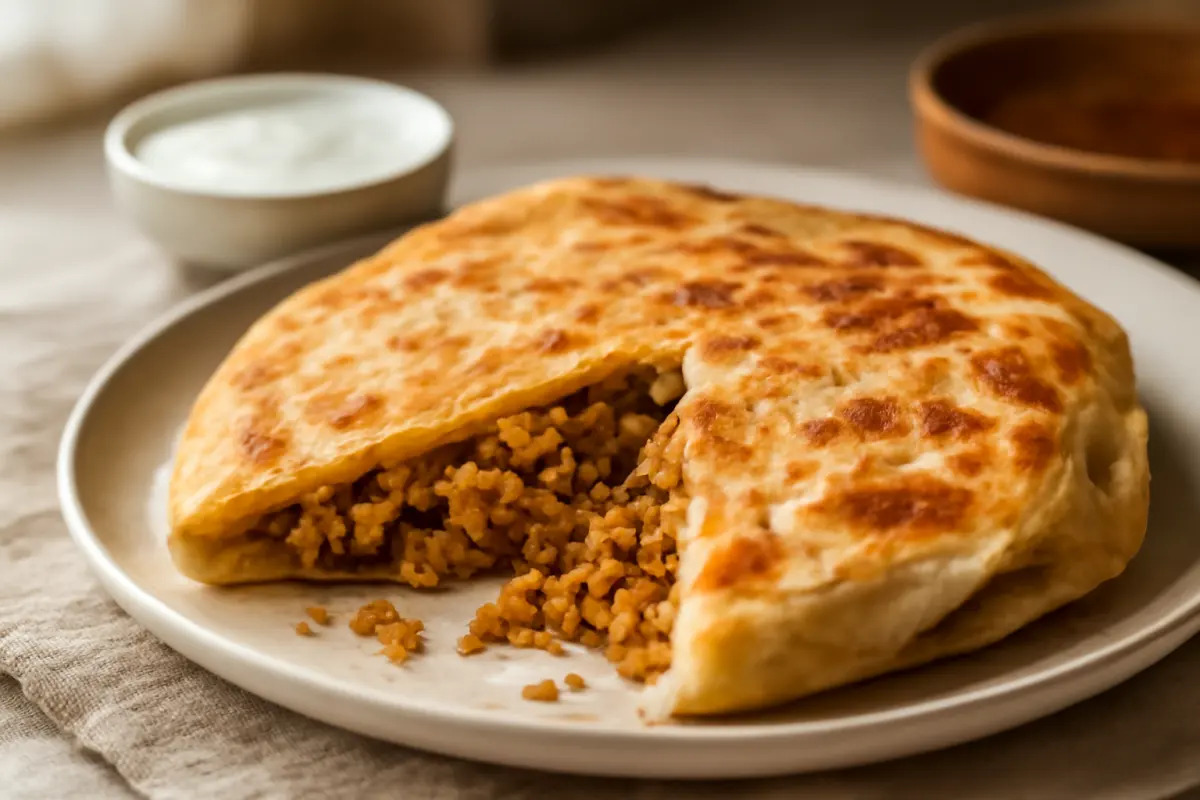
These chicken qeema parathas have a crisp, flaky exterior and a savory minced-chicken filling seasoned with ginger, garlic, green chili, and warm spices. Cook the filling dry and cool it fully before stuffing for parathas that seal neatly and cook through.
Overview
Chicken qeema paratha is a stuffed flatbread filled with dry, warmly spiced minced chicken. The filling is cooked first, then enclosed in whole-wheat dough and rolled into a thin paratha before cooking in a hot skillet.
This recipe makes 6 medium parathas. The most important details are to remove excess moisture from the qeema, cool it before stuffing, and cook the parathas over medium heat so the dough browns while the filling heats through.
Ingredients
- 2 cups (250 g) whole-wheat flour, plus extra for rolling
- 1/2 teaspoon salt
- 2 teaspoons neutral oil or melted ghee, plus more for cooking
- About 3/4 cup (180 ml) lukewarm water, added gradually
- 1 tablespoon neutral oil
- 1 small onion, finely chopped, about 100 g
- 1 tablespoon minced fresh ginger
- 1 tablespoon minced garlic
- 1 green chili, finely chopped, or less to taste
- 1/2 teaspoon cumin seeds
- 1/2 teaspoon ground turmeric
- 1 teaspoon ground coriander
- 1/2 teaspoon red chili powder
- 1/2 teaspoon garam masala
- 1/2 teaspoon salt, or to taste
- 450 g ground chicken
- 2 tablespoons chopped fresh cilantro
- 1 tablespoon lemon juice
- 1 small egg, beaten, optional, for brushing the dough edge
How to make it
Make the dough. Add the flour and salt to a bowl. Mix in 2 teaspoons of oil or ghee, then add the lukewarm water a little at a time. Stir until a shaggy dough forms. Knead for 6–8 minutes, until smooth and soft. It should feel pliable rather than sticky; if it feels dry or cracks, knead in 1 teaspoon of water at a time.
Rest the dough. Rub the dough with a few drops of oil, cover it, and rest for 20–30 minutes at room temperature. This makes it easier to roll without springing back.
Cook the chicken filling. Heat 1 tablespoon of oil in a wide skillet over medium heat. Add the cumin seeds. When they sizzle, add the onion and cook for 4–5 minutes, stirring occasionally, until soft and lightly golden.
Add the ginger, garlic, and green chili. Cook for 1 minute, until fragrant. Stir in the turmeric, coriander, red chili powder, garam masala, and salt. Add 1 tablespoon of water if the spices begin sticking.
Add the ground chicken. Break it up with a wooden spoon and cook for 8–10 minutes, stirring often, until no pink remains. Continue cooking until the mixture looks fairly dry and any liquid in the skillet has evaporated. The chicken should be crumbly, moist, and fully cooked, not wet or saucy. For a precise check, the thickest pieces should reach 74°C (165°F).
Turn off the heat. Stir in the cilantro and lemon juice. Spread the filling on a plate so it cools quickly, then let it cool completely. Divide it into 6 equal portions. Warm filling can soften the dough and make the parathas difficult to seal.
Divide the dough. Knead the rested dough once or twice, then divide it into 6 equal balls. Keep the balls covered while you work so their surfaces do not dry out.
Stuff one paratha. Lightly flour the work surface and roll one dough ball into a 12 cm (5-inch) circle. Keep the center slightly thicker than the edge. Place one portion of filling in the center, leaving about 2 cm (3/4 inch) around the edge.
Bring the edges up over the filling and pinch them together firmly at the top. If the seam feels thick, twist off a small excess piece of dough. Press the sealed ball gently flat, dust it with flour, and roll it into a 17–18 cm (7-inch) circle. Use light, even pressure and turn the dough as you roll. If a small crack appears, patch it with a pinch of dough before continuing.
Cook the paratha. Heat a heavy skillet or tawa over medium heat. Place the rolled paratha on the dry skillet. Cook for 45–60 seconds, until the top changes color and a few small bubbles appear. Turn it over and cook the other side for about 1 minute.
Brush or drizzle 1/2–1 teaspoon oil or ghee over the surface, turn, and cook for 30–45 seconds. Add a little more to the second side, turn again, and press gently around the edges with a spatula. Cook until both sides have distinct golden-brown spots and the center feels firm rather than doughy, usually 2–3 minutes in total.
Transfer the cooked paratha to a plate and cover it loosely with a clean cloth or place it in a lined container. Repeat with the remaining dough and filling, adjusting the heat if the spots darken before the center cooks. Serve hot.
Expert tips
- Keep the chicken mixture dry. If it is wet, return it to the skillet for a few minutes; a moist filling is the main cause of leaking seams and gummy centers.
- If the filling feels crumbly and difficult to pack, press each portion together with your fingers before placing it on the dough. Do not add water.
- Roll from the center outward and turn the dough frequently. Pressing hard on one edge can push the filling through the seam.
- A medium skillet temperature works better than high heat. If the paratha browns in under 30 seconds, lower the heat; if it stays pale and dry after 2 minutes, increase it slightly.
- For a milder filling, omit the green chili and use 1/4 teaspoon red chili powder. Ground chicken can be replaced with finely minced chicken thigh, but chop it small enough to spread evenly.
- If using previously frozen ground chicken, thaw it in the refrigerator and pat away excess moisture before cooking. Do not refreeze raw chicken that has been thawed at room temperature.
Serving and storage
Serve the parathas hot with plain yogurt, raita, mint chutney, or sliced cucumber and onion. A squeeze of lemon just before eating brightens the spiced filling.
Refrigerate cooked parathas and leftover filling in separate airtight containers within 2 hours of cooking. Use the cooked chicken filling or parathas within 3–4 days. Reheat a paratha in a dry skillet over medium-low heat until hot throughout; a microwave will warm it faster but will make the exterior softer.
For longer storage, cool the cooked parathas completely, stack them with parchment between each one, and freeze them in a sealed freezer bag for up to 2 months. Reheat from frozen in a covered skillet over low-medium heat, turning occasionally, until steaming hot throughout.
Frequently asked questions
Can I prepare the chicken qeema filling in advance?
Yes. Cook the filling, cool it quickly, and refrigerate it in a covered container for up to 3–4 days. Bring it out while the dough rests, but do not leave it at room temperature for more than 2 hours.
Why is my paratha breaking while I roll it?
The filling may be too wet, the dough may not have rested long enough, or the paratha may be overfilled. Cook the qeema until dry, rest the dough for at least 20 minutes, and seal the filling inside a smaller dough circle before rolling gently.
Can I freeze uncooked chicken qeema paratha?
Yes, but freeze each stuffed and rolled paratha flat with parchment between layers. Cook it from frozen over medium-low heat, adding a little extra time so the center heats fully. For the most reliable texture, freeze cooked parathas instead.
How do I know the chicken filling is cooked?
There should be no pink pieces, the chicken should be crumbly, and all liquid should have evaporated. For the safest check, use a thermometer and cook the filling to 74°C (165°F).
What can I use instead of whole-wheat flour?
Use chapati atta for an especially soft dough, or replace up to 1/4 of the whole-wheat flour with all-purpose flour for a slightly lighter texture. A full replacement changes the dough’s elasticity and may require less water.