Recipes
Cinnamon Rolls Recipe
These homemade cinnamon rolls bake up soft and tender, with a buttery cinnamon-sugar spiral and tangy cream cheese frosting. Follow the visual rising and doneness cues for reliable results.
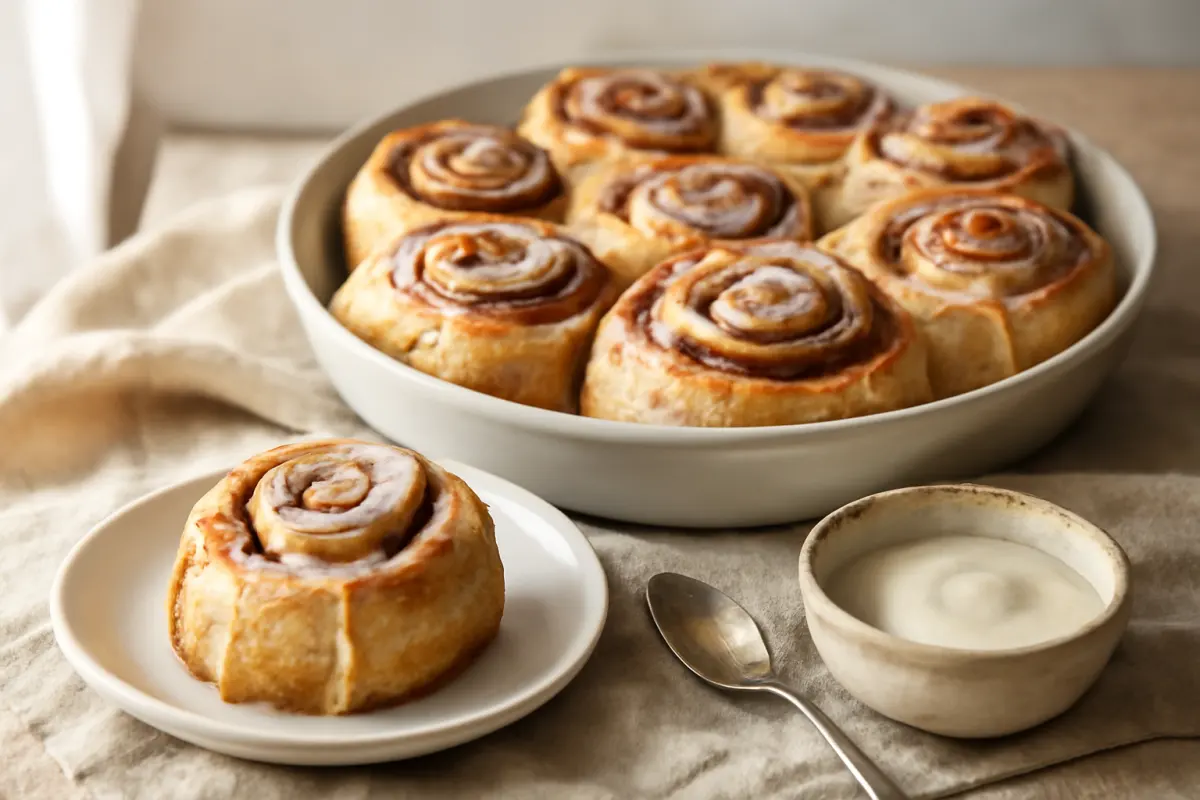
Overview
These cinnamon rolls are soft, buttery, and generously filled with brown sugar and cinnamon. The dough is enriched with milk, egg, and butter, giving the baked rolls a tender crumb without making them difficult to handle.
The recipe makes 12 rolls in a 9-by-13-inch pan. Let the dough rise until visibly puffy rather than relying only on the clock, then bake until the centers are set and the edges are lightly golden. Spread the frosting over warm—not piping-hot—rolls so it softens into the spirals without completely melting away.
Ingredients
- 240 ml (1 cup) whole milk, warmed to about 38–43°C (100–110°F)
- 7 g (2 1/4 teaspoons) instant yeast
- 50 g (1/4 cup) granulated sugar
- 1 large egg, room temperature
- 60 g (1/4 cup) unsalted butter, melted and cooled slightly
- 1 teaspoon fine salt
- 420 g (3 1/2 cups) all-purpose flour, plus extra for the work surface if needed
For the filling
- 75 g (5 tablespoons) unsalted butter, softened
- 150 g (3/4 cup, packed) light brown sugar
- 2 tablespoons ground cinnamon
- 1/4 teaspoon fine salt
For the cream cheese frosting
- 115 g (4 ounces) cream cheese, softened
- 30 g (2 tablespoons) unsalted butter, softened
- 120 g (1 cup) powdered sugar
- 1/2 teaspoon vanilla extract
- 1–2 tablespoons milk, as needed
How to make it
Prepare the dough. In a large bowl, stir together the warm milk, instant yeast, and granulated sugar. Add the egg, melted butter, and salt. Mix in 3 cups (360 g) of the flour until a shaggy dough forms, then add the remaining 1/2 cup (60 g) gradually.
Knead until smooth. Knead by hand for 8–10 minutes, or with a dough hook on low speed for 5–7 minutes. The dough should become smooth, elastic, and slightly tacky, but it should not smear heavily on your fingers. If it feels wet and impossible to shape, knead in the remaining flour 1 tablespoon at a time. Avoid adding large amounts of flour, which can make the rolls dense.
Let the dough rise. Shape the dough into a ball and place it in a lightly greased bowl. Cover with a clean towel or reusable cover and leave in a warm, draft-free place for 60–90 minutes. It is ready when it has roughly doubled in size and a gentle fingertip press leaves an indentation that slowly springs back.
Mix the filling. While the dough rises, combine the brown sugar, cinnamon, and salt in a small bowl. Grease a 9-by-13-inch baking pan with a little butter or oil. Line the base with parchment if you want to lift the rolls out more easily.
Roll out the dough. Turn the risen dough onto a lightly floured surface and gently press out the larger air bubbles. Roll it into a rectangle about 16 by 12 inches, with the longer side nearest you. Keep the corners reasonably square so the finished rolls are similar in size.
Fill and shape. Spread the softened butter over the dough, leaving a 1/2-inch strip bare along the far long edge. Sprinkle the cinnamon-sugar mixture evenly over the butter and lightly press it in. Starting from the long edge nearest you, roll the dough into a firm log. Do not squeeze it so tightly that the filling is pushed out.
Cut the rolls. Trim the ends if they are uneven, then cut the log into 12 equal pieces, each about 1 1/3 inches wide. Unflavored dental floss makes clean cuts: slide it under the log, cross the ends over the top, and pull. A sharp serrated knife also works; use a gentle sawing motion.
Arrange and proof again. Place the rolls cut-side up in the prepared pan, leaving a little space between them. Cover and let them rise for 30–45 minutes. They are ready when they look swollen, touch one another or nearly do so, and wobble slightly when the pan is nudged.
Bake. Heat the oven to 180°C (350°F). Bake the rolls for 22–28 minutes, rotating the pan once if your oven browns unevenly. The tops should be lightly golden, the outside edges should feel set, and the center roll should no longer look wet or doughy. If you use an instant-read thermometer, the center should register about 88–93°C (190–200°F).
Make the frosting. Beat the cream cheese and softened butter until smooth. Add the powdered sugar and vanilla, then beat until creamy. Add milk 1 teaspoon at a time until the frosting is thick but spreadable.
Finish and serve. Cool the rolls in the pan for 10–15 minutes. Spread the frosting over the warm rolls, allowing it to soften across the tops while remaining thick in the crevices. Serve while warm.
Expert tips
- Milk temperature matters: Milk that feels hot rather than comfortably warm can weaken or kill the yeast. If you do not have a thermometer, it should feel barely warm on the inside of your wrist.
- Use the dough, not the clock, as your guide: A cool kitchen may lengthen both rises, while a warm kitchen may shorten them. Look for dough that has doubled and rolls that are visibly puffy.
- For evenly sized rolls: Mark the log into quarters first, then divide each quarter into three pieces.
- If the filling leaks: A small amount of seepage is normal, but very soft butter or an overly loose roll can cause more. Leave the clean border at the far edge and place the cut rolls snugly in the pan.
- Substitutions: Use bread flour for slightly chewier rolls, or replace up to half of the all-purpose flour with whole-wheat flour. The dough may need 1–2 extra tablespoons of milk. For the frosting, use an equal amount of mascarpone, or make a simple glaze with 120 g powdered sugar and 1–2 tablespoons milk.
- If the rolls brown too quickly: Loosely cover the pan with foil for the final 8–10 minutes of baking.
Serving and storage
Serve the rolls warm on the day they are baked. Keep leftovers in an airtight container at room temperature for up to 2 days, or refrigerate them for up to 5 days. Because the frosting contains cream cheese, refrigerate frosted rolls if they will not be eaten within about 2 hours.
Rewarm individual rolls in the microwave for 15–25 seconds, or cover the pan with foil and warm in a 160°C (325°F) oven until heated through. You can freeze unfrosted baked rolls in an airtight container for up to 2 months; thaw overnight in the refrigerator or at room temperature, then warm and frost before serving.
Frequently asked questions
Can I prepare these cinnamon rolls the night before?
Yes. Assemble and cut the rolls, place them in the greased pan, cover tightly, and refrigerate for up to 16 hours. Let the pan stand at room temperature for 45–75 minutes, until the rolls are puffy, then bake as directed. The exact time depends on how cold your refrigerator and kitchen are.
Why are my cinnamon rolls dense?
Common causes are too much flour, under-kneading, or an incomplete rise. The dough should be soft and slightly tacky, and it should roughly double during the first rise. If the rolls have not become puffy before baking, give them more time rather than putting them straight into the oven.
Can I use active dry yeast instead of instant yeast?
Yes. Use the same amount, 7 g or 2 1/4 teaspoons. Stir it into the warm milk with the sugar and wait 5–10 minutes until the surface looks foamy before adding the remaining ingredients.
How do I know when cinnamon rolls are fully baked?
The tops should be lightly golden, the outer edges should feel set, and the center roll should not look wet or wobble like raw dough. An instant-read thermometer inserted into the center should read about 88–93°C (190–200°F).
Can I make cinnamon rolls without cream cheese frosting?
Yes. Serve them plain, use a quick powdered-sugar glaze, or spread them with softened butter. For a glaze, stir 120 g powdered sugar with 1–2 tablespoons milk and a little vanilla until smooth.