Recipes
Fish and Chips Recipe
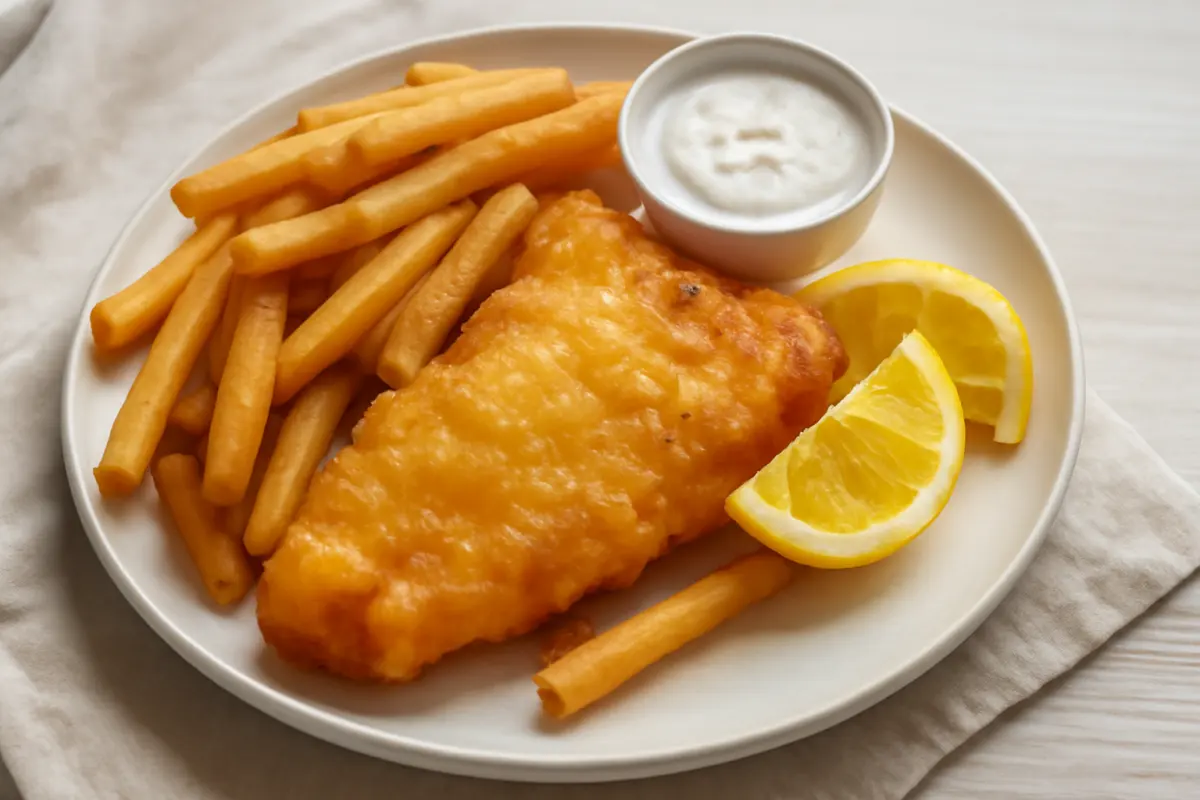
This fish and chips recipe makes flaky white fish in a crisp beer batter with fluffy, golden chips. Prepare the potatoes first, keep the batter cold, and fry in batches for the best crunch.
Overview
This fish and chips recipe makes four generous servings of flaky white fish covered in a crisp, airy batter, alongside fluffy chips with golden edges. The method uses a two-stage fry for the potatoes: a lower-temperature cook to soften the centers, followed by a hotter fry to crisp the outside.
Cod is a classic choice, but haddock, pollock, or another firm white fish works well. Keep the batter cold, dry the fish thoroughly, and avoid crowding the oil so the coating stays crisp instead of greasy.
Ingredients
- 1 1/2 pounds russet potatoes, about 3 large, peeled or scrubbed
- 1 1/2 quarts neutral frying oil, such as peanut, canola, or sunflower oil, plus more if needed
- 1 1/2 pounds skinless cod fillets, cut into 4 equal pieces
- 1 teaspoon fine salt, divided
- 1/2 teaspoon black pepper
- 1 cup all-purpose flour, plus 1/4 cup for dredging
- 1/4 cup cornstarch
- 1 teaspoon baking powder
- 1/2 teaspoon fine salt for the batter
- 1 cup cold lager or sparkling water, plus 1 to 2 tablespoons if needed
- Lemon wedges, for serving
- Malt vinegar or tartar sauce, for serving
How to make it
Cut and soak the potatoes. Cut the potatoes into chips about 1/2 inch thick. Rinse them under cold water until the water runs mostly clear, then place them in a large bowl of cold water for at least 30 minutes and up to 2 hours. This removes excess surface starch and helps the chips crisp.
Heat the oil for the first fry. Pour the oil into a large, heavy pot, leaving at least 3 inches of space above the oil. Heat it to 300°F. Set a wire rack over a rimmed baking sheet for draining. Do not leave the heating oil unattended.
Dry and blanch the potatoes. Drain the potatoes and dry them very thoroughly with clean kitchen towels. Moisture can cause the oil to splatter. Fry the potatoes in 3 or 4 batches for 5 to 7 minutes per batch, until they are pale, flexible, and just tender when pierced with a knife. They should not be deeply browned yet. Transfer each batch to the rack and let it drain for at least 15 minutes.
Prepare the fish. Pat the fish dry, then season it with 1/2 teaspoon of the salt and the black pepper. Let it stand while you make the batter, but do not leave it at room temperature for longer than about 20 minutes. If the fillets are very thick, cut them into pieces no more than 1 1/2 inches thick so the coating and fish finish together.
Mix the batter. In a bowl, whisk together 1 cup flour, cornstarch, baking powder, and the remaining 1/2 teaspoon salt. Pour in the cold lager or sparkling water and whisk just until no large dry pockets remain. A few small lumps are fine. The batter should fall from the whisk in a thick ribbon. If it looks pasty, whisk in 1 tablespoon more liquid at a time. Keep the batter cold while you finish preparing the oil.
Raise the oil temperature. Increase the oil to 350°F. Place the remaining 1/4 cup flour in a shallow dish. Coat each piece of fish lightly in flour, shake off the excess, then dip it into the batter. Let the excess batter drip back into the bowl for a few seconds.
Fry the fish. Lower the battered fish carefully into the 350°F oil. Fry 2 pieces at a time for 5 to 7 minutes, turning once if needed, until the coating is deeply golden and audibly crisp. The fish should be opaque and separate easily into flakes, and the thickest part should reach 145°F on an instant-read thermometer. Transfer the fish to the rack. Keep finished pieces in a 200°F oven while you cook the rest, but do not cover them or the coating will soften.
Finish the chips. Bring the oil to 375°F. Fry the blanched potatoes in batches for 2 to 4 minutes, until golden brown and crisp at the edges. They should sound lightly crisp when shaken in the basket and feel firm on the outside while remaining fluffy inside. Drain on the rack and season immediately with the remaining salt, or adjust the seasoning to taste.
Serve immediately. Divide the fish and chips among four plates. Serve with lemon wedges, malt vinegar, and tartar sauce. For the crispiest meal, serve the chips as soon as the final batch is drained.
Expert tips
- Keep the batter cold: Cold liquid helps the batter stay light as it hits the hot oil. Mix it shortly before frying rather than preparing it hours ahead.
- Dry everything well: Wet potatoes and damp fish can make the oil splatter and prevent browning. Pat the fish dry immediately before dredging.
- Watch the oil temperature: Adding food lowers the temperature. Fry in small batches and wait for the oil to return to the target temperature before adding more.
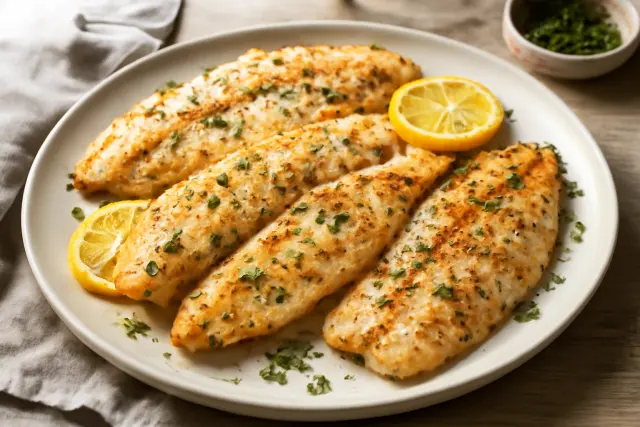
- Use the right fish: Cod, haddock, and pollock are good choices. For a baked alternative with herbs and breadcrumbs, try baked haddock with herbs.
- If the batter is soggy: The oil was likely too cool, the pot was crowded, or the fried fish sat on a flat surface. Use a rack, fry fewer pieces, and check the oil between batches.
- If the batter browns before the fish cooks: The pieces may be too thick or the oil may be too hot. Lower the temperature slightly and use evenly sized pieces.
- If the chips are dark outside but firm inside: The first fry was too hot or too short. Keep the first fry near 300°F and cook until the potatoes are tender before the final high-temperature fry.
Serving and storage
Serve the fish and chips immediately for the best texture. If you need to hold the fish briefly, place it on a wire rack in a 200°F oven for up to about 20 minutes; avoid stacking or covering it.
Cool leftovers promptly, then refrigerate them in a shallow airtight container for up to 2 days. Reheat the fish and chips on a wire rack in a 400°F oven or air fryer until hot and crisp, usually 8 to 12 minutes depending on the portion. Avoid reheating them in the microwave if you want to preserve the coating.
Frequently asked questions
What fish is best for homemade fish and chips?
Cod is a classic because it has large, flaky pieces and a mild flavor. Haddock and pollock are good alternatives with a similar firm texture. Cut the fillets into evenly sized pieces so they cook at the same rate.
Can I make the batter without beer?
Yes. Replace the beer with an equal amount of very cold sparkling water. It will still produce a light batter, though the flavor will be slightly less malty.
Why did my fish batter turn soggy?
Common causes are oil that was below about 350°F, frying too many pieces at once, or draining the fish on a flat surface. Fry in small batches, check the temperature between batches, and drain on a wire rack.
Can I skip soaking the potatoes?
You can, but soaking removes some surface starch and helps the chips fry more cleanly. If you skip it, rinse the cut potatoes thoroughly and dry them especially well before the first fry.
How do I know when the fish is done?
The coating should be deep golden and crisp, while the fish inside should be opaque and separate easily into flakes. For a precise check, the thickest part should reach 145°F.