Recipes
Classic Ratatouille Recipe
This classic ratatouille recipe gently cooks eggplant, zucchini, peppers, tomatoes, onion, and garlic until tender and richly savory. Cooking the vegetables in stages keeps their individual textures while the finished stew develops a cohesive flavor.
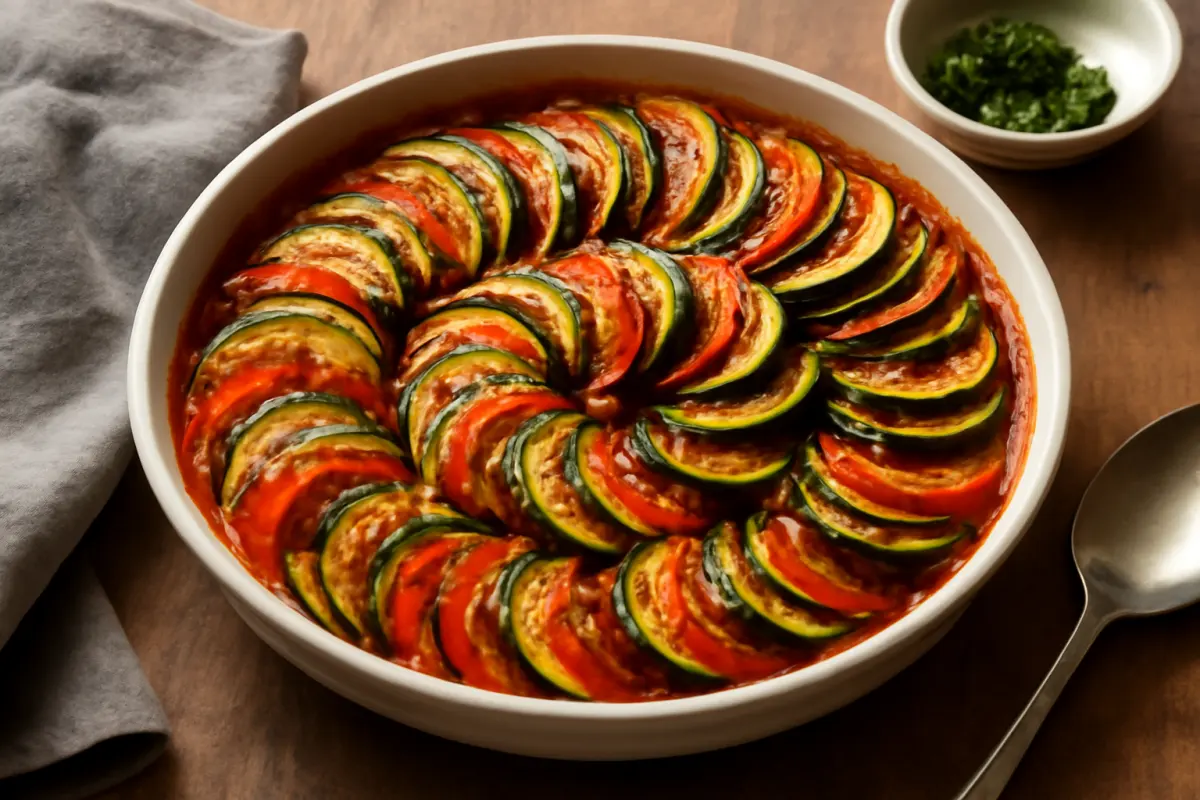
Overview
Classic ratatouille is a rustic French vegetable stew made with eggplant, zucchini, bell pepper, tomatoes, onion, garlic, and herbs. The vegetables are cooked in stages rather than crowded into the pan at once, so the eggplant becomes creamy, the zucchini stays recognizable, and the sauce thickens without becoming watery.
Serve it warm or at room temperature with crusty bread, rice, pasta, or a fried egg. It also tastes even better after a short rest, when the tomato, garlic, and herb flavors have had time to blend.
Ingredients
- 1 large eggplant, about 1 pound, cut into 1-inch cubes
- 1 teaspoon kosher salt, divided, plus more to taste
- 6 tablespoons extra-virgin olive oil, divided
- 1 medium yellow onion, finely chopped
- 1 red bell pepper, seeded and cut into 1-inch pieces
- 1 green or yellow bell pepper, seeded and cut into 1-inch pieces
- 1 medium zucchini, about 8 ounces, cut into 1-inch pieces
- 4 garlic cloves, thinly sliced or finely chopped
- 1 pound ripe tomatoes, peeled if desired and chopped, or one 28-ounce can whole peeled tomatoes, crushed by hand
- 2 tablespoons tomato paste
- 1 teaspoon dried herbes de Provence or dried Italian seasoning
- 2 fresh thyme sprigs, or 1/2 teaspoon dried thyme
- 1 bay leaf
- 1/4 teaspoon freshly ground black pepper, plus more to taste
- 2 tablespoons chopped fresh basil or flat-leaf parsley, for finishing
- 1 teaspoon red wine vinegar, optional, to balance the finished stew
How to make it
Salt the eggplant. Put the eggplant cubes in a colander and toss them with 1/2 teaspoon of the salt. Let them stand for 20 minutes while you prepare the other vegetables. Pat them dry with paper towels. This removes surface moisture and helps the eggplant brown instead of immediately steaming.
Brown the eggplant. Heat 2 tablespoons of the olive oil in a wide, heavy-bottomed Dutch oven or deep skillet over medium-high heat. Add the eggplant in a single layer; work in two batches if the pan is crowded. Cook for 6 to 8 minutes, turning occasionally, until the cubes are golden in spots and beginning to soften. Transfer them to a plate. Add another tablespoon of oil if the pan looks dry before cooking the second batch.
Soften the onion and peppers. Reduce the heat to medium and add 2 tablespoons of oil. Add the onion and both bell peppers with the remaining 1/2 teaspoon salt. Cook for 8 to 10 minutes, stirring occasionally, until the onion is translucent and the peppers have softened but still hold their shape. If the vegetables start to brown too quickly, lower the heat to medium-low.
Cook the zucchini and garlic. Stir in the remaining 1 tablespoon of oil, then add the zucchini. Cook for 5 to 6 minutes, stirring once or twice, until the zucchini is lightly browned and just beginning to become tender. Add the garlic and cook for 30 seconds, until fragrant but not brown.
Build the tomato base. Stir in the tomato paste and cook for 1 minute. Add the chopped fresh tomatoes or crushed canned tomatoes, herbes de Provence, thyme, bay leaf, and black pepper. Scrape the bottom of the pan to loosen any browned bits.
Simmer the ratatouille. Return the eggplant to the pan and stir gently. Bring the mixture to a steady simmer, then reduce the heat to low. Cook uncovered for 25 to 35 minutes, stirring every 5 minutes, until the tomatoes have thickened into a loose sauce and the vegetables are tender. The eggplant should yield easily when pressed with a spoon, while the zucchini and peppers should still be visible rather than collapsed.
Adjust and rest. Remove the thyme sprigs and bay leaf. Taste and add more salt or pepper as needed. If the stew tastes heavy or overly sweet, stir in the optional red wine vinegar, 1/2 teaspoon at a time. Fold in the basil or parsley, then let the ratatouille rest for 10 minutes before serving.
Expert tips
- Use a wide pan so moisture can evaporate. A narrow, deep pot traps steam and can leave the vegetables watery.
- Do not skip drying the salted eggplant. Wet cubes are more likely to steam and absorb oil unevenly.
- If using canned tomatoes, choose whole peeled tomatoes and crush them by hand; diced canned tomatoes can release more liquid and may need a longer simmer.
- For a smoother, softer stew, simmer for up to 45 minutes. For more distinct vegetable pieces, stop as soon as the eggplant is creamy and the zucchini is tender.
- If the bottom begins to stick, add 1 to 2 tablespoons of water and lower the heat rather than adding a large amount of liquid.
- Fresh tomatoes work best when ripe and flavorful. Out-of-season tomatoes can be replaced entirely with canned tomatoes without changing the method.
Serving and storage
Serve ratatouille warm, at room temperature, or gently reheated. Spoon it over toasted bread, rice, polenta, or pasta, or serve it alongside roasted meat or fish. A fried or poached egg makes it a more substantial meal.
Cool leftovers promptly and refrigerate them in a covered container within 2 hours. They keep for up to 4 days in the refrigerator. Reheat gently in a saucepan over medium-low heat, adding a splash of water if the sauce has thickened. Ratatouille can also be frozen for up to 3 months; thaw it overnight in the refrigerator and reheat gently, knowing the zucchini may be softer after freezing.
Frequently asked questions
Can I make ratatouille ahead of time?
Yes. Ratatouille can be made up to 2 days ahead and refrigerated in a covered container. Reheat it gently on the stovetop, or serve it at room temperature after letting it sit out briefly.
Why is my ratatouille watery?
The pan may have been crowded, the vegetables may have released extra moisture, or the stew may not have simmered long enough. Cook it uncovered over low to medium-low heat, stirring occasionally, until the tomato sauce thickens. A wide pan speeds evaporation.
Do I have to peel the eggplant or tomatoes?
No. Eggplant skin softens during cooking and helps the cubes hold their shape. Tomato skins are also optional, though peeled tomatoes give the stew a smoother texture.
Can I use frozen vegetables?
Fresh vegetables give the best texture, but frozen bell peppers or zucchini can work in a pinch. Add them straight to the tomato base and expect a softer result; frozen eggplant is more likely to become mushy.
What should I serve with ratatouille?
Crusty bread, rice, polenta, pasta, or a cooked egg all work well. For another vegetable-and-tomato dinner, try this classic minestrone soup recipe.