Recipes
Creamy Garlic Shrimp Pasta Recipe
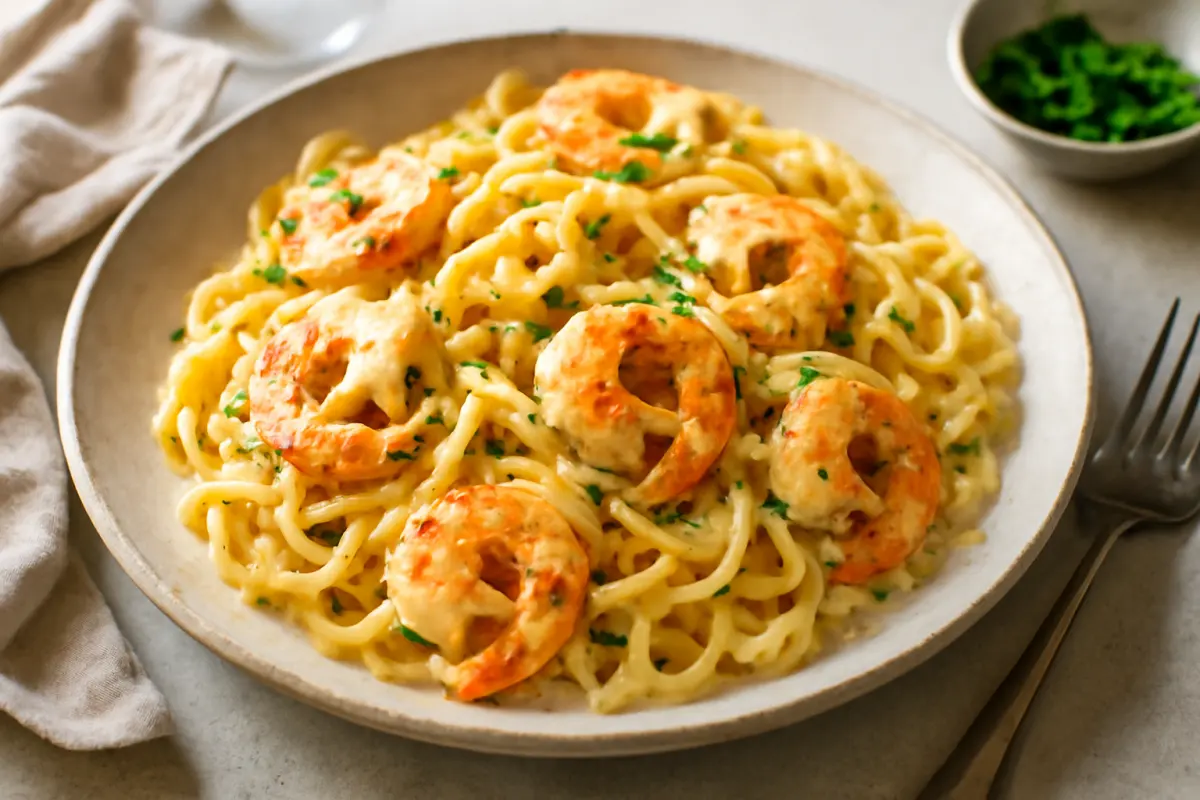
This creamy garlic shrimp pasta combines juicy shrimp and al dente linguine in a smooth Parmesan-garlic sauce. It comes together in one skillet while the pasta cooks, with practical tips for preventing rubbery shrimp or a broken sauce.
Overview
This creamy garlic shrimp pasta is a quick skillet dinner built around tender shrimp, al dente linguine, and a silky sauce made with garlic, butter, cream, Parmesan, and reserved pasta water. The sauce clings to the noodles without needing flour or a complicated roux.
For the best texture, cook the shrimp just until they turn opaque and curl into loose C shapes, then return them to the sauce at the end. Slightly undercooking the pasta in the pot gives it time to finish in the skillet and absorb the garlic cream sauce.
Ingredients
- 12 ounces linguine or spaghetti
- 1 pound large shrimp, peeled and deveined, tails removed or left on
- 1 teaspoon kosher salt, plus more for the pasta water
- 1/2 teaspoon freshly ground black pepper
- 2 tablespoons olive oil, divided
- 3 tablespoons unsalted butter, divided
- 5 garlic cloves, finely minced
- 1/2 teaspoon red pepper flakes, optional
- 1 cup heavy cream
- 3/4 cup finely grated Parmesan cheese, plus more for serving
- 1 tablespoon fresh lemon juice
- 2 tablespoons chopped fresh parsley
- 1/2 cup reserved pasta water, added as needed
How to make it
Prepare the shrimp. Pat the shrimp dry with paper towels. Toss them with the kosher salt and black pepper. Dry shrimp sear more readily and are less likely to release excess water into the skillet.
Boil the pasta. Bring a large pot of water to a rolling boil. Salt it generously, add the linguine, and cook according to the package directions until it is 1 minute shy of al dente. Before draining, scoop out at least 1/2 cup of the pasta water. Drain the pasta; do not rinse it.
Sear the shrimp. While the pasta cooks, heat 1 tablespoon of olive oil and 1 tablespoon of butter in a large skillet over medium-high heat. Add the shrimp in a single layer. Cook for about 1 to 2 minutes per side, depending on their size. They are ready when the centers are opaque, the exteriors are pink, and they form loose C shapes rather than tight circles. Transfer them to a plate immediately.
Cook the garlic. Reduce the heat to medium. Add the remaining 1 tablespoon olive oil and 2 tablespoons butter to the skillet. Add the minced garlic and red pepper flakes, if using. Cook for 30 to 45 seconds, stirring constantly, until the garlic smells fragrant but has not browned. If the garlic starts turning dark, lower the heat immediately; scorched garlic will make the sauce bitter.
Build the sauce. Pour in the heavy cream and scrape up any flavorful bits from the bottom of the skillet. Bring it to a gentle simmer, not a rapid boil, and cook for 2 to 3 minutes. The cream should lightly coat a spoon but still look pourable.
Add the cheese. Remove the skillet from the heat. Stir in the Parmesan a little at a time until smooth. Add 2 tablespoons of reserved pasta water, then stir. The sauce should be glossy and loose enough to flow; add more pasta water 1 tablespoon at a time if it seems thick or sticky.
Toss with pasta and shrimp. Add the drained pasta to the skillet and toss for 1 to 2 minutes over low heat. Add the shrimp and lemon juice, then toss gently until the shrimp are warmed through and the sauce coats the noodles. Avoid prolonged cooking at this stage, which can make the shrimp tough.
Finish and serve. Taste and adjust with more salt, black pepper, or lemon juice. Sprinkle with parsley and serve immediately with extra Parmesan. If the sauce tightens while standing, toss in another splash of warm pasta water before serving.
Expert tips
- Use large shrimp when possible. Medium shrimp cook quickly, so begin checking them after about 45 seconds per side. The size affects cooking time more than the total weight.
- Do not crowd the skillet. If the shrimp overlap, they steam instead of browning. Cook them in two batches if your pan is small.
- Grate Parmesan finely. Finely grated cheese melts into the cream more smoothly than thick shreds. Pre-shredded cheese can leave the sauce slightly grainy.
- Keep the cream at a gentle simmer. A hard boil can cause the sauce to reduce too quickly or separate. Take the pan off the heat before adding Parmesan.
- If the sauce is too thin, toss the pasta in it over low heat for another minute; the starch and cheese will help it thicken. If it is too thick, loosen it with reserved pasta water rather than extra cream.
- If the sauce looks grainy, remove the skillet from the heat and whisk in 1 tablespoon of warm pasta water. Avoid boiling it, and add any remaining cheese gradually.
- For a dairy-light substitution, use evaporated milk in place of the heavy cream and reduce the Parmesan to 1/2 cup. The sauce will be less rich but still creamy. Unsweetened plain coconut milk can also work, though it will add a noticeable coconut flavor.
- For frozen shrimp, thaw them completely in the refrigerator or under cold running water, then pat them very dry before seasoning. Do not cook them from frozen in this recipe.
Serving and storage
Serve the pasta as soon as it is finished, while the sauce is glossy and loose. A simple green salad or steamed broccoli works well alongside it. Crusty bread can also be used to scoop up the remaining sauce.
Refrigerate leftovers in a shallow, airtight container within 2 hours of cooking. Use them within 3 days. Reheat gently in a skillet over low heat with 1 to 2 tablespoons of water, milk, or cream, stirring until warmed through. Avoid high heat, which can toughen the shrimp and cause the sauce to separate. Freezing is not recommended because the cream sauce may become grainy after thawing.
Frequently asked questions
Can I use frozen shrimp for creamy garlic shrimp pasta?
Yes. Thaw the shrimp completely, remove any excess moisture with paper towels, and cook them exactly as you would fresh shrimp. Very wet shrimp can water down the sauce and make searing difficult.
How do I keep the shrimp from becoming rubbery?
Cook them only until the centers are opaque and they form loose C shapes, usually 1 to 2 minutes per side for large shrimp. Remove them from the skillet immediately, then return them to the finished sauce just long enough to warm through.
Can I make this pasta without heavy cream?
Use evaporated milk as a lighter substitute, though the sauce will be less rich. Half-and-half can also work, but keep the heat low because it is more likely to separate if boiled.
Why is my creamy pasta sauce too thick?
Stir in reserved pasta water 1 tablespoon at a time while tossing. The starchy water loosens the sauce and helps it coat the pasta instead of sitting heavily on the noodles.
Can I prepare creamy garlic shrimp pasta ahead of time?
It is best freshly made because shrimp and cream sauce both lose texture when held for a long time. You can measure the ingredients, thaw the shrimp, and grate the Parmesan ahead, then cook the dish just before serving.