Recipes
Creamy Lemon Chicken Piccata Recipe
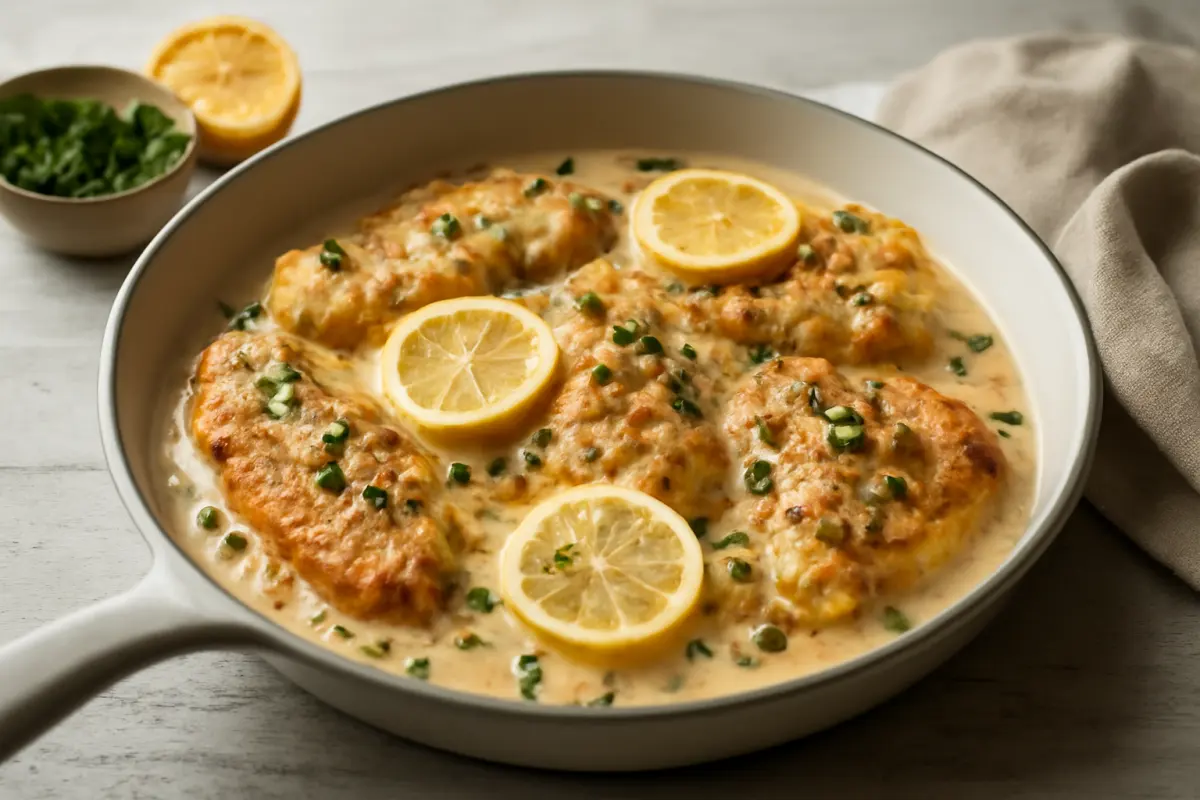
This creamy lemon chicken piccata pairs thin, golden chicken cutlets with a tangy cream sauce, briny capers, and fresh parsley. It is a quick skillet dinner with clear doneness cues and simple substitutions.
Overview
This creamy lemon chicken piccata recipe features lightly floured chicken cutlets browned in a skillet, then finished in a silky sauce made with lemon juice, chicken stock, cream, and capers. The chicken stays tender while the sauce balances richness with bright citrus and salty, briny bites.
Use chicken breasts sliced into thin cutlets so they cook quickly and evenly. Serve the finished chicken with pasta, rice, mashed potatoes, or crusty bread to catch every spoonful of sauce.
Ingredients
- 2 large boneless, skinless chicken breasts, about 1 1/2 pounds total
- 1 teaspoon kosher salt, divided
- 1/2 teaspoon freshly ground black pepper, divided
- 1/2 cup all-purpose flour
- 2 tablespoons olive oil
- 2 tablespoons unsalted butter, divided
- 3 garlic cloves, finely minced
- 1 cup low-sodium chicken stock
- 1/3 cup heavy cream
- 1/4 cup freshly squeezed lemon juice, from about 1 large lemon
- 2 tablespoons capers, drained and rinsed
- 1 teaspoon finely grated lemon zest
- 2 tablespoons chopped fresh parsley
How to make it
Prepare the chicken. Pat the chicken breasts dry. Slice each breast horizontally into two cutlets, giving you four pieces. If any cutlet is much thicker than the others, place it between sheets of parchment and gently pound it to an even thickness of about 1/2 inch. Season both sides with 3/4 teaspoon of the salt and 1/4 teaspoon of the pepper.
Coat the cutlets. Put the flour in a shallow dish and mix in the remaining 1/4 teaspoon salt and 1/4 teaspoon pepper. Dredge each chicken cutlet in the flour, turning to coat both sides, then shake off the excess. The coating should be thin rather than clumpy.
Brown the chicken. Heat the olive oil and 1 tablespoon of the butter in a large skillet over medium-high heat. When the butter foams and the oil looks fluid, add the chicken in a single layer. Work in batches if necessary; crowded chicken will steam instead of brown.
Cook for 3 to 4 minutes on the first side, until the underside is golden brown and the chicken releases easily from the pan. Turn and cook for 2 to 3 minutes more. The cutlets do not need to be fully cooked at this stage, but the centers should no longer look raw around the edges. Transfer the chicken to a plate.
Build the base of the sauce. Reduce the heat to medium. Add the remaining 1 tablespoon butter to the skillet. Once melted, add the garlic and cook for 30 seconds, stirring constantly, just until fragrant. Do not let it brown deeply, or it may make the sauce bitter.
Deglaze the skillet. Pour in the chicken stock and scrape the browned bits from the bottom with a wooden spoon. Bring the stock to a steady simmer and cook for 3 to 4 minutes, until it has reduced slightly and smells savory rather than watery.
Add the cream and lemon. Stir in the heavy cream, lemon juice, capers, and lemon zest. Simmer gently for 2 minutes. The sauce should look smooth and lightly thickened; it will coat a spoon but will still be loose enough to pour. Avoid a hard boil, which can cause the cream to separate.
Finish the chicken in the sauce. Return the chicken and any juices from the plate to the skillet. Spoon sauce over the cutlets and simmer gently for 3 to 5 minutes, turning once, until the thickest part reaches 165°F on an instant-read thermometer. Without a thermometer, cut into the thickest cutlet: it should be opaque throughout, with clear juices and no translucent center.
Adjust and serve. Taste the sauce and add more lemon juice for brightness or a pinch of salt if needed; capers vary in saltiness, so taste before seasoning. Remove from the heat, scatter over the parsley, and serve immediately with the sauce spooned over the chicken.
Expert tips
- For evenly cooked chicken: Slice the breasts horizontally rather than trying to cook thick whole breasts in the sauce. Uneven pieces are the most common reason some cutlets dry out while others remain undercooked.
- For better browning: Dry the chicken thoroughly and shake off excess flour. Too much flour can turn gummy in the sauce.
- If the sauce is too thin: Remove the chicken and simmer the sauce for another 1 to 2 minutes. Do not add a large amount of flour directly to the finished sauce, which can create lumps.
- If the sauce becomes too thick: Whisk in 1 to 2 tablespoons of warm chicken stock or water at a time until it loosens.
- If the sauce looks split: Take the skillet off the heat and whisk in a tablespoon of warm stock. Keep the sauce at a gentle simmer rather than boiling it.
- Substitutions: Half-and-half can replace the heavy cream, though the sauce will be lighter and slightly less glossy. Use boneless, skinless chicken thighs if preferred; pound them to an even thickness and cook until they reach 165°F. For a gluten-free version, use a cup-for-cup gluten-free flour blend for dredging.
- Capers: If your capers are packed in salt, rinse them well and pat them dry. Chopped green olives can provide a similar briny note, though they will change the flavor.
Serving and storage
Serve the chicken with angel hair pasta, buttered noodles, rice, mashed potatoes, or steamed vegetables. Crusty bread is especially useful for scooping up the lemon cream sauce. A simple green salad also adds freshness to the plate.
Refrigerate leftovers in a shallow, airtight container within 2 hours of cooking. They will keep for up to 3 days. Reheat gently in a covered skillet over low heat with a splash of stock or water, just until hot; vigorous boiling can make the cream sauce separate and the chicken tough. Freeze the chicken and sauce only if needed—the texture of the cream sauce may become slightly grainy after thawing.
Frequently asked questions
Can I make creamy lemon chicken piccata without capers?
Yes. Leave them out or replace them with 2 tablespoons of finely chopped green olives for a briny, savory flavor. Taste the sauce before adding extra salt because olives and capers vary in saltiness.
Why did my creamy piccata sauce split?
The sauce was probably boiled too vigorously or reheated too aggressively. Keep it at a gentle simmer, and if it separates, remove the pan from the heat and whisk in 1 tablespoon of warm chicken stock at a time.
How do I know when the chicken is done?
The thickest part should reach 165°F on an instant-read thermometer. If you do not have one, cut into the thickest cutlet; the center should be opaque with clear juices and no translucent area.
Can I use chicken thighs instead of chicken breasts?
Yes. Use boneless, skinless thighs, pound them to an even thickness, and cook them until the thickest part reaches 165°F. They may need an extra minute or two in the sauce.
Can I prepare this recipe ahead of time?
You can slice and season the chicken, measure the sauce ingredients, and chop the garlic and parsley several hours ahead. For the best texture, brown the chicken and finish the sauce shortly before serving.