Recipes
Garlic Parmesan Breadsticks Recipe
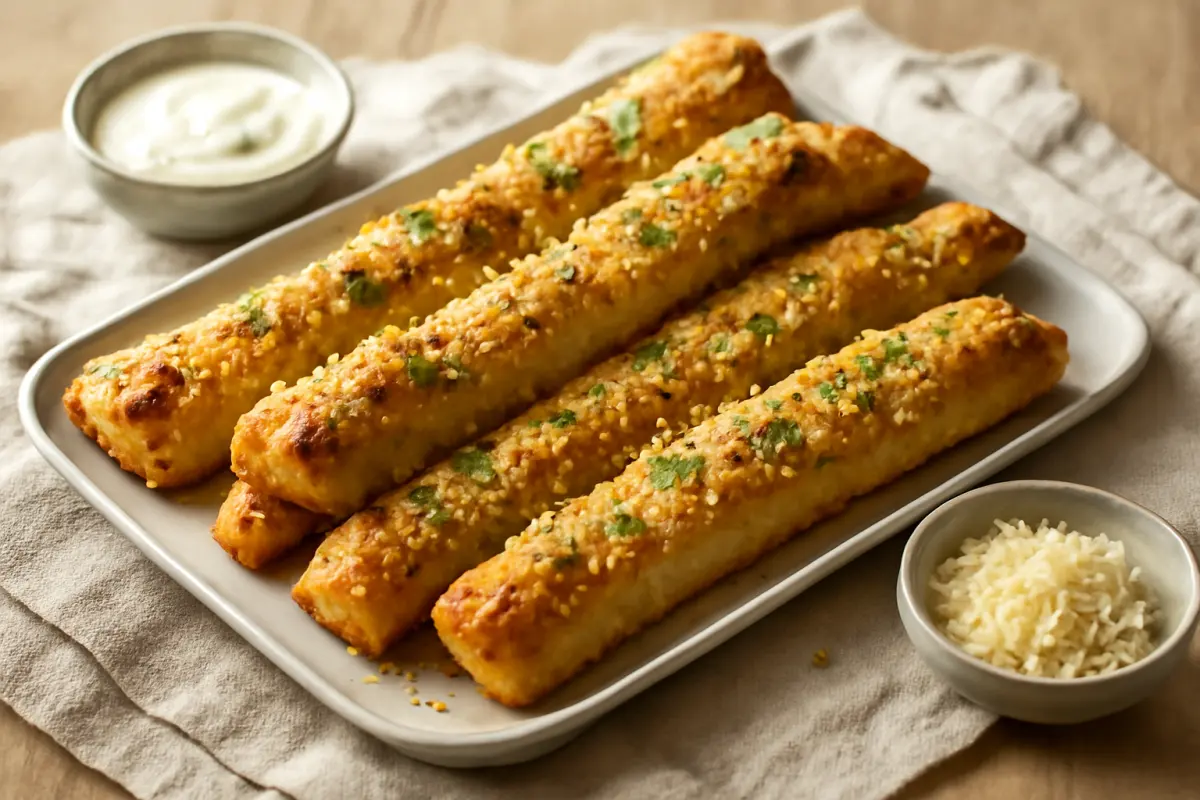
These homemade garlic Parmesan breadsticks are soft in the center, lightly golden at the edges, and brushed with garlicky butter before and after baking. The dough is straightforward to mix, shape, and bake for a warm side dish with soup, pasta, or salad.
Overview
These garlic Parmesan breadsticks are soft and slightly chewy in the middle, with lightly browned edges and a buttery topping that soaks into the freshly baked dough. The dough needs one rise, then it is rolled into a rectangle, cut into strips, and baked until puffed and golden.
Fresh garlic gives the topping the most flavor, while finely grated Parmesan clings to the butter instead of falling off. Serve the breadsticks warm alongside pasta, soup, or a simple dinner such as roasted garlic butter mushrooms.
Ingredients
- ¾ cup (180 ml) warm water, about 105–110°F (40–43°C)
- 2¼ teaspoons (1 packet) active dry yeast
- 1 teaspoon granulated sugar
- 2¼ cups (270 g) all-purpose flour, plus more for the work surface
- 1 teaspoon fine salt
- 2 tablespoons (28 g) unsalted butter, melted and cooled slightly
- 1 tablespoon olive oil, for the bowl
- 3 tablespoons (42 g) unsalted butter, melted, for brushing
- 2 garlic cloves, finely grated or minced
- ¼ teaspoon fine salt, for the garlic butter
- ½ cup (45 g) finely grated Parmesan cheese
- 1 tablespoon chopped fresh parsley, optional
How to make it
Activate the yeast. Stir the warm water, yeast, and sugar together in a large bowl. Let it stand for 5–10 minutes. The surface should look creamy and lightly foamy. If it remains completely flat, start again with fresh yeast and water that is warm but not hot.
Mix the dough. Add the flour and 1 teaspoon salt to the yeast mixture. Stir in the 2 tablespoons melted butter until a shaggy dough forms. Knead by hand on a lightly floured surface for 6–8 minutes, or knead with a dough hook on low speed for about 5 minutes. The dough should become smooth and elastic and should feel slightly tacky, not wet or sticky enough to coat your hands.
Let it rise. Lightly coat a clean bowl with the olive oil. Place the dough inside, turning it once to coat, then cover the bowl. Leave it in a draft-free spot for 60–90 minutes, until it has roughly doubled in size. A cool kitchen may require the longer end of that range.
Prepare the oven and pan. Heat the oven to 400°F (200°C). Line a large baking sheet with parchment paper. Stir the 3 tablespoons melted butter, garlic, and ¼ teaspoon salt together in a small bowl. Set it aside while you shape the dough.
Shape the breadsticks. Gently press the air from the risen dough and transfer it to a lightly floured surface. Roll it into a rectangle about 10 by 14 inches and ¼ inch thick. Use a pizza wheel or sharp knife to cut the dough lengthwise into 12 strips. If the ends are uneven, trim them or leave them rustic. Transfer the strips to the prepared sheet, leaving about ½ inch between them.
Add the first topping. Brush the dough strips with about half of the garlic butter. Sprinkle with half of the Parmesan, keeping the cheese mostly on the dough rather than the parchment so it does not scorch.
Bake. Bake for 14–18 minutes, rotating the pan halfway through, until the breadsticks are puffed and the edges are golden brown. The centers should look set rather than doughy, and the bottoms should be lightly browned. If the tops brown before the centers finish, loosely cover the pan with foil for the final few minutes.
Finish and serve. Brush the hot breadsticks with the remaining garlic butter. Sprinkle with the remaining Parmesan and the parsley, if using. Let them cool for 5 minutes before serving; they will be softest while warm but firm enough to handle.
Expert tips
- Measure the flour carefully. If you scoop directly from the bag, the dough can become dry and difficult to roll. Stir the flour first, spoon it into measuring cups, and level the tops, or weigh 270 g.
- Adjust the dough by feel. If it is very sticky after several minutes of kneading, add flour 1 tablespoon at a time. If it feels stiff and cracks while rolling, knead in 1 teaspoon of water at a time.
- Use finely grated Parmesan. A fine grate melts slightly into the butter and gives each breadstick better coverage than large shreds.
- Do not overbake. Breadsticks continue to firm slightly as they cool. Pull them when the centers are set and the edges are pale golden to medium golden, rather than waiting for a deep brown crust.
- For a softer finish, cover the warm breadsticks loosely with a clean kitchen towel for 5–10 minutes. Leave them uncovered if you prefer a lightly crisp surface.
Serving and storage
Serve the breadsticks warm with marinara, soup, pasta, salad, or roasted vegetables. They are best on the day they are baked.
Store completely cooled breadsticks in an airtight container at room temperature for up to 2 days. Rewarm them on a baking sheet at 325°F (165°C) for 5–7 minutes, or microwave individual breadsticks briefly. For longer storage, freeze cooled breadsticks in a freezer-safe bag for up to 2 months. Thaw at room temperature, then warm in a 325°F (165°C) oven until heated through.
Frequently asked questions
Can I make these garlic Parmesan breadsticks without a stand mixer?
Yes. Mix the dough with a spoon, then knead it by hand on a lightly floured surface for 6–8 minutes. It is ready when smooth, elastic, and slightly tacky rather than sticky.
Why did my breadsticks turn out dense?
The yeast may not have activated, the dough may not have risen long enough, or too much flour may have been added. Check that the dough roughly doubles during the rise and add flour gradually rather than all at once.
Can I prepare the dough ahead of time?
Yes. After kneading, place the covered dough in the refrigerator for up to 24 hours. Let it sit at room temperature for about 30–45 minutes before rolling, shaping, and baking.
Can I use garlic powder instead of fresh garlic?
Yes. Replace the 2 minced garlic cloves with ¾ teaspoon garlic powder. Stir it into the melted butter with the salt before brushing.