Recipes
Creamy Spinach Artichoke Pasta Recipe
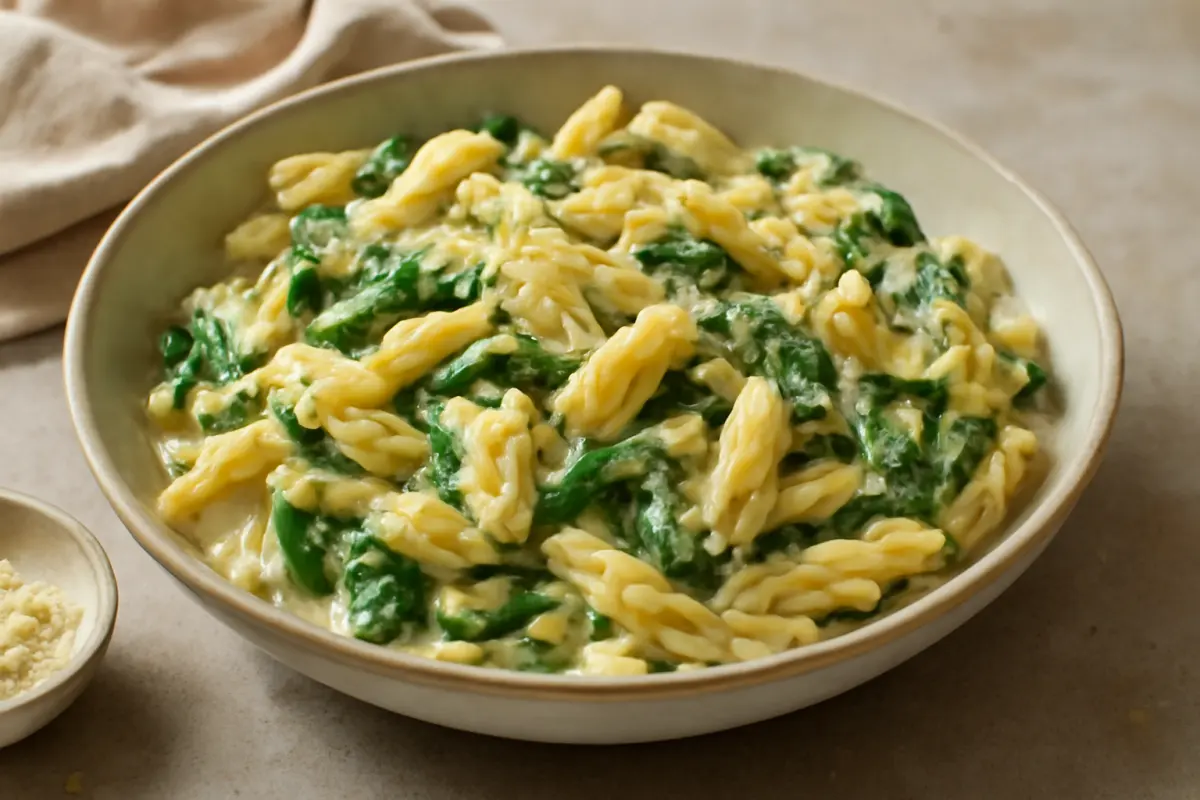
This creamy spinach artichoke pasta combines tender pasta with garlicky cream sauce, wilted spinach, tangy artichokes, and Parmesan. It is a practical one-pan-style dinner that comes together in about 30 minutes.
Overview
This creamy spinach artichoke pasta recipe makes four generous servings in about 30 minutes. The sauce is built from garlic, cream cheese, heavy cream, Parmesan, and reserved pasta water, so it turns smooth and glossy rather than thick and pasty. Chopped artichoke hearts and spinach add savory flavor and color without making the dish complicated.
Use any short pasta that can catch the sauce, such as penne, rigatoni, fusilli, or shells. Cook the pasta just until al dente, then finish it in the sauce so the noodles absorb some of the seasoning while staying pleasantly firm.
Ingredients
- 12 ounces dried penne, rigatoni, fusilli, or medium shells
- 1 tablespoon fine salt, for the pasta water
- 2 tablespoons unsalted butter
- 1 tablespoon olive oil
- 4 garlic cloves, finely minced
- 1/4 teaspoon red pepper flakes, optional
- 1 cup heavy cream
- 4 ounces full-fat cream cheese, cut into small pieces and softened briefly
- 1/2 cup finely grated Parmesan cheese, plus more for serving
- 1/2 teaspoon kosher salt, plus more to taste
- 1/4 teaspoon freshly ground black pepper
- 1 can (14 ounces) artichoke hearts, drained and patted dry
- 5 ounces baby spinach
- 1 tablespoon fresh lemon juice
- 2 tablespoons chopped fresh parsley, optional
How to make it
Boil the pasta. Bring a large pot of water to a rolling boil. Add the tablespoon of salt, then stir in the pasta. Cook according to the package directions, stirring once or twice, until the pasta is al dente: tender in the center but still offering a slight bite. Before draining, scoop out 1 1/2 cups of the starchy pasta water. Drain the pasta; do not rinse it.
Prepare the artichokes. While the pasta cooks, quarter or roughly chop the drained artichoke hearts. Patting them dry prevents excess liquid from thinning the sauce. If the pieces are large and fibrous, remove any tough outer leaves before chopping.
Start the sauce. Place a large skillet or Dutch oven over medium heat. Add the butter and olive oil. When the butter has melted, add the garlic and red pepper flakes, if using. Cook for 30 to 45 seconds, stirring constantly, until the garlic smells fragrant but has not browned. Burnt garlic will make the sauce bitter.
Add the cream and cream cheese. Pour in the heavy cream and bring it to a gentle simmer; it should look steamy with small bubbles around the edge, not boil hard. Add the cream cheese in pieces and whisk until mostly smooth, about 2 minutes. A few small soft streaks are fine because they will melt as the sauce finishes.
Melt in the Parmesan. Reduce the heat to low. Add the Parmesan, kosher salt, and black pepper, stirring until the cheese melts into the cream. Keep the pan below a simmer at this point. High heat can cause the dairy and cheese to separate.
Wilt the spinach and warm the artichokes. Add the spinach in two handfuls, stirring after each addition until wilted. Add the chopped artichokes and cook for 1 to 2 minutes, just until heated through. The spinach should be soft and dark green, while the artichokes should remain recognizable rather than breaking down completely.
Toss with the pasta. Add the drained pasta to the skillet along with 1/2 cup of the reserved pasta water. Toss continuously for 1 to 2 minutes. The sauce should coat the pasta and slowly slide back into the pan when stirred. Add more pasta water, 1 to 2 tablespoons at a time, if it looks thick or clumpy.
Finish and taste. Remove the pan from the heat and stir in the lemon juice. Taste and adjust the salt, pepper, or lemon. Add the parsley if using, then serve immediately with extra Parmesan.
Expert tips
- Grate the Parmesan finely. Fine shreds melt more evenly than thick, cold chunks. Pre-shredded Parmesan can leave the sauce slightly grainy because of its anti-caking coating.
- Keep the heat low after adding cheese. The sauce should be hot enough to melt the cheese but never rapidly bubbling. If it becomes too hot, remove the pan from the burner for a minute before stirring.
- Reserve more pasta water than you think you need. Pasta water is the easiest way to loosen the sauce without making it watery. The sauce will also thicken slightly as it sits.
- Use frozen spinach carefully. Substitute 5 ounces of frozen chopped spinach for the fresh spinach, but thaw it completely and squeeze it very dry before adding it. Extra water can make the sauce thin.
- For a lighter substitution, use half-and-half instead of heavy cream, but expect a thinner sauce. Do not replace all the cream with milk unless you also use less pasta water and keep the heat especially gentle.
- For more protein, stir in 2 cups of shredded cooked chicken or 8 ounces of cooked shrimp at the end, just long enough to warm them through.
- For another creamy pasta dinner, compare this method with the deeply browned mushrooms and Parmesan sauce in the creamy mushroom pasta recipe. For a baked, tomato-based spinach and ricotta option, see the spinach ricotta stuffed shells recipe.
Serving and storage
Serve the pasta hot, with extra Parmesan, black pepper, and a little lemon zest if desired. A crisp green salad or roasted vegetables make simple accompaniments.
Refrigerate leftovers in a covered container within 2 hours of cooking and use them within 3 to 4 days. The sauce will thicken when chilled. Reheat gently in a skillet over low heat with 1 to 2 tablespoons of water, milk, or cream per serving, stirring until loosened and steaming hot. Avoid high heat, which can make the sauce separate. Freezing is not ideal because the cream sauce may become grainy after thawing.
Frequently asked questions
Can I make creamy spinach artichoke pasta without cream cheese?
Yes. Replace the 4 ounces of cream cheese with an additional 1/2 cup of heavy cream and 2 tablespoons of finely grated Parmesan. The sauce will be less tangy and slightly looser, so add pasta water gradually.
Why is my spinach artichoke pasta sauce too thick?
Stir in reserved pasta water 1 to 2 tablespoons at a time over low heat. Toss after each addition until the sauce becomes smooth and coats the pasta. The starch in the water helps loosen the sauce without making it thin and watery.
Why did the cream sauce turn grainy?
The pan was likely too hot when the Parmesan was added, or the cheese did not melt evenly. Remove the pan from the heat, whisk in a small splash of warm pasta water, and keep stirring. Add Parmesan over low or no heat in future batches.
Can I use jarred marinated artichokes?
Yes, but drain and pat them dry first. Because marinated artichokes contain oil, vinegar, and seasoning, taste the sauce before adding the full amount of salt and lemon juice.
What pasta shape works best for this recipe?
Penne, rigatoni, fusilli, and shells all work well because their ridges, curves, or openings hold the creamy sauce. Long pasta can also be used, but it may be slightly harder to toss with the spinach and artichokes.