Recipes
Lemon Raspberry Tart Recipe
This lemon raspberry tart pairs crisp, buttery pastry with silky lemon curd and juicy fresh raspberries. Bake the shell fully before filling it, then chill the tart until the curd is firm enough to slice cleanly.
Overview
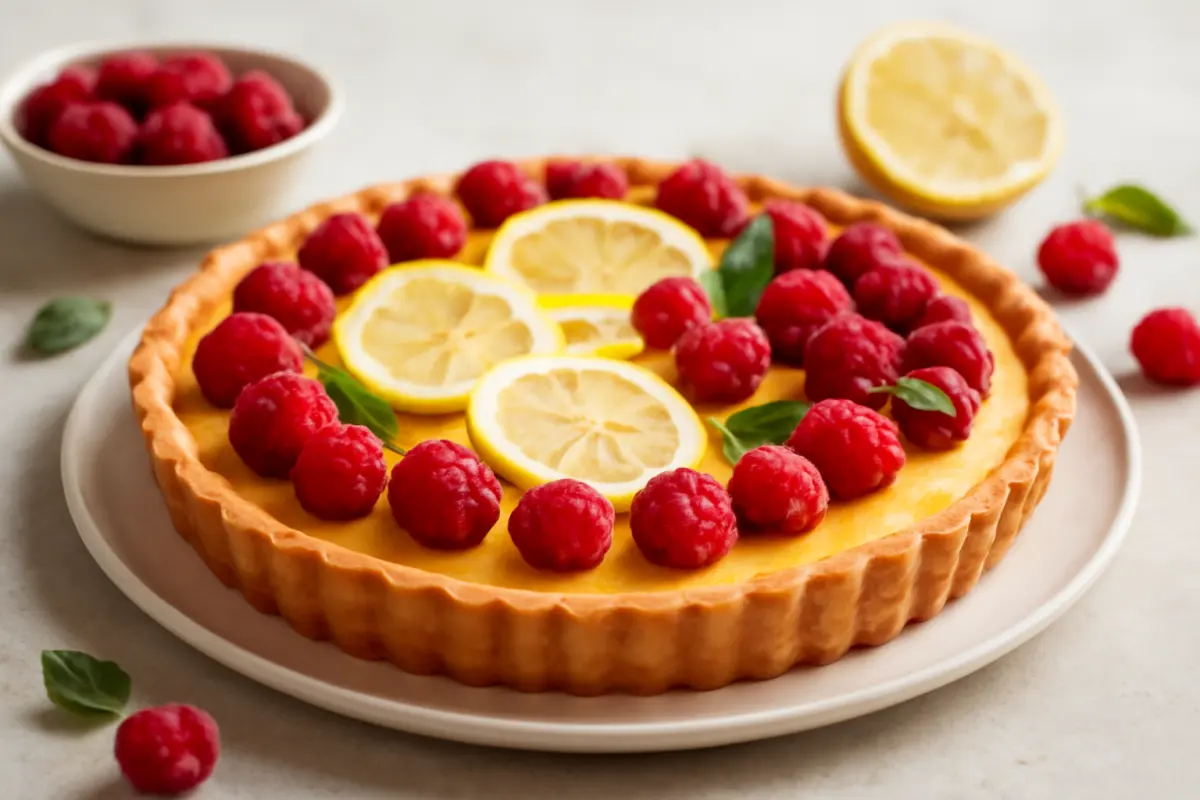
This lemon raspberry tart combines a crisp, buttery pastry shell with smooth lemon curd and fresh raspberries. The tart is bright rather than overly sweet, with the berries adding a soft, juicy contrast to the creamy filling.
The recipe makes one 9-inch tart and is easiest to manage when the pastry is chilled before baking and the lemon curd is cooled slightly before it goes into the shell. Bake the crust until it is fully golden; a pale crust can turn soft once filled.
Ingredients
- 1 1/4 cups (160 g) all-purpose flour, plus extra for rolling
- 1/4 cup (50 g) granulated sugar
- 1/4 teaspoon fine salt
- 1/2 cup (113 g) unsalted butter, cold and cut into 1/2-inch cubes
- 1 large egg yolk
- 2 tablespoons (30 ml) ice water, plus 1 teaspoon more if needed
- 3 large eggs
- 3 large egg yolks
- 3/4 cup (150 g) granulated sugar
- 2/3 cup (160 ml) fresh lemon juice, from about 4 to 5 medium lemons
- 2 teaspoons finely grated lemon zest
- 1/4 teaspoon fine salt
- 6 tablespoons (85 g) unsalted butter, cut into small pieces
- 1 1/2 cups (about 170 g) fresh raspberries
- 1 tablespoon confectioners' sugar, for dusting, optional
How to make it
Make the pastry. Whisk the flour, sugar, and salt in a medium bowl. Add the cold butter and rub it into the flour with your fingertips, or cut it in with a pastry blender, until the mixture resembles coarse crumbs with a few pea-sized pieces of butter remaining.
Add the egg yolk and 2 tablespoons of ice water. Stir with a fork just until the dough begins to clump. Squeeze a small piece in your hand: it should hold together without feeling wet. If it remains crumbly, add the extra teaspoon of ice water.
Turn the dough onto the counter and press it together without kneading. Shape it into a flat disk, wrap it, and refrigerate for at least 45 minutes and up to 2 days.
Roll and chill the tart shell. Lightly flour the counter and roll the dough into an 11-inch circle, lifting and turning it occasionally so it does not stick. Transfer it to a 9-inch tart pan with a removable bottom. Press the dough into the bottom and fluted sides, then trim the excess level with the rim. Patch any cracks with scraps of dough.
Prick the bottom all over with a fork. Freeze the lined tart pan for 20 minutes while the oven heats to 375°F (190°C). Place a rack in the center of the oven.
Blind-bake the crust. Line the chilled shell with parchment and fill it with pie weights or dried beans. Bake for 18 minutes. Carefully remove the parchment and weights, then bake for 10 to 14 minutes more, until the bottom looks dry and the pastry is evenly golden at the edges and lightly golden in the center.
Set the crust on a rack to cool. If the sides have puffed slightly, gently press them back into place while the pastry is still warm. Keep the oven on if the crust needs another minute or two later; it should be completely baked before filling.
Make the lemon curd. In a medium heatproof bowl, whisk the eggs, egg yolks, sugar, lemon juice, lemon zest, and salt until smooth. Set the bowl over a saucepan containing 1 inch of barely simmering water. The bottom of the bowl should not touch the water.
Cook, whisking constantly and scraping around the sides and bottom, for 8 to 12 minutes. The curd is ready when it thickly coats a spoon and a line drawn through it stays visible for a few seconds. If using a thermometer, aim for about 170 to 175°F (77 to 79°C); do not let the mixture boil.
Remove the bowl from the heat and whisk in the butter, one piece at a time, until glossy and fully blended. For an especially smooth filling, strain the curd through a fine-mesh sieve into a clean bowl.
Fill and finish the tart. Pour the warm curd into the cooled pastry shell. If the crust has cooled completely and the curd has thickened too much to spread smoothly, set the bowl over warm water for a minute and stir before filling. Bake the tart at 325°F (165°C) for 8 to 12 minutes, just until the surface looks set but still has a slight wobble in the center.
Cool the tart on a rack for 1 hour, then refrigerate it for at least 2 hours. Arrange the raspberries over the chilled tart just before serving, or add them during the final 30 minutes of chilling if you prefer them more firmly set in the surface. Dust with confectioners' sugar, if desired, and use a sharp knife to slice.
Expert tips
- Keep the pastry crisp: Do not fill a warm or underbaked shell. The base should look dry and golden, not pale or doughy.
- Prevent shrinking: Chill the pastry in the pan before baking, and avoid stretching it as you press it into the sides.
- Watch the curd, not only the clock: It should coat a spoon and move slowly when whisked. Boiling can make the eggs curdle.
- If the curd looks lumpy: Immediately strain it while warm. Small lumps can usually be removed before the filling goes into the crust.
- If the tart cracks: It was likely baked too long or cooled too quickly. A crack does not affect the flavor; cover it with raspberries before serving.
- Berry substitutions: Blueberries or sliced strawberries can replace the raspberries. Pat any washed berries very dry so excess water does not soften the curd.
- For a dairy-free version: Use a dairy-free block-style baking butter in both the crust and curd. Soft tub-style spreads can contain extra water and may produce a less crisp shell.
Serving and storage
Serve the tart cold or slightly cool, when the curd is firm and the pastry is easiest to cut. It is best topped with raspberries shortly before serving, especially if the berries are very ripe.
Refrigerate leftovers in the tart pan, loosely covered, for up to 3 days. Keep the tart refrigerated rather than leaving it at room temperature for extended periods because the filling contains eggs and butter. The pastry will gradually soften as it sits, but the flavor remains good. Freeze the baked, unfilled crust for up to 1 month; thaw it at room temperature and refresh it in a 325°F (165°C) oven for 5 to 8 minutes before filling.
Frequently asked questions
Can I make the lemon raspberry tart ahead of time?
Yes. Bake the crust and make the tart up to 1 day ahead, then refrigerate it covered. Add the raspberries close to serving so they stay fresh and do not release excess juice onto the curd.
Why is my tart crust soggy?
The shell may have been underbaked, filled while warm, or exposed to wet berries for too long. Bake until the base is dry and golden, cool it fully, and pat raspberries dry before arranging them on top.
How do I know when the lemon curd is done?
It should visibly thicken, coat the back of a spoon, and leave a line that remains clear for a few seconds when you run a finger through it. It should not boil.
Can I use bottled lemon juice?
Fresh lemon juice is strongly preferable because it gives the tart a brighter flavor and supplies the zest used in the recipe. If bottled juice is your only option, use it for the juice but omit the zest or add finely grated zest from one fresh lemon if available.
Can I use frozen raspberries?
Frozen raspberries are not ideal for the topping because they become soft and release liquid as they thaw. Use them only if you cook them into a sauce, then cool the sauce completely before serving it with the tart.