Recipes
Daal Chawal Recipe
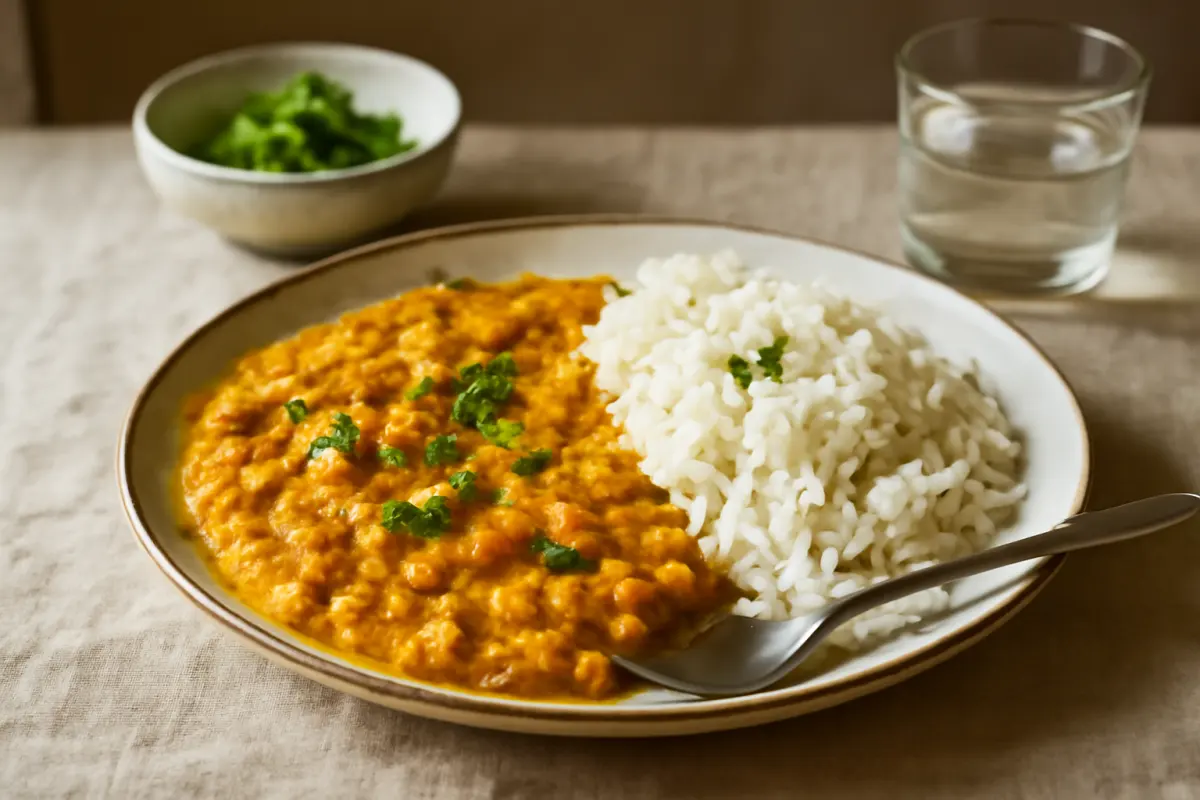
This daal chawal recipe pairs soft, gently spiced lentils with separate, fluffy basmati rice and a sizzling garlic-and-cumin tadka. The practical method includes soaking, cooking cues, substitutions, and fixes for thin or undercooked daal.
Overview
Daal chawal is a simple, satisfying meal of soft lentils served with rice. This version uses split yellow lentils cooked with turmeric, tomato, ginger, and green chile, then finished with a fragrant tadka of ghee, cumin, garlic, and dried chile.
The recipe makes four servings. Cook the rice separately so the grains stay distinct, and adjust the daal with hot water at the end until it reaches your preferred consistency—thick enough to coat a spoon but loose enough to pour over rice.
Ingredients
For the daal
- 1 cup (200 g) split yellow lentils, such as moong dal, masoor dal, or a 50:50 mixture
- 3 cups water, plus more for rinsing and adjusting
- 1 medium tomato, about 150 g, finely chopped
- 1 small yellow onion, about 100 g, finely chopped
- 1 tablespoon grated fresh ginger
- 1 green chile, slit lengthwise, or 1/4 teaspoon red pepper flakes
- 1/2 teaspoon ground turmeric
- 1 teaspoon kosher salt, plus more to taste
- 1/2 teaspoon ground coriander
- 1/4 teaspoon ground cumin
- 2 tablespoons chopped fresh cilantro, for finishing
For the rice
- 1 1/2 cups (300 g) basmati rice
- 2 1/4 cups water
- 1 teaspoon salt
- 1 teaspoon neutral oil or ghee
For the tadka
- 2 tablespoons ghee or neutral oil
- 1 teaspoon cumin seeds
- 4 garlic cloves, thinly sliced
- 2 dried red chiles, broken in half, optional
- 1/4 teaspoon red pepper flakes, optional
How to make it
Rinse and soak the lentils. Place the lentils in a bowl, cover with water, and swish them with your fingers. Drain and repeat until the water is mostly clear. Cover with fresh water and soak for 20 minutes. Drain before cooking. Soaking is optional, but it helps the lentils cook more evenly.
Start the daal. Add the drained lentils, 3 cups water, chopped tomato, onion, ginger, green chile, turmeric, salt, coriander, and ground cumin to a medium saucepan. Bring to a boil over medium-high heat, then reduce the heat to low. Partially cover and simmer for 25 to 35 minutes, stirring every 8 to 10 minutes.
Check for doneness. The daal is ready when the lentils are very soft and break apart easily when pressed against the side of the pan. The mixture should look creamy with some visible lentil texture. If the liquid disappears before the lentils soften, add 1/2 cup hot water at a time and continue simmering.
Cook the rice while the daal simmers. Rinse the basmati rice several times, then soak it in clean water for 15 minutes. Drain well. Add the rice, 2 1/4 cups water, salt, and oil or ghee to a saucepan. Bring to a boil uncovered. Once the water is level with the rice and small holes appear across the surface, cover tightly, reduce the heat to the lowest setting, and cook for 12 minutes.
Rest and fluff the rice. Turn off the heat and leave the rice covered for 10 minutes. Remove the lid and gently fluff from the edges with a fork. The grains should be tender and separate rather than wet or sticky.
Adjust the daal. Stir the cooked lentils vigorously for 30 to 45 seconds to smooth them slightly. Add hot water, 2 tablespoons at a time, if they are too thick. Taste and add more salt if needed. Keep the daal over very low heat while preparing the tadka so it stays hot.
Make the tadka. Heat the ghee or oil in a small skillet over medium heat. Add the cumin seeds. When they sizzle and smell nutty, add the sliced garlic and dried red chiles. Cook for 30 to 60 seconds, stirring, until the garlic is light golden. Add the red pepper flakes, if using, and immediately pour the hot tadka over the daal. Do not let the garlic become dark brown, or it can taste bitter.
Finish and serve. Scatter the cilantro over the daal. Spoon the daal over hot rice and serve immediately. A cool side such as this cucumber raita works well with the warm spices.
Expert tips
- Choose the lentils by texture: moong dal cooks quickly and becomes smooth; masoor dal gives a slightly deeper color and earthy flavor. Either works on its own.
- Keep the rice covered: lifting the lid during the 12-minute steaming stage lets heat escape and can leave the center undercooked.
- Use hot water for adjustments: cold water can interrupt the simmer and slow the final cooking.
- For a richer finish: replace the oil in the tadka with ghee. For a dairy-free version, use neutral oil throughout.
- If the daal is too thin: simmer it uncovered for 5 to 10 minutes, stirring occasionally, until excess water evaporates. If it is too thick, loosen it with hot water.
- If the rice is firm but the pot is dry: sprinkle 2 tablespoons hot water over the rice, cover, and steam on low for another 5 minutes, then rest for 5 minutes before checking again.
- If the rice is wet: keep it uncovered off the heat for 5 minutes so excess steam can escape. Fluff gently rather than stirring vigorously.
- If the tadka burns: discard it and make a fresh batch. Burnt garlic will flavor the whole pot with bitterness, and scraping the dark bits into the daal will not fix it.
Serving and storage
Serve the daal hot over rice, with lemon wedges, chopped cilantro, sliced green chile, or plain yogurt if desired. The cooked daal and rice can be refrigerated separately in covered containers for up to 3 days. Cool them promptly rather than leaving them at room temperature for an extended period.
Reheat the daal in a saucepan with a splash of water, stirring until steaming hot throughout. Reheat the rice covered in the microwave with 1 tablespoon water per serving, or in a saucepan with a splash of water. Stir the daal before serving because it thickens as it cools.
Frequently asked questions
Can I make daal chawal without soaking the lentils?
Yes. Rinse the lentils well and simmer them as directed, but expect the cooking time to increase by about 10 to 15 minutes. Add hot water if the pot becomes dry before the lentils turn soft.
Which lentil is best for daal chawal?
Split yellow moong dal makes a mild, creamy daal and cooks quickly. Split red lentils cook just as easily and have a slightly earthier flavor. A half-and-half mixture gives a balanced texture and color.
Why is my daal still hard after simmering?
The heat may be too low, the lentils may be older, or the water may have evaporated too quickly. Add hot water, cover partially, and continue simmering until the lentils crush easily with the back of a spoon.
Can I cook the rice and daal in the same pot?
You can, but the rice and lentils need different cooking times and liquid amounts, so the textures are less predictable. Cooking them separately gives fluffy rice and lets you adjust the daal's thickness at the end.
How do I stop basmati rice from becoming sticky?
Rinse until the water is mostly clear, soak for 15 minutes, drain thoroughly, and avoid stirring while the rice cooks. Let it rest covered for 10 minutes before fluffing.