Recipes
French Toast Recipe
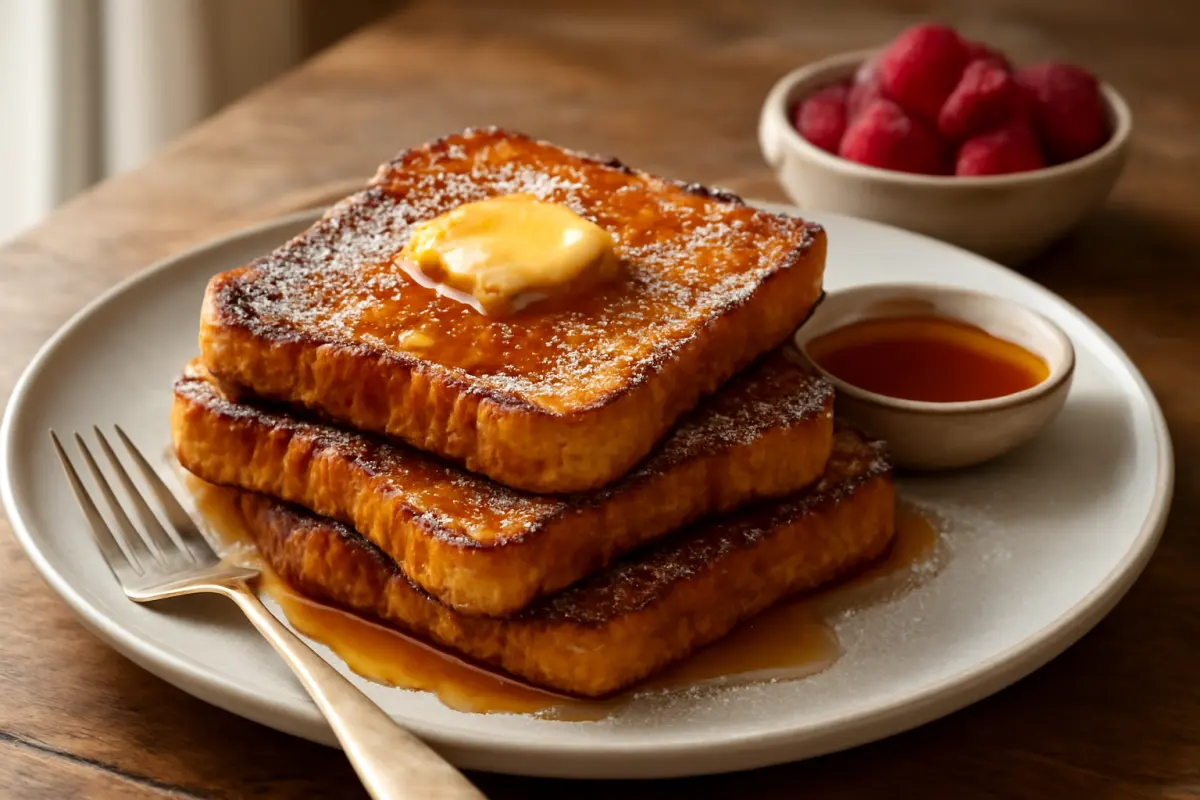
This easy French toast recipe makes eight golden slices with crisp, buttery edges and a soft, custardy center. The key is soaking thick bread briefly, then cooking it gently enough to brown without burning.
Overview
This French toast recipe makes eight slices with crisp, buttery edges and a tender, custardy center. Cinnamon, vanilla, and a small pinch of salt give the egg mixture balanced flavor without making it overly sweet.
Use bread that is slightly stale or leave fresh slices uncovered for 30 to 60 minutes before cooking. Drier bread absorbs the custard more evenly and is less likely to fall apart in the pan.
Ingredients
- 8 slices thick-cut bread, about 2.5 cm (1 inch) thick; brioche, challah, or sturdy white bread works well
- 4 large eggs
- 240 ml (1 cup) whole milk
- 2 tablespoons granulated sugar
- 1 teaspoon vanilla extract
- 1 teaspoon ground cinnamon
- 1/4 teaspoon fine salt
- 2 tablespoons unsalted butter, plus more as needed for the pan
- Maple syrup, powdered sugar, fresh berries, or sliced bananas, for serving
How to make it
Make the custard. In a wide, shallow bowl, whisk the eggs until the yolks and whites are fully combined. Whisk in the milk, sugar, vanilla, cinnamon, and salt. The mixture should look smooth, with no visible streaks of egg white.
Heat the pan. Place a large nonstick or well-seasoned skillet over medium-low to medium heat. Add 1 tablespoon of butter. It should melt and foam gently, but it should not turn dark brown before the bread goes into the pan.
Soak the bread briefly. Place one or two slices in the custard, depending on the size of your bowl. Turn them once so both sides are coated. For 2.5 cm-thick bread, soak for about 10 to 15 seconds per side. The bread should feel saturated but still hold its shape; do not leave it submerged until it becomes floppy.
Cook the first side. Lift the bread from the custard and let the excess drip back into the bowl. Place it in the hot skillet. Cook for 3 to 4 minutes, without pressing it down, until the underside is deep golden brown and the edges look set.
Turn and finish cooking. Add a little more butter if the pan looks dry, then turn the bread with a spatula. Cook the second side for 2 to 3 minutes. It should be golden, the center should feel springy rather than wet, and no liquid egg should seep out when the slice is gently pressed at the edge.
Repeat in batches. Transfer cooked slices to a plate or a wire rack and continue with the remaining bread. Adjust the heat if needed: lower it if the outside darkens before the center cooks, or raise it slightly if the bread is still pale after 4 minutes. Wipe out burnt butter between batches if necessary, then add fresh butter.
Serve immediately. Top the French toast with maple syrup, powdered sugar, berries, or sliced bananas. For a crispier finish, serve it as soon as the last batch is cooked rather than stacking all the slices in a covered dish.
Expert tips
- Choose the right bread: Brioche and challah give a rich, tender result. Thick-sliced sandwich bread works too, but soak it for less time because it softens quickly.
- Avoid soggy centers: Use slightly stale bread, keep the soak brief, and cook over moderate heat. Very high heat browns the outside before the custard sets inside.
- Prevent uneven browning: Whisk the custard again after every few slices so the cinnamon and sugar do not settle at the bottom of the bowl.
- If the bread tears: It has absorbed too much liquid or is too delicate. Use shorter soaking times and turn it with a wide spatula.
- For extra-rich French toast: Replace 60 ml (1/4 cup) of the milk with heavy cream. Do not add more egg, or the cooked center can become firm and eggy.
- For dairy-free French toast: Use an unsweetened oat, soy, or almond beverage and plant-based butter. Soy or oat beverages usually give the closest browning and texture.
Serving and storage
Serve French toast hot with maple syrup, fruit, yogurt, or a small pat of butter. The recipe is lightly sweetened, so you can add more sweetness at the table without making the custard too sugary.
Cool leftovers promptly, then refrigerate them in a covered container for up to 3 days. Reheat in a toaster, toaster oven, or lightly buttered skillet until hot throughout; a microwave will warm the slices but will make them softer. Do not leave cooked French toast at room temperature for more than 2 hours, or 1 hour in very hot conditions.
Frequently asked questions
Why is my French toast soggy in the middle?
The bread may have been soaked too long, the slices may be too thick for the cooking time, or the pan may have been too hot. Use slightly stale bread, soak it only until coated and pliable, and cook over medium-low to medium heat until the center feels springy and no liquid egg remains.
What is the best bread for French toast?
Brioche and challah make rich, tender French toast, while thick-cut white bread gives a lighter result. Slightly stale bread is easier to soak without falling apart and gives a more even custardy center.
Can I make French toast without vanilla?
Yes. Leave it out, or replace it with a little extra cinnamon, a pinch of nutmeg, or a small amount of orange zest. The eggs, milk, sugar, and salt will still make a flavorful custard.
How do I keep French toast warm for a group?
Place cooked slices in a single layer on a wire rack set over a baking sheet in a 95°C (200°F) oven. Avoid covering them tightly, which traps steam and softens the browned edges.