Recipes
Garlic Herb Dinner Rolls Recipe
These garlic herb dinner rolls are soft, lightly chewy, and brushed with garlic-parsley butter while warm. The dough is easy to mix, shape, and bake for a dependable homemade side dish.
Overview
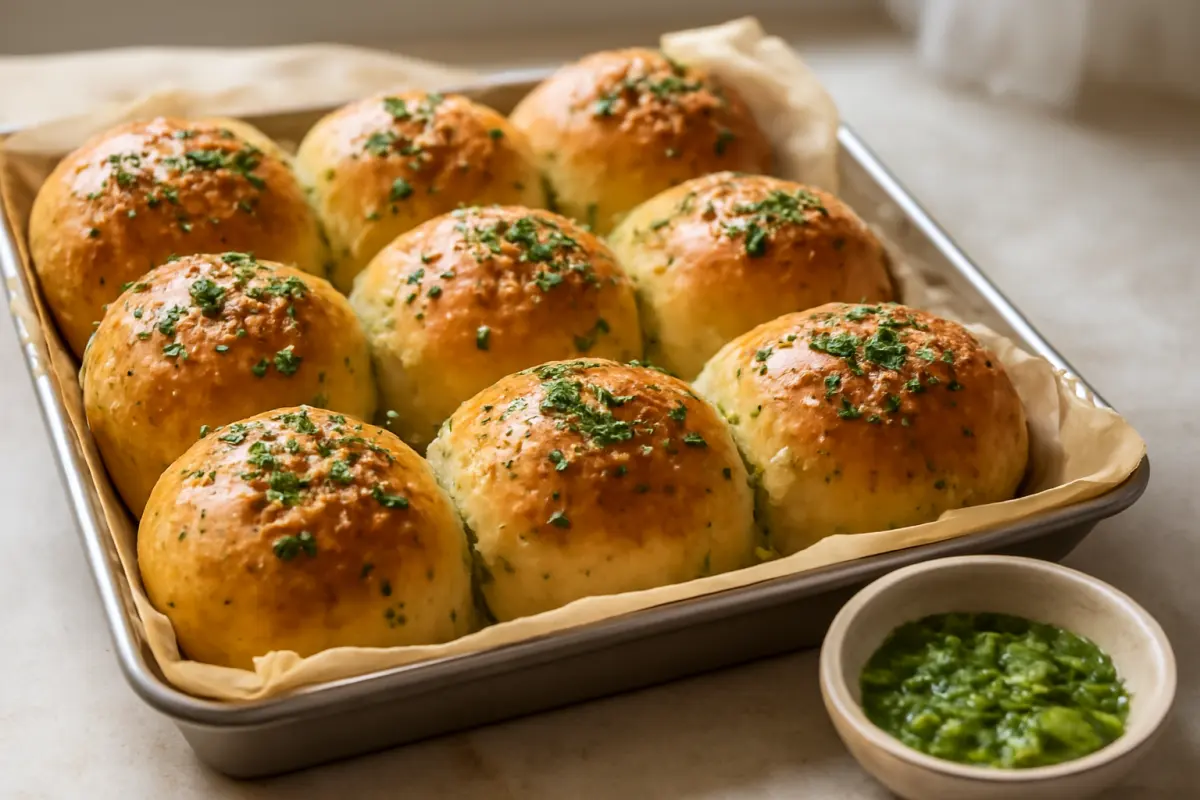
These garlic herb dinner rolls have tender, fluffy centers, lightly golden tops, and plenty of savory flavor from melted butter, garlic, parsley, and oregano. The dough uses instant yeast and needs two rises, but most of the time is hands-off.
The recipe makes 12 rolls and works well alongside soup, pasta, roasted meat, or a holiday meal. Brush the rolls as soon as they come out of the oven so the garlic herb butter can soak into the warm tops without making them soggy.
Ingredients
- ¾ cup (180 ml) whole milk, warmed to about 105°F (40°C)
- 2¼ teaspoons (1 packet or 7 g) instant yeast
- 2 tablespoons (25 g) granulated sugar
- 1 large egg, at room temperature
- 4 tablespoons (56 g) unsalted butter, melted and cooled slightly, divided
- 3 cups (360 g) all-purpose flour, plus 1 to 2 tablespoons if needed
- 1 teaspoon fine salt
- 2 garlic cloves, finely grated or minced
- 1 tablespoon finely chopped fresh parsley
- ½ teaspoon dried oregano
- ⅛ teaspoon black pepper
How to make it
Prepare the dough. In a large bowl, stir together the warm milk, yeast, and sugar. Let the mixture stand for 3 to 5 minutes. It may look slightly creamy or foamy, though instant yeast does not always produce a thick foam. Stir in the egg and 2 tablespoons of the melted butter.
Add the flour and salt. Stir with a sturdy spoon until a shaggy dough forms and no large dry patches remain. The dough should feel soft and slightly tacky, not wet or runny.
Knead the dough on a lightly floured surface for 6 to 8 minutes, or knead with a dough hook on low-medium speed for about 5 minutes. It is ready when smooth and elastic: press it with a fingertip and it should slowly spring back. If it clings heavily to your hands or the bowl, add flour 1 tablespoon at a time. Avoid adding more flour than necessary, or the rolls can turn dense.
Let the dough rise. Shape the dough into a ball and place it in a lightly greased bowl. Turn it once to coat, cover the bowl, and leave it in a warm, draft-free place for 60 to 90 minutes. The dough should look puffy and nearly double in size. A cool kitchen may require the longer end of the range.
Shape the rolls. Grease a 9-inch square baking pan or a 9-inch round cake pan. Turn the dough onto a lightly floured surface and gently press out large air pockets. Divide it into 12 equal pieces; for consistent rolls, each piece will weigh about 53 to 55 g.
Roll each piece under your cupped palm until smooth. Arrange the dough balls in the prepared pan with a little space between them. Cover and let rise for 30 to 45 minutes, until the rolls look swollen and the dough springs back slowly when pressed lightly.
Near the end of the second rise, heat the oven to 375°F (190°C). Bake the rolls for 18 to 22 minutes, rotating the pan once if your oven browns unevenly. They are done when the tops are golden brown and the center roll feels set when gently pressed. If using an instant-read thermometer, the center should register about 190°F (88°C).
Make the garlic herb butter. While the rolls bake, stir together the remaining 2 tablespoons melted butter, garlic, parsley, oregano, and black pepper. For a milder garlic flavor, warm the butter and garlic together in a small saucepan over low heat for 1 minute, then stir in the herbs.
Brush the hot rolls generously with the garlic herb butter. Let them cool in the pan for 5 to 10 minutes before serving. Pull them apart or use a serrated knife to separate them.
Expert tips
- Milk temperature matters: Milk that feels comfortably warm, rather than hot, is suitable. Very hot milk can weaken or kill the yeast.
- Do not judge the rise by the clock alone: Dough rises faster in a warm room and slower in a cool one. Look for a doubled, airy dough during the first rise and visibly puffy rolls during the second.
- For a softer crust: Cover the baked rolls loosely with a clean kitchen towel for 10 minutes after brushing them with butter.
- Fresh-herb substitution: Replace the parsley and oregano with 1 tablespoon finely chopped fresh chives, basil, rosemary, or a combination. Use less rosemary if it is especially strong.
- No stand mixer: Knead by hand until the dough is smooth and elastic. The dough may feel sticky at first; give it a few minutes before adding extra flour.
- If the rolls brown too quickly: Loosely tent the pan with foil for the final 5 to 8 minutes of baking.
- If the rolls are dense: The dough may have been over-floured, under-kneaded, or allowed to rise in a cold place. Next time, keep the dough slightly tacky and wait for the visual rise cues before shaping and baking.
Serving and storage
Serve the rolls warm with the garlic herb butter on top. They are especially good with a bowl of roasted garlic white bean soup, a saucy pasta dish, or a roasted vegetable side.
Store completely cooled rolls in an airtight container at room temperature for up to 2 days. Rewarm them in a 300°F (150°C) oven for 8 to 10 minutes, or microwave one roll for about 10 seconds. For longer storage, wrap the cooled rolls well and freeze for up to 2 months. Thaw at room temperature and warm before serving.
Frequently asked questions
Can I use active dry yeast instead of instant yeast?
Yes. Use the same amount, 2¼ teaspoons (7 g). Stir it into the warm milk and sugar, then let it stand for 5 to 10 minutes until foamy before adding the egg, butter, flour, and salt.
Can I prepare these garlic herb dinner rolls ahead of time?
Yes. Shape the rolls, place them in the greased pan, cover tightly, and refrigerate for up to 16 hours. Let them sit at room temperature until puffy, usually 45 to 75 minutes, then bake as directed.
Why did my dinner rolls turn out hard?
The most common causes are too much flour, overbaking, or insufficient rising time. Measure flour by weight when possible, add extra flour gradually, and bake only until the tops are golden and the center is set.
Can I make the garlic butter without fresh parsley?
Yes. Use 1 teaspoon dried parsley, or replace it with 1 tablespoon chopped chives or basil. The garlic butter will still work without herbs, although the flavor will be simpler.