Recipes
Garlic Herb Roasted Pork Tenderloin Recipe
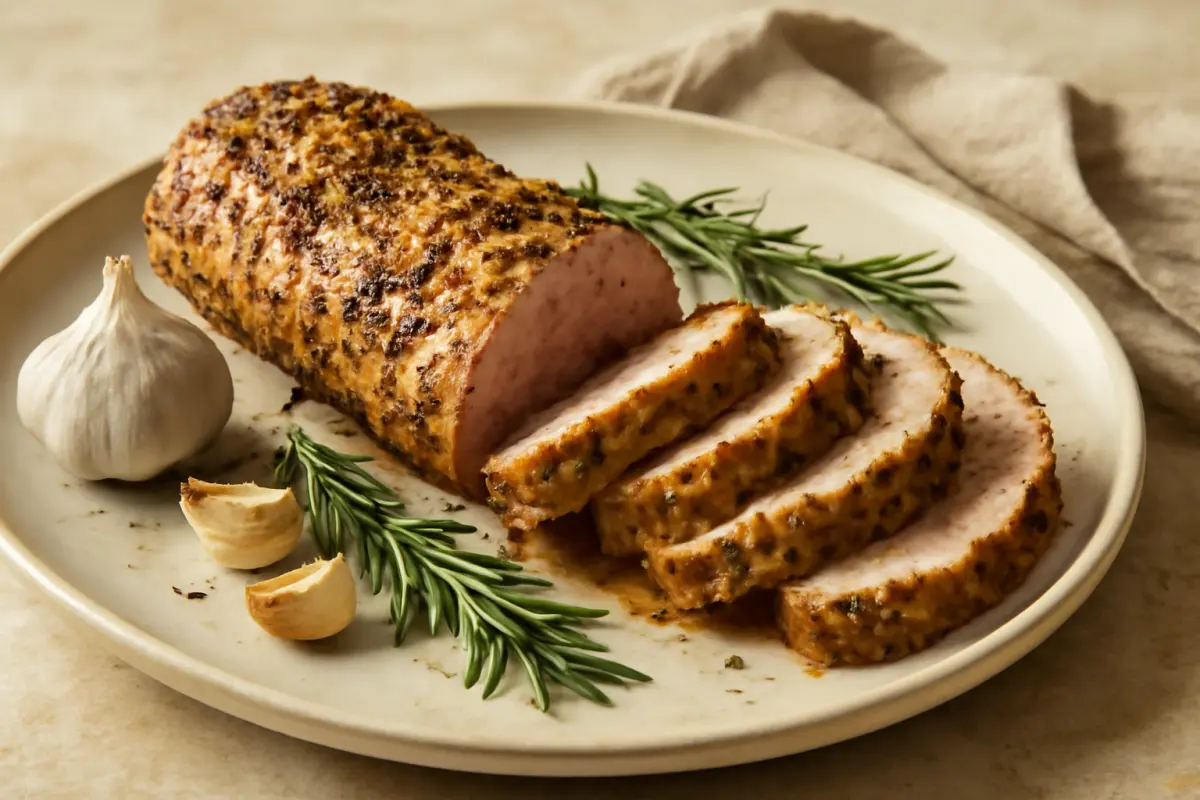
This garlic herb roasted pork tenderloin is browned on the outside, juicy in the center, and seasoned with garlic, rosemary, thyme, and Dijon mustard. A quick sear followed by oven roasting gives it a flavorful crust without a complicated method.
Overview
This garlic herb roasted pork tenderloin is a practical dinner when you want a tender main dish without a long cooking time. The pork is coated with garlic, Dijon mustard, rosemary, thyme, and olive oil, then seared briefly before roasting.
Use an instant-read thermometer rather than relying only on color. The tenderloin is ready when the thickest part reaches 145°F, then rests so the juices settle before slicing. The finished pork should be lightly browned outside and moist, with a faint blush possible in the center.
Ingredients
- 1 pork tenderloin, about 1 to 1 1/4 pounds, trimmed of silver skin
- 1 tablespoon olive oil, plus 1 teaspoon for the pan if needed
- 4 garlic cloves, finely grated or minced
- 1 tablespoon Dijon mustard
- 1 teaspoon finely chopped fresh rosemary, or 1/2 teaspoon dried rosemary
- 1 teaspoon finely chopped fresh thyme, or 1/2 teaspoon dried thyme
- 1/2 teaspoon kosher salt
- 1/4 teaspoon freshly ground black pepper
- 1 teaspoon lemon juice, optional
How to make it
Heat the oven and prepare the pork. Set an oven rack in the center position and heat the oven to 425°F. Pat the pork tenderloin thoroughly dry with paper towels. Removing surface moisture helps it brown instead of steaming. If the tenderloin has a thin, shiny strip of silver skin, slide a sharp knife underneath it and trim it away without removing much meat.
Mix the herb coating. In a small bowl, stir together the olive oil, garlic, Dijon mustard, rosemary, thyme, salt, pepper, and lemon juice if using. Rub the mixture evenly over every side of the pork. Let it stand at room temperature for 10 to 15 minutes while the oven heats; do not leave it out longer than 2 hours.
Sear the tenderloin. Heat a large oven-safe skillet over medium-high heat. Add the extra teaspoon of oil if the pan looks dry. When the oil shimmers, add the pork and sear for 2 to 3 minutes per side, turning it with tongs until several sides are browned. The garlic may darken slightly, but if it begins to burn, reduce the heat immediately.
Roast until cooked through. Transfer the skillet to the oven. Roast for 12 to 18 minutes, depending on the thickness of the tenderloin. Begin checking after 12 minutes by inserting an instant-read thermometer into the thickest section. Remove the pork when it reaches 145°F. If the tenderloin is very thin, it may finish sooner; if it is unusually thick, it may need a few extra minutes.
Rest and slice. Move the pork to a cutting board and loosely tent it with foil. Rest for 5 to 10 minutes. The surface should feel firm but spring slightly when pressed, and the juices should not run freely onto the board. Slice across the grain into pieces about 1/2 inch thick and spoon any board juices over the top.
Expert tips
- Prevent dry pork: Tenderloin is lean and can overcook quickly. Start checking its temperature early rather than waiting for a fixed roasting time.
- No oven-safe skillet: Sear the pork in any heavy skillet, then transfer it to a small rimmed baking sheet or roasting dish before placing it in the oven.
- No fresh herbs: Dried rosemary and thyme work well, but use half the amount listed for fresh herbs because their flavor is more concentrated.
- Garlic burning in the pan: Use medium heat for the sear, or reserve half of the garlic mixture and brush it on after browning and before roasting.
- Uneven tenderloin: Fold the thin tail underneath and tie it with kitchen twine so the meat cooks more evenly. Remove the twine before slicing.
- More sauce: Deglaze the hot skillet after removing the pork with 1/2 cup chicken stock. Simmer for 2 to 3 minutes, scraping up browned bits, then whisk in 1 tablespoon butter.
Serving and storage
Serve the sliced pork with pan juices and a simple vegetable side. Garlic Parmesan roasted cauliflower or lemon garlic green beans pairs well with the savory herb coating. A roasted beet salad adds a bright, earthy contrast.
Refrigerate leftovers in a shallow airtight container within 2 hours of cooking. They keep for up to 3 to 4 days in the refrigerator. Reheat gently in a covered skillet with a splash of stock or water, or microwave in short intervals so the lean pork does not dry out. Cold slices also work in sandwiches or grain bowls.
Frequently asked questions
How do I know when pork tenderloin is done?
Insert an instant-read thermometer into the thickest part of the tenderloin. Remove it from the oven at 145°F, then rest it for 5 to 10 minutes before slicing. The pork should feel firm with a little spring and may have a faint blush in the center.
Should I sear pork tenderloin before roasting it?
Searing is optional, but it adds browned flavor and gives the outside a more appealing crust. If you skip it, rub the pork with the herb mixture and roast at 425°F, checking the temperature early.
Can I use pork loin instead of pork tenderloin?
They are different cuts and are not a direct size-for-size substitution. Pork loin is wider and usually needs a longer roasting time, so use its weight and thickness to guide cooking and check the center with a thermometer.
Why did my pork tenderloin turn out dry?
It was likely roasted past its target temperature, sliced immediately without resting, or unusually small and therefore cooked faster than expected. Check the temperature early and remove the pork at 145°F.