Recipes
Gulab Jamun Recipe
This gulab jamun recipe makes soft, golden milk-powder dumplings soaked in a fragrant cardamom-and-saffron syrup. The method includes clear dough, frying, soaking, and troubleshooting cues.
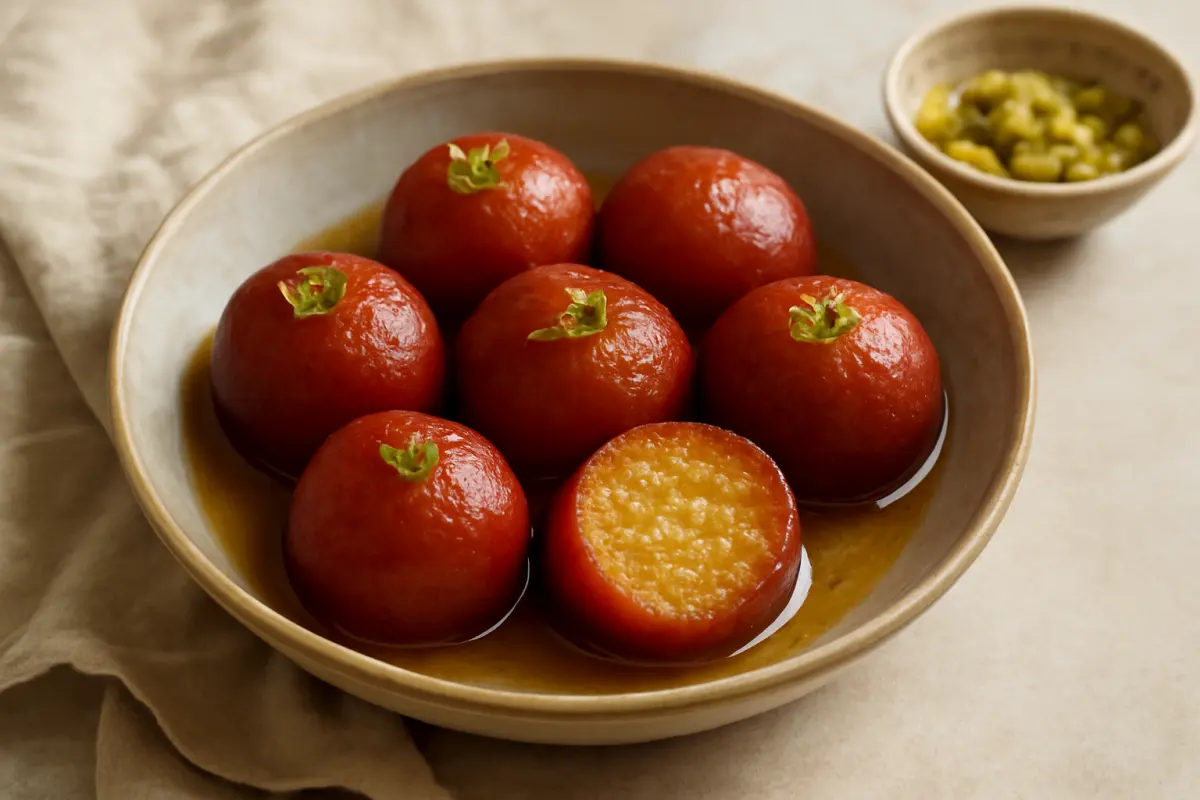
Overview
This gulab jamun recipe makes 18–20 small, soft dumplings with a lightly crisp golden surface and a tender center that absorbs the syrup. Milk powder provides the milky flavor, while a little yogurt keeps the dough soft without making it difficult to shape.
The most important details are a soft, crack-free dough and gentle frying over low to medium-low heat. The gulab jamuns should cook slowly enough to turn evenly golden before they are added to warm syrup.
Ingredients
- 1 cup (100 g) full-fat milk powder
- 3 tablespoons (24 g) all-purpose flour
- 1/4 teaspoon baking powder
- 2 tablespoons ghee, melted and cooled slightly
- 3 tablespoons plain full-fat yogurt, plus up to 1 teaspoon more if needed
- 1/2 teaspoon rose water, optional
- 4 cups neutral oil or ghee, for frying
- 1 1/2 cups (300 g) granulated sugar
- 1 1/2 cups (360 ml) water
- 4 green cardamom pods, lightly crushed
- 8–10 saffron strands, optional
- 1 teaspoon rose water, for the syrup
- 1 tablespoon sliced pistachios or almonds, for serving, optional
How to make it
Make the syrup first. Combine the sugar, water, crushed cardamom, and saffron in a wide saucepan. Bring to a boil over medium heat, stirring until the sugar dissolves. Boil for 5–6 minutes, then turn off the heat and stir in 1 teaspoon rose water. The syrup should be clear and lightly sticky, not thick like honey. Keep it warm, covered, while you prepare and fry the gulab jamuns.
Mix the dough. In a bowl, whisk together the milk powder, flour, and baking powder. Add the melted ghee and rub it through the dry ingredients with your fingertips until the mixture looks evenly moistened. Add 3 tablespoons yogurt and gently bring the mixture together. Do not knead firmly; overworking makes the finished gulab jamuns dense.
Check the dough texture. The dough should be soft, smooth, and slightly tacky but easy to handle. If it looks dry or cracks when pressed, add extra yogurt 1/4 teaspoon at a time. If it feels very sticky, rest it for 3–4 minutes before adding flour; milk powder often absorbs moisture as it sits. Avoid adding more than 1 teaspoon extra yogurt unless absolutely necessary.
Shape the balls. Lightly grease your hands with a drop of ghee. Divide the dough into 18–20 equal portions, about 1 tablespoon each. Roll each portion gently between your palms until smooth and round. Check for visible cracks: even small cracks can widen in the oil. If a ball cracks, soften that portion with damp fingertips and roll it again without pressing hard.
Heat the oil. Pour the oil or ghee into a deep, heavy saucepan and heat it over medium-low heat. Test it with a tiny piece of dough. It should sink briefly, then rise slowly with a few small bubbles. If it rises immediately and browns quickly, the oil is too hot; let it cool for a minute or reduce the heat.
Fry in batches. Carefully lower 6–8 balls into the oil, leaving enough room for them to move. For the first 30 seconds, leave them mostly undisturbed so the outer layer sets. Then stir or roll them gently with a slotted spoon so they brown evenly. Fry for 7–10 minutes, adjusting the heat as needed, until they are an even deep golden brown. The color should develop gradually; dark spots or a very fast brown crust indicate excessive heat.
Drain briefly. Lift the gulab jamuns onto a plate lined with paper towels and let them drain for about 30 seconds. Do not leave them to cool completely, because warm dumplings absorb the syrup more readily.
Soak in warm syrup. Transfer the warm gulab jamuns to the warm syrup. The syrup should feel warm but not be boiling. Cover the pan and let them soak for at least 2 hours. They will become plumper and softer as they absorb the syrup. For the best texture, soak them 4 hours or overnight in the refrigerator, then bring them to room temperature or warm them gently before serving.
Serve. Spoon some syrup over each portion and finish with sliced pistachios or almonds. Serve warm or at room temperature.
Expert tips
- Use full-fat milk powder rather than a low-fat or instant coffee creamer substitute; the fat contributes to a softer, milkier center.
- Do not knead the dough like bread dough. Gentle mixing prevents a rubbery texture.
- Make every ball the same size so the centers cook before the outside becomes too dark.
- Keep the heat low to medium-low throughout frying. A gulab jamun that browns in under 5 minutes is likely cooking too quickly and may remain raw inside.
- If the dough cracks while shaping, it needs a little more moisture. If it spreads or feels wet, rest it briefly before adjusting it rather than immediately adding a lot of flour.
- For a richer version, replace up to 1 tablespoon of the yogurt with 1 tablespoon of heavy cream. Add it gradually because different milk powders absorb liquid differently.
- If you have khoya or mawa, use a traditional dough instead: replace the milk powder with 1 cup (200 g) finely grated, soft khoya and reduce the yogurt to 1–2 tablespoons as needed. The dough should still be soft and crack-free.
Serving and storage
Serve gulab jamun warm, at room temperature, or with a scoop of kulfi for a richer dessert plate. The dumplings can remain covered at room temperature for up to 1 day if the room is cool. Refrigerate leftovers in their syrup in a covered container for up to 5 days.
To serve refrigerated gulab jamun, warm individual portions gently in the microwave in short 10–15-second intervals, or warm them in a saucepan over low heat. Do not boil the syrup, as vigorous heating can make the dumplings lose their soft texture.
Frequently asked questions
Why did my gulab jamun turn hard?
The dough was likely overworked, too dry, or fried at too high a temperature. Mix only until the dough comes together, add enough yogurt for a soft texture, and fry slowly so the centers cook before the outside darkens.
Why did my gulab jamun crack in the oil?
Cracks usually mean the dough was too dry or the balls were not rolled smooth. Add a small amount of yogurt to the dough, shape gently with lightly greased hands, and check each ball for cracks before frying.
Why are my gulab jamuns raw in the middle?
The oil was probably too hot, causing the outside to brown before the center cooked. Fry over low to medium-low heat; each batch should take roughly 7–10 minutes to become evenly golden.
Can I make gulab jamun without rose water?
Yes. Leave it out or replace it with a small pinch of saffron, extra cardamom, or 1/2 teaspoon kewra water if available. The recipe will still work without any floral flavoring.
How long should gulab jamun soak in syrup?
Give them at least 2 hours, although 4 hours or overnight gives a softer, more syrup-filled center. Use warm syrup rather than boiling syrup so the fried dumplings absorb it evenly.