Recipes
Homemade Chicken Noodle Soup Recipe
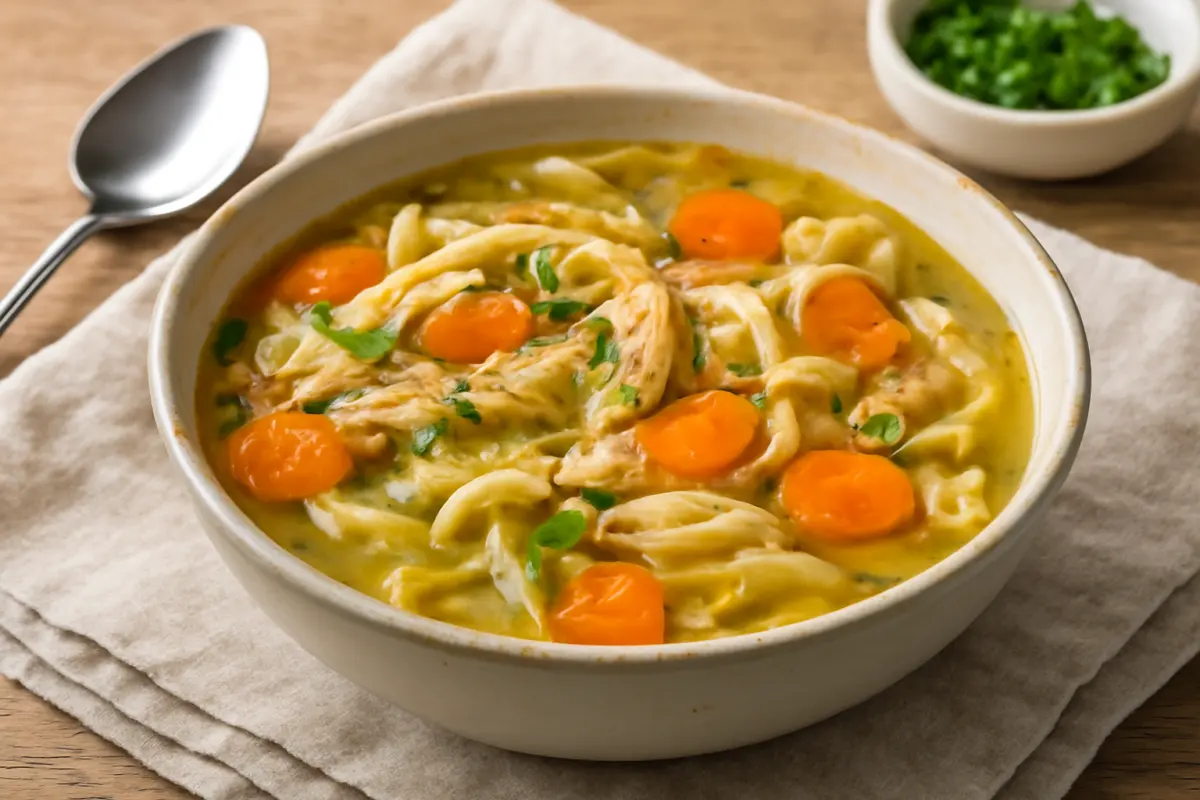
This homemade chicken noodle soup is built around tender chicken, sweet carrots, celery, onion, and egg noodles in a savory herb-scented broth. The method is straightforward, with practical tips for flavorful broth and noodles that stay pleasantly tender instead of turning mushy.
Overview
This homemade chicken noodle soup combines tender chicken, aromatic vegetables, herbs, and egg noodles in a clear, savory broth. Simmering the chicken gently keeps it moist while giving the broth time to take on flavor from the onion, garlic, celery, carrot, and bay leaf.
The noodles cook near the end so they do not become overly soft. For the best texture, serve the soup soon after adding them, or cook the noodles separately if you plan to refrigerate leftovers.
Ingredients
- 2 tablespoons olive oil
- 1 medium yellow onion, about 8 ounces, finely diced
- 3 medium carrots, about 8 ounces, peeled and sliced into 1/4-inch rounds
- 3 celery stalks, about 5 ounces, sliced into 1/4-inch pieces
- 3 garlic cloves, finely chopped
- 8 cups low-sodium chicken broth
- 1 1/2 pounds boneless, skinless chicken thighs
- 1 bay leaf
- 1 teaspoon dried thyme
- 1/2 teaspoon kosher salt, plus more to taste
- 1/4 teaspoon freshly ground black pepper, plus more to taste
- 5 ounces wide egg noodles, about 2 1/2 cups dry
- 2 tablespoons chopped fresh parsley
- 1 tablespoon fresh lemon juice, optional
How to make it
Soften the vegetables. Heat the olive oil in a large pot or Dutch oven over medium heat. Add the onion, carrots, and celery. Cook for 6 to 8 minutes, stirring occasionally, until the onion looks translucent and the vegetables begin to soften. They should smell sweet and savory but should not be deeply browned.
Add the garlic and broth. Stir in the garlic and cook for 30 seconds, just until fragrant. Pour in the chicken broth, then add the chicken thighs, bay leaf, dried thyme, salt, and pepper. The chicken should be mostly covered by the liquid.
Gently cook the chicken. Bring the broth to a gentle simmer over medium-high heat, then reduce the heat to low. Partially cover the pot and cook for 18 to 22 minutes. Keep the liquid at a quiet simmer rather than a rapid boil; vigorous bubbling can make the chicken tougher and the broth cloudy.
The chicken is ready when the thickest thigh reaches 165°F on an instant-read thermometer and the meat is easy to pierce. If the pieces are very thick, simmer for a few minutes longer and check again.
Shred the chicken. Transfer the chicken to a plate or shallow bowl with tongs. Let it cool for 5 minutes, then shred it into bite-size pieces with two forks. Remove and discard the bay leaf. If any foam has collected on the surface, skim it off with a spoon.
Cook the noodles. Return the broth to a steady simmer. Add the egg noodles and cook according to the package timing, usually 6 to 8 minutes, stirring once or twice so they do not stick together. Taste one noodle near the end: it should be tender throughout but still have a little resistance in the center.
Finish the soup. Return the shredded chicken to the pot and warm for 1 to 2 minutes. Stir in the parsley and lemon juice, if using. Taste the broth and add more salt or pepper as needed. If the soup tastes flat, a small amount of lemon juice can brighten it; if it tastes too strong, add a splash of water or unsalted broth.
Serve. Ladle the soup into bowls while hot, making sure each serving gets chicken, vegetables, noodles, and broth.
Expert tips
- Use thighs for a forgiving result. Boneless, skinless chicken thighs stay juicy during simmering. Boneless chicken breasts also work, but begin checking them around 15 minutes so they do not overcook.
- Keep the simmer gentle. If the surface is churning hard, lower the heat. A few small bubbles rising from the bottom are enough.
- Prevent soggy noodles in leftovers. Cook the noodles in a separate pot of salted water, drain them, and add them to individual bowls. This is the best option if you expect to store the soup for more than one meal.
- Fix bland broth before serving. Check salt first, then consider the optional lemon juice. Fresh parsley added at the end gives a cleaner flavor than simmering it for the entire cooking time.
- If the soup is too salty, add unsalted broth or water a little at a time. Avoid relying on extra noodles to correct the seasoning, since they can make the soup thick and absorb more broth.
- For a thicker, more vegetable-heavy soup, add another carrot or celery stalk, but allow a few extra minutes for the vegetables to soften before adding the noodles.
Serving and storage
Serve the soup with crusty bread or crackers. It is also satisfying on its own because each bowl includes broth, vegetables, chicken, and noodles.
Cool leftovers promptly in shallow containers and refrigerate them within 2 hours. Store the soup in the refrigerator for up to 3 to 4 days. The noodles will continue absorbing broth as they sit, so add a little water or broth when reheating if the soup has thickened. Reheat gently on the stovetop until the chicken and broth are steaming hot throughout; avoid boiling for a long time, which can make the noodles mushy.
For longer storage, freeze the broth, vegetables, and chicken without the noodles for up to 3 months. Thaw in the refrigerator, reheat until hot, and cook fresh noodles separately before serving.
Frequently asked questions
Can I use cooked rotisserie chicken instead of raw chicken?
Yes. Use about 3 cups of shredded cooked chicken. Simmer the broth and vegetables until the vegetables are tender, cook the noodles, then stir in the chicken during the final 2 to 3 minutes so it warms without drying out.
Can I make chicken noodle soup with chicken breast?
Yes. Use 1 1/2 pounds boneless, skinless chicken breasts and begin checking the thickest piece after about 15 minutes of gentle simmering. Remove it as soon as it reaches 165°F, then shred it and return it to the finished soup.
Why did my noodles become mushy?
They were likely cooked too long or stored in the broth. Cook them only until tender, and cook them separately if you expect leftovers. Store cooked noodles separately when possible.
Can I freeze homemade chicken noodle soup?
Yes, but noodles soften after freezing and thawing. For the best texture, freeze the soup without noodles and add freshly cooked noodles when reheating.
How can I make the broth more flavorful?
Sauté the onion, carrot, and celery before adding the broth, use a good-quality chicken broth, season in layers, and finish with parsley or a small squeeze of lemon. Keep the chicken at a gentle simmer rather than a hard boil.