Recipes
Homemade Pita Bread Recipe
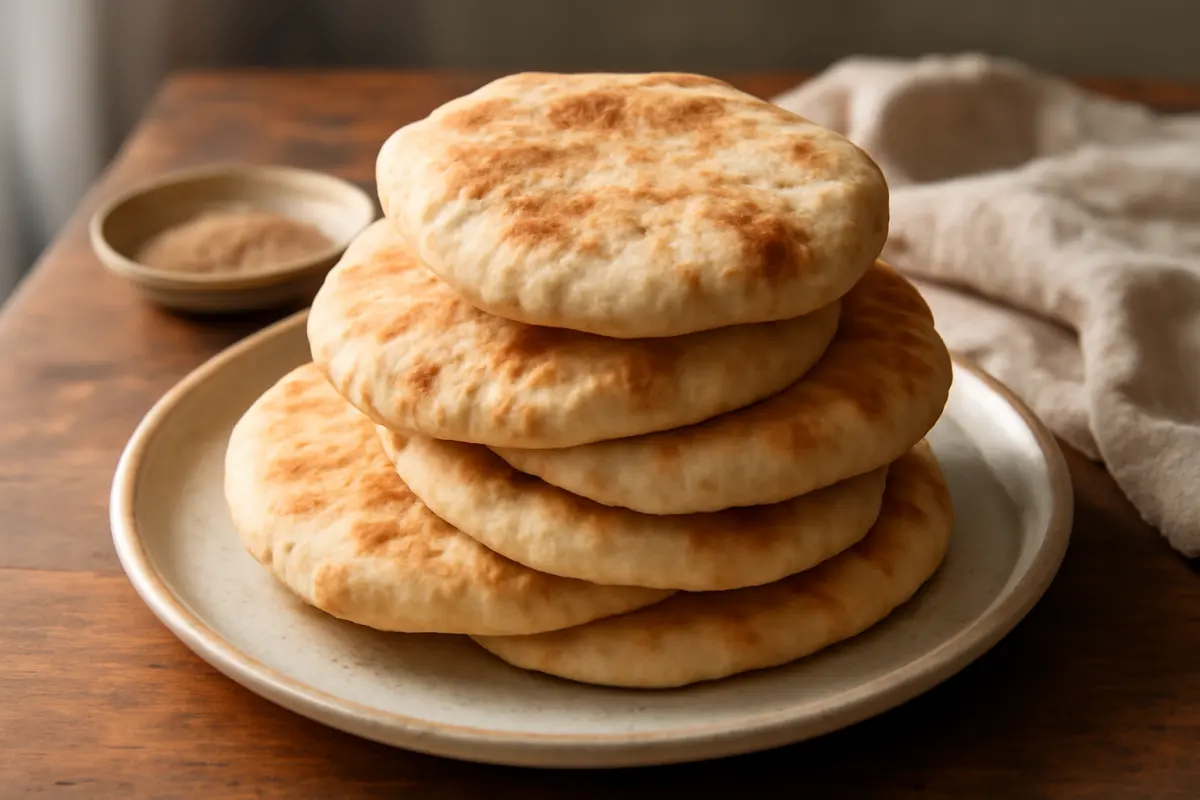
This homemade pita bread recipe makes soft, chewy pitas with lightly browned spots and hollow centers for filling. The dough is simple to mix, easy to shape, and includes practical fixes if your pitas do not puff.
Overview
This homemade pita bread recipe makes eight soft, chewy flatbreads with lightly browned surfaces and a pocket inside. The dough needs two rises, but the hands-on work is straightforward: mix, knead, rest, roll, and bake.
For the best puff, roll each piece evenly and bake it on a fully heated surface. Serve the pitas warm with dips, use them for sandwiches, or pair them with salads such as quinoa tabbouleh. They also make a useful scoop for baked spinach artichoke dip.
Ingredients
- 3 cups (375 g) all-purpose flour, plus more for the work surface
- 2 teaspoons instant yeast
- 1 teaspoon granulated sugar
- 1 1/4 teaspoons fine salt
- 1 cup (240 ml) warm water, about 105–110°F (40–43°C)
- 2 tablespoons (30 ml) olive oil, plus more for the bowl
How to make it
Mix the dough. Whisk the flour, instant yeast, sugar, and salt in a large bowl. Add the warm water and olive oil. Stir with a wooden spoon or sturdy spatula until no dry flour remains and a shaggy dough forms.
Knead until smooth. Transfer the dough to a lightly floured surface. Knead for 6–8 minutes, pushing the dough away with the heel of your hand and folding it back over itself. The finished dough should feel smooth, soft, and slightly tacky, but it should not cling heavily to your hands. If it feels wet, knead in flour 1 teaspoon at a time; avoid adding a large amount, which can make the pitas firm.
Let the dough rise. Lightly oil a clean bowl and place the dough inside, turning it once to coat. Cover the bowl with a lid, plate, or reusable cover. Leave it in a warm, draft-free place for 60–90 minutes, until noticeably puffy and close to doubled in size. The timing depends on room temperature, so use the dough’s appearance rather than the clock alone.
Prepare the oven. Place a baking stone, baking steel, or heavy baking sheet on the middle rack. Heat the oven to 500°F (260°C) for at least 30 minutes. A thoroughly heated surface helps the pitas inflate quickly. If using a baking sheet, turn it upside down so the pitas are easier to slide on and off.
Divide and rest. Gently press the air from the risen dough. Divide it into 8 equal pieces, about 80 g each. Shape each piece into a smooth ball by pulling the edges underneath. Cover the balls with a clean kitchen towel and let them rest for 10–15 minutes. This short rest relaxes the dough and makes rolling easier.
Roll the pitas. Lightly flour the work surface and roll one dough ball into a circle about 7 inches (18 cm) wide and 1/8 inch (3 mm) thick. Roll from the center outward, turning the dough frequently to keep the shape even. Avoid leaving a thick rim or thin patches, since uneven thickness can prevent a complete pocket from forming. Keep the remaining dough covered while you work.
Bake in batches. Carefully place 1–2 rounds on the hot baking surface. Bake for 2–3 minutes, watching for the dough to swell. Once fully puffed, bake for 30–60 seconds more, until the surface has a few pale golden spots. Do not leave the pitas in the oven much longer than needed or they can dry out. Wrap the finished pitas in a clean towel as you bake the rest; trapped steam keeps them soft.
Use a skillet if preferred. Heat a dry cast-iron or heavy skillet over medium-high heat until hot. Cook one rolled pita for 30–45 seconds, until bubbles appear. Flip and cook for 1–2 minutes, then flip once more. It should puff in the final minute and show browned spots on both sides. If it darkens before puffing, reduce the heat slightly. Wrap cooked pitas in a towel.
Cool briefly and serve. Let the pitas rest in the towel for 5 minutes before opening or cutting them. The centers should be soft and flexible, with a natural seam that separates into a pocket. If a pita did not fully puff, it is still good for dipping or tearing into pieces.
Expert tips
- For reliable yeast activity: The water should feel warm, not hot. Very hot water can damage the yeast, while cool water simply makes the rise take longer.
- If the dough springs back while rolling: Cover it and let it rest for another 5–10 minutes, then try again. The gluten needs time to relax.
- If the pitas do not puff: Check that the oven surface was fully preheated, the rounds were rolled evenly, and the dough was not heavily dusted with flour. A cold baking sheet is the most common cause of slow, incomplete puffing.
- If they puff but turn crisp: Reduce the baking time and place finished pitas under a clean towel immediately. They soften as they steam in the stack.
- For whole-wheat pita: Replace up to 1 cup (120 g) of the all-purpose flour with whole-wheat flour. The dough may need 1–2 tablespoons more water, added gradually, and the pitas may be slightly less light.
- For a dairy-free or vegan recipe: No substitution is needed; the listed ingredients are already dairy-free and egg-free.
Serving and storage
Serve the pitas warm or at room temperature with dips, roasted vegetables, grilled meat, falafel, eggs, or salad. To open a pocket, slice along one edge once the pita is cool enough to handle.
Store cooled pitas in an airtight bag or container at room temperature for up to 2 days. For longer storage, freeze them with parchment between each pita for up to 3 months. Rewarm frozen or room-temperature pitas in a dry skillet, toaster, or 350°F (175°C) oven until flexible and warm. Let them cool completely before sealing for storage so trapped condensation does not make them soggy.
Frequently asked questions
Why did my homemade pita bread not puff?
The baking surface may not have been hot enough, or the dough may have been rolled unevenly. Preheat the oven and baking surface for at least 30 minutes, roll the rounds to an even 1/8-inch thickness, and avoid tearing or puncturing them before baking.
Can I make pita dough ahead of time?
Yes. After kneading, place the covered dough in the refrigerator for up to 24 hours. Let it sit at room temperature for about 30 minutes before dividing, then continue with shaping and rolling. The dough may rise slowly in the refrigerator, so wait until it looks puffy before shaping if needed.
How do I keep homemade pita soft?
Bake only until the pitas are puffed and lightly spotted, then wrap them in a clean kitchen towel while warm. Overbaking dries them out, while the towel holds enough steam to keep the stack flexible.
Can I use active dry yeast instead of instant yeast?
Yes. Use the same 2 teaspoons, but stir it into the warm water with the sugar and wait 5–10 minutes until slightly foamy before mixing in the flour, salt, and oil. The first rise may take a little longer.