Recipes
Pasta Primavera Recipe
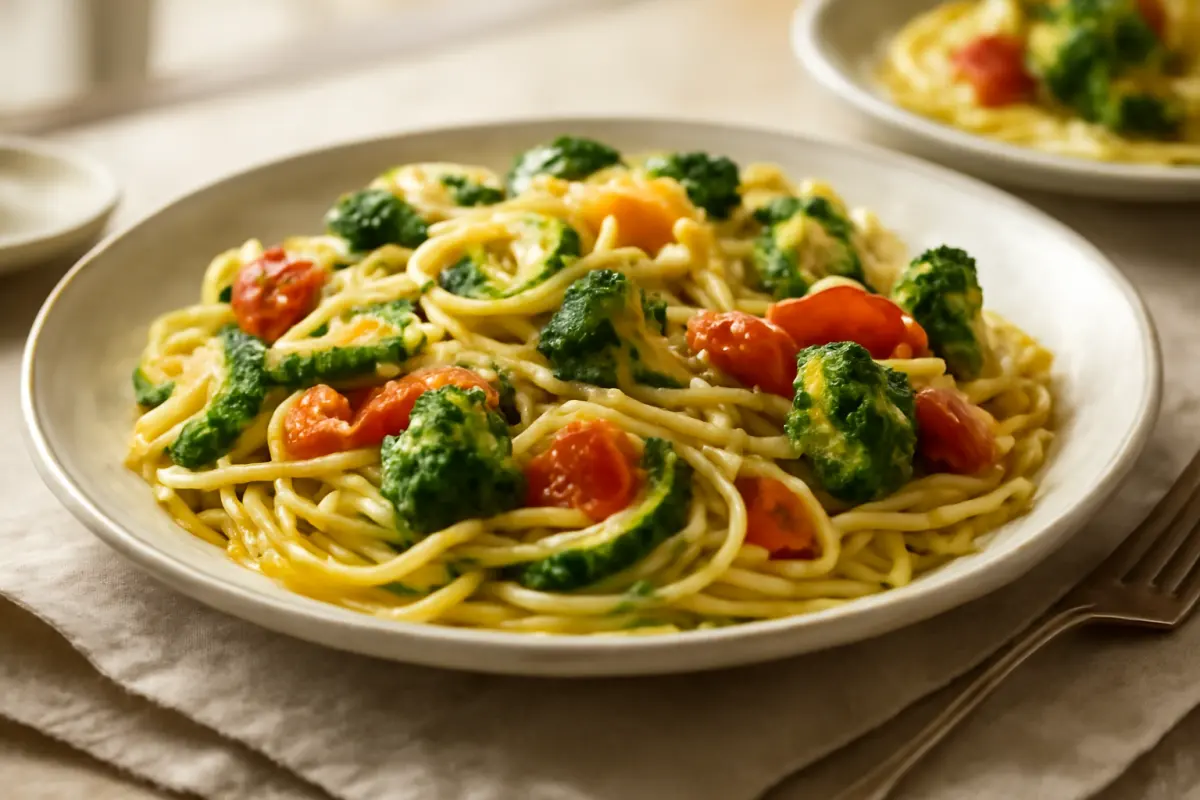
This pasta primavera recipe combines al dente pasta with crisp-tender broccoli, asparagus, zucchini, bell pepper, peas, and tomatoes in a light garlic-Parmesan sauce. The vegetables cook in stages so each one keeps its best texture.
Overview
This pasta primavera recipe is a practical weeknight dinner built around colorful vegetables and a silky sauce made with garlic, butter, cream, Parmesan, lemon, and pasta water. Cooking the vegetables in stages keeps the broccoli and asparagus pleasantly crisp while the zucchini and tomatoes become tender without turning mushy.
The recipe makes four generous servings and is ready in about 35 minutes. Use any short or long pasta you have; reserve pasta water before draining so you can loosen the sauce and help it cling to every strand. For a chicken-based pasta dinner with a richer pesto sauce, try this creamy pesto chicken pasta recipe.
Ingredients
- 12 ounces pasta, such as penne, fusilli, linguine, or spaghetti
- 2 tablespoons olive oil, divided
- 2 tablespoons unsalted butter, divided
- 1 small yellow onion, finely chopped, about 1 cup
- 3 garlic cloves, finely minced
- 1 cup broccoli florets, cut into bite-size pieces
- 1 cup asparagus, trimmed and cut into 1-inch pieces
- 1 medium zucchini, quartered lengthwise and sliced 1/4 inch thick
- 1 medium red bell pepper, thinly sliced
- 1 cup frozen peas, thawed or added straight from frozen
- 1 cup cherry tomatoes, halved
- 1/2 teaspoon kosher salt, plus more for the pasta water
- 1/4 teaspoon freshly ground black pepper
- 1/2 cup heavy cream
- 1/2 cup finely grated Parmesan cheese, plus more for serving
- 1 teaspoon finely grated lemon zest
- 1 tablespoon fresh lemon juice
- 2 tablespoons chopped fresh basil or parsley, for serving
How to make it
Prepare the vegetables. Cut everything before you start cooking. Keep the broccoli, asparagus, zucchini, bell pepper, peas, and tomatoes in separate piles because they enter the pan at different times.
Boil the pasta water. Bring a large pot of water to a rolling boil. Salt it generously; the water should taste noticeably seasoned. Cook the pasta according to the package directions until al dente, usually about 1 minute less than the shortest suggested time. Before draining, scoop out 1 1/2 cups of pasta water. Drain the pasta and do not rinse it.
Start the vegetable base. While the pasta cooks, heat 1 tablespoon olive oil and 1 tablespoon butter in a large, deep skillet or Dutch oven over medium-high heat. Add the onion and cook for 3 to 4 minutes, stirring, until softened and translucent. Add the broccoli and asparagus with 1/4 teaspoon of the salt. Cook for 3 minutes, stirring once or twice; the broccoli should turn bright green and the asparagus should begin to bend but still have some firmness.
Add the quicker-cooking vegetables. Stir in the remaining 1 tablespoon olive oil, zucchini, and bell pepper. Cook for 3 to 4 minutes, stirring occasionally, until the zucchini has lightly browned and is just tender when pierced, while the pepper still has a little bite. Add the peas and tomatoes and cook for 2 minutes more, just until the peas are hot and the tomatoes begin to soften. Transfer the vegetables to a bowl if your skillet is crowded.
Build the sauce. Reduce the heat to medium. Add the remaining 1 tablespoon butter to the skillet. Add the garlic and cook for 30 seconds, just until fragrant; do not let it brown. Pour in the cream and bring it to a gentle simmer. Cook for 2 minutes, stirring, until it lightly coats the back of a spoon.
Toss the pasta and sauce. Add the drained pasta and 1/2 cup reserved pasta water to the skillet. Toss with tongs for 1 to 2 minutes until the sauce looks glossy and clings to the pasta. Turn the heat to low, then add the Parmesan, lemon zest, lemon juice, remaining 1/4 teaspoon salt, and black pepper. Toss until the cheese melts. Add more pasta water, 2 tablespoons at a time, if the sauce looks thick or sticky.
Finish with the vegetables. Fold the vegetables back into the pasta and warm for about 1 minute. The finished dish should be creamy but not soupy, with vegetables that are tender when bitten but not collapsing. Taste and adjust with more salt, pepper, or lemon juice.
Serve immediately. Divide among bowls and top with basil or parsley and extra Parmesan. A final drizzle of olive oil is optional.
Expert tips
- Do not cook every vegetable together. Broccoli and asparagus need a head start, while peas and tomatoes need only a short time. This is the key to avoiding a soft, watery primavera.
- Reserve more pasta water than you think you need. The starchy water loosens the cream sauce without making it greasy and helps the Parmesan blend smoothly.
- Use finely grated Parmesan. Coarse shreds can melt unevenly and leave the sauce grainy. Add the cheese over low heat rather than at a hard boil.
- For a lighter sauce, replace the heavy cream with 3/4 cup whole milk. Simmer it gently and use a little extra Parmesan; the result will be less rich and slightly thinner.
- For a dairy-free version, omit the butter, cream, and Parmesan. Use 3 tablespoons olive oil total and finish with extra lemon juice, a spoonful of nutritional yeast, or toasted breadcrumbs for savory flavor.
- If the sauce breaks or looks oily, remove the pan from the heat and whisk in warm pasta water, 1 tablespoon at a time, while tossing continuously.
- If the vegetables release too much water, keep the pan uncovered and cook for another 1 to 2 minutes before adding the cream. Overcrowding the skillet is the usual cause, so use a wide pan.
Serving and storage
Serve the pasta as soon as it is finished, while the sauce is glossy and the vegetables are still crisp-tender. It works well with a simple green salad or crusty bread.
Cool leftovers promptly and refrigerate them in a covered container for up to 3 days. Reheat gently in a skillet over medium-low heat with 1 to 2 tablespoons of water or milk per serving, tossing until hot. The sauce may thicken in the refrigerator, so add liquid gradually rather than all at once. Do not leave cooked pasta at room temperature for more than 2 hours.
Frequently asked questions
Can I use different vegetables in pasta primavera?
Yes. Good substitutes include green beans, cauliflower, sliced mushrooms, spinach, carrots, or yellow squash. Add firm vegetables such as carrots and cauliflower with the broccoli, quick-cooking vegetables such as spinach near the end, and mushrooms with the zucchini so they have time to brown.
Why is my pasta primavera watery?
The vegetables may have released excess moisture, especially if the pan was crowded or the tomatoes were very juicy. Cook the vegetables uncovered until the extra liquid evaporates, then add the cream. Also drain the pasta thoroughly and add reserved pasta water gradually rather than all at once.
Can I make pasta primavera without cream?
Yes. Use 3/4 cup reserved pasta water, 2 extra tablespoons olive oil, and the Parmesan to make a lighter emulsified sauce. Toss the hot pasta vigorously with the water, oil, and cheese until glossy, then add the vegetables and lemon.
What pasta shape is best for pasta primavera?
Penne, fusilli, farfalle, spaghetti, and linguine all work well. Short ridged shapes hold the sauce and small vegetables, while long pasta makes the dish feel lighter. Cook any shape just until al dente so it does not become soft during the final toss.
Can I prepare pasta primavera ahead of time?
It is best freshly made, but you can chop the vegetables and grate the cheese up to 1 day ahead. For leftovers, refrigerate the cooked pasta promptly and reheat it gently with a splash of water or milk to loosen the sauce.