Desserts
Hot Cakes vs Pancakes: What’s the Difference?
Hot cakes and pancakes usually describe the same griddle-cooked breakfast, although the meaning changes by region and recipe. Here’s how to tell them apart and make a thick, tender stack.
Overview
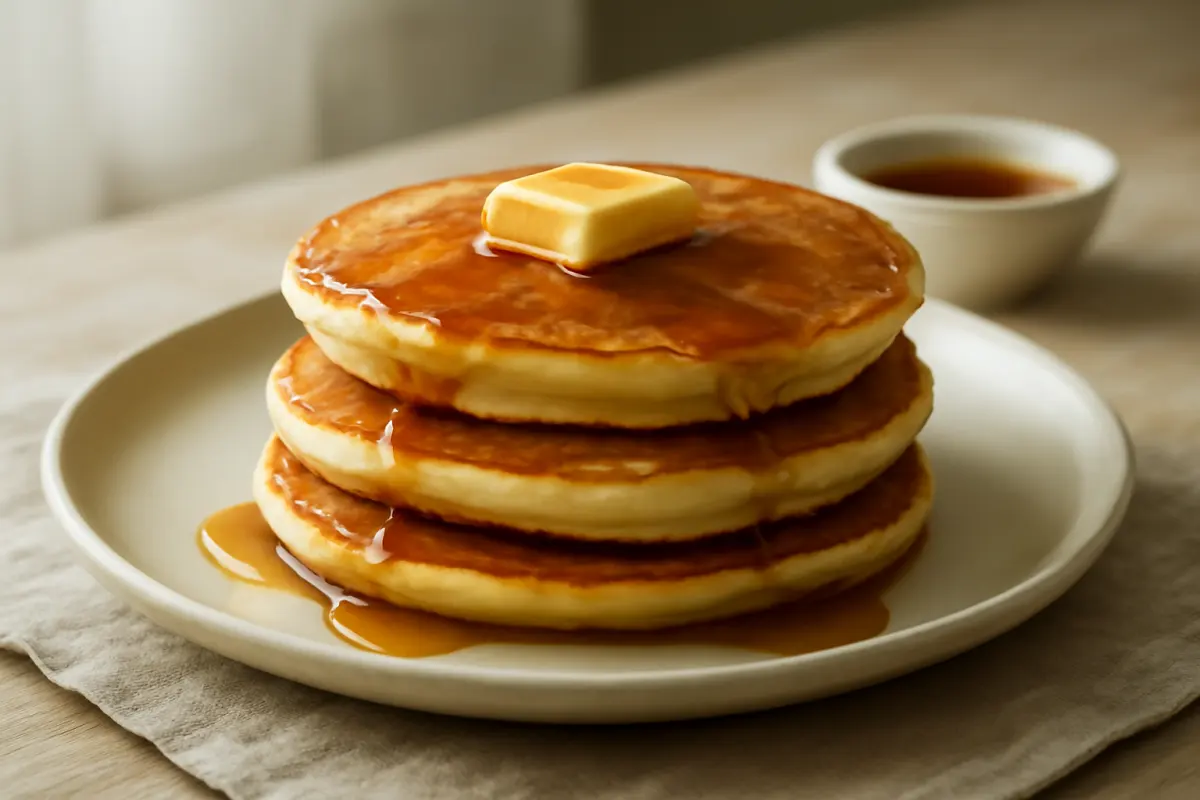
In everyday American usage, hot cakes and pancakes are usually two names for the same breakfast: rounds of batter cooked on a hot griddle or skillet and served warm. “Hot cakes” is also used as a menu term, while “pancakes” is the more common general name.
The terms can differ when a recipe uses them to describe a particular style. A hot cake may be marketed as thicker, denser, or more substantial, while a pancake may be thin and soft. Those descriptions are not universal, however, so the recipe and cooking method matter more than the name.
Ingredients
This recipe makes about 8 medium pancakes or hot cakes, each roughly 10 cm (4 inches) wide.
- 240 g (2 cups) plain flour
- 2 tablespoons granulated sugar
- 2 teaspoons baking powder
- 1/2 teaspoon baking soda
- 1/2 teaspoon fine salt
- 360 ml (1 1/2 cups) buttermilk
- 2 large eggs
- 45 g (3 tablespoons) unsalted butter, melted and cooled slightly
- 1 teaspoon vanilla extract, optional
- 1 to 2 teaspoons neutral oil or extra butter, for greasing the pan
- Butter, maple syrup, or fruit, for serving
Useful substitutions
- Replace the buttermilk with 360 ml milk mixed with 1 tablespoon lemon juice or white vinegar. Leave it for 5 minutes before using.
- For a thinner pancake, add 1 to 2 tablespoons of milk to the finished batter.
- For a thicker, more hot-cake-like result, do not thin the batter and cook smaller rounds over moderate heat.
- Plain flour can be replaced with all-purpose flour at the same weight. Avoid swapping in self-raising flour unless you also adjust the baking powder and salt.
How to make it
Mix the dry ingredients. Put the flour, sugar, baking powder, baking soda, and salt in a large bowl. Whisk for about 20 seconds so the raising agents are evenly distributed.
Mix the wet ingredients. In a separate bowl or jug, whisk the buttermilk, eggs, melted butter, and vanilla, if using, until combined. The butter should be warm rather than hot; very hot butter can begin to set the eggs.
Combine gently. Pour the wet mixture into the dry ingredients. Stir with a whisk or spatula just until no large pockets of dry flour remain. A few small lumps are fine. Do not beat the batter smooth, or the cooked pancakes can turn chewy.
Rest the batter. Leave it for 5 to 10 minutes. It should thicken slightly and look aerated. If it becomes so thick that it will not spread when scooped, stir in 1 tablespoon of milk.
Heat the pan. Place a large nonstick skillet or griddle over medium heat for 2 to 3 minutes. Lightly grease it with a little oil or butter, then wipe away any excess. The surface is ready when a drop of water skitters briefly across it and evaporates; if it instantly burns, lower the heat.
Cook the first side. Scoop about 60 ml (1/4 cup) of batter for each pancake. Leave space between the rounds. Cook for 2 to 3 minutes, until bubbles rise and pop across the surface, the edges look set, and the underside is golden brown.
Flip once. Slide a wide spatula fully underneath and turn the pancake in one controlled movement. Cook for 1 to 2 minutes more. The center should spring back lightly when pressed, and no wet batter should show at the edge.
Continue in batches. Lightly grease the pan again only if it looks dry. If the pancakes brown before the centers cook, reduce the heat to medium-low. Keep finished pancakes in a single layer on a plate, or in a low oven at about 90°C (200°F), while you cook the rest.
Serve immediately. Stack the pancakes and add butter, maple syrup, berries, or another topping. For a thicker hot-cake style, use smaller rounds and give each one the full cooking time so the middle cooks through.
Expert tips
- There is no fixed technical dividing line. In many places, “hot cake” simply means “pancake.” Check the recipe’s batter and thickness rather than relying on the label.
- For thinner pancakes, use a slightly looser batter and swirl the pan gently after adding it. Thin pancakes cook faster and may need only 60 to 90 seconds per side.
- For thicker hot cakes, keep the batter fairly thick, use about 1/4 cup per round, and cook over medium-low heat. Very high heat will darken the outside before the center sets.
- If the pancakes are tough, the batter was probably overmixed or the pan was too cool, leading to longer cooking. Stir only until combined and preheat the pan properly.
- If they spread too much, the batter may be too warm or thin. Rest it for a few minutes, then add flour 1 tablespoon at a time until it slowly mounds when dropped from a spoon.
- If they stick, check that the pan is fully preheated and lightly greased. A thin film of oil is usually more reliable than a large amount of butter, which can burn.
- Avoid pressing after flipping. Flattening the pancake forces out steam and makes the interior less tender.
Serving and storage
Serve hot cakes or pancakes as soon as possible for the best texture. Keep cooked pancakes warm for up to about 20 minutes in a single layer in a low oven; covering them tightly can make the surfaces damp.
Cool leftovers promptly, then refrigerate them in a sealed container for up to 3 days. Reheat in a toaster, dry skillet, or microwave until hot throughout. For longer storage, freeze the cooled pancakes in a single layer, then transfer them to a freezer-safe bag for up to 2 months. Reheat from frozen in a toaster or skillet.
Frequently asked questions
Are hot cakes and pancakes the same thing?
Usually, yes. In much of American usage, “hot cakes” is another name for pancakes. Some restaurants or recipes use “hot cake” to suggest a thicker or denser pancake, but that distinction is not universal.
Why are some hot cakes thicker than pancakes?
A thicker hot cake usually comes from a thicker batter, a smaller amount spread in the pan, or a lower cooking temperature that allows the center to set without overbrowning the outside. The name itself does not guarantee a particular thickness.
Can I make this recipe without buttermilk?
Yes. Mix 360 ml milk with 1 tablespoon lemon juice or white vinegar, wait 5 minutes, and use it in place of the buttermilk. The slight acidity also works with the baking soda to help the batter rise.
How do I know when a pancake is ready to flip?
Wait until bubbles have formed and popped across the surface, the edges look set, and the underside is golden brown. If the batter still looks shiny and liquid around the edges, give it more time.