Desserts
Peach Ginger Upside-Down Cake Recipe
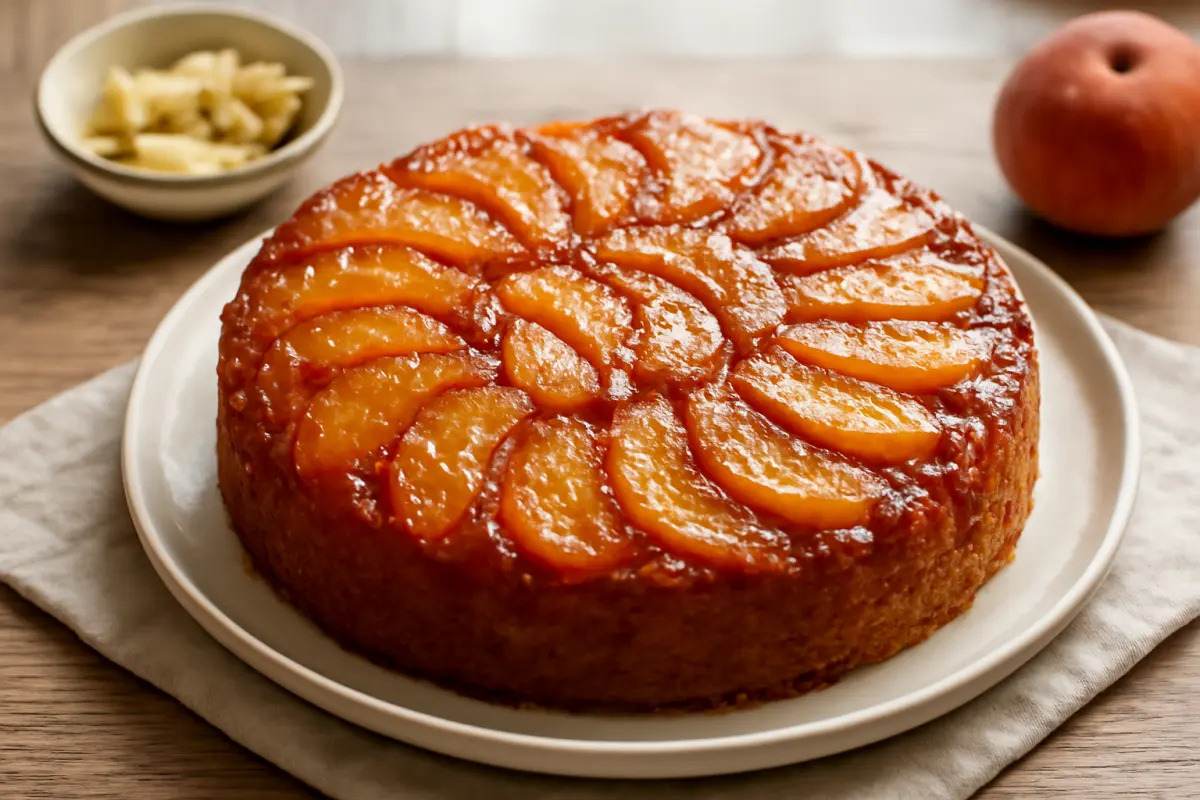
This peach ginger upside-down cake pairs juicy peaches with a buttery brown-sugar topping and a tender cake scented with fresh and ground ginger. The peaches soften and caramelize as the cake bakes, then become a glossy topping when the warm cake is inverted.
Overview
This peach ginger upside-down cake has a soft, buttery crumb beneath a layer of peaches coated in brown sugar, butter, and a little lemon. Fresh ginger gives the fruit a bright, warm edge, while ground ginger carries that flavor through the cake.
Use ripe but firm peaches so the slices keep their shape in the oven. Let the cake cool briefly before turning it out, but do not wait until it is completely cold: the caramelized topping can firm up and stick to the pan.
Ingredients
- 4 tablespoons unsalted butter, divided
- 1/2 cup packed light brown sugar
- 1 tablespoon finely grated fresh ginger, divided
- 1 tablespoon lemon juice
- 3 medium peaches, about 1 1/4 pounds total, pitted and cut into 1/4-inch slices
- 1 1/2 cups all-purpose flour, spooned into measuring cups and leveled
- 1 1/2 teaspoons baking powder
- 1/2 teaspoon ground ginger
- 1/4 teaspoon fine salt
- 1/2 cup unsalted butter, softened
- 2/3 cup granulated sugar
- 2 large eggs, room temperature
- 1 teaspoon vanilla extract
- 1/2 cup whole milk, room temperature
How to make it
Prepare the pan and oven. Heat the oven to 350°F. Grease the bottom and sides of a 9-inch round cake pan with 1 tablespoon of the softened butter or with nonstick spray. Set the pan on a rimmed baking sheet to catch any bubbling topping. Do not use a springform pan, because the butter and peach juices may leak.
Make the peach topping. Melt 4 tablespoons of the butter in a small saucepan over medium heat. Add the brown sugar, 1/2 tablespoon of the grated fresh ginger, and the lemon juice. Stir until the butter is melted and the mixture looks glossy, about 1 minute; it does not need to boil. Pour it evenly into the prepared cake pan.
Arrange the peaches. Lay the peach slices in slightly overlapping circles over the brown-sugar mixture. Keep them in an even layer so the cake sits level. Set the pan aside while you make the batter.
Combine the dry ingredients. In a medium bowl, whisk together the flour, baking powder, ground ginger, and salt. Breaking up any lumps now helps prevent overmixing later.
Cream the butter and sugar. In a large bowl, beat the softened 1/2 cup butter and granulated sugar with an electric mixer on medium speed for 2 to 3 minutes, until pale and fluffy. Scrape down the bowl once or twice. Add the eggs one at a time, beating well after each addition, then mix in the vanilla and remaining 1/2 tablespoon fresh ginger.
Finish the batter. Add the flour mixture in three additions, alternating with the milk in two additions. Mix on low speed just until each addition disappears. The finished batter should be thick, smooth, and easy to spread; stop as soon as no dry streaks remain.
Fill the pan. Spoon the batter over the peaches and gently spread it to the edges without disturbing the fruit. Tap the pan once or twice on the counter to release large air pockets.
Bake. Bake for 45 to 55 minutes, rotating the pan once after 30 minutes. The cake is done when the top is golden, the center springs back lightly when pressed, and a wooden skewer inserted into the cake portion comes out with a few moist crumbs rather than wet batter. If the top browns before the center is baked, loosely tent it with foil for the remaining time.
Cool briefly, then invert. Place the cake on a wire rack and let it cool in the pan for 10 to 15 minutes. Run a thin knife around the edge. Place a serving plate upside down over the pan, hold both firmly with oven mitts, and turn them over in one decisive motion. Leave the pan in place for 30 seconds, then lift it away. If a peach slice remains in the pan, carefully lift it out and place it back on the cake.
Serve. Let the cake cool for another 15 to 20 minutes so the topping thickens slightly while the crumb stays warm and tender. Cut into wedges and serve plain, or add lightly whipped cream or vanilla ice cream.
Expert tips
- Choose the right peaches: Ripe but firm peaches are easier to slice and less likely to collapse into a watery layer. Very soft peaches can still be used, but arrange them in a single layer and expect a softer topping.
- Peeling is optional: The peach skins soften during baking and add color. If you prefer a smoother topping, dip the peaches in boiling water for 30 seconds, transfer them to ice water, and peel before slicing.
- Measure flour carefully: Too much flour makes the cake dense and can leave the crumb dry. Spoon it into the measuring cup and level it, or weigh out 180 grams.
- Do not overmix: Once the flour is added, mix only until the batter is combined. Extra mixing can make the cake chewy instead of tender.
- Prevent sticking: Inverting while the cake is still warm is important. If the topping has set firmly, place the pan over low heat for 10 to 15 seconds before trying again; do not leave it long enough to melt the cake.
- If using canned peaches: Drain them very thoroughly and pat them dry. Use about 2 cups of sliced peaches, and avoid peaches packed in heavy syrup because they can make the topping excessively wet.
Serving and storage
Serve the cake warm or at room temperature. Keep leftovers covered at room temperature for up to 1 day, or refrigerate them in an airtight container for up to 3 days. The topping will firm in the refrigerator; warm individual slices for 10 to 20 seconds in the microwave or let them sit at room temperature before serving.
For longer storage, wrap cooled slices well and freeze for up to 2 months. Thaw overnight in the refrigerator, then bring to room temperature or warm gently before serving.
Frequently asked questions
Can I make peach ginger upside-down cake with frozen peaches?
Yes, but thaw the peaches completely and drain them well before slicing. Pat them dry to remove excess moisture, and expect the topping to be softer than one made with fresh peaches.
Why did my upside-down cake stick to the pan?
The pan may not have been greased thoroughly, or the cake may have cooled too long before inverting. Run a thin knife around the edge and warm the bottom of the pan over low heat for 10 to 15 seconds before turning it out.
How do I know when the cake is baked?
The top should be golden, the center should spring back lightly when pressed, and a skewer inserted into the cake should come out with a few moist crumbs but no wet batter. Start checking at 45 minutes.
Can I bake this cake in a square pan?
Yes. Use an 8-inch square pan with similar capacity, but begin checking after about 40 minutes. A 9-inch square pan will make a thinner cake and may finish sooner, so watch for the same doneness cues.