Desserts
Hotcakes vs Pancakes: What’s the Difference?
Hotcakes and pancakes usually describe the same griddled breakfast cake. Learn when the terms overlap, how regional recipes differ, and how to make either style at home.
Overview
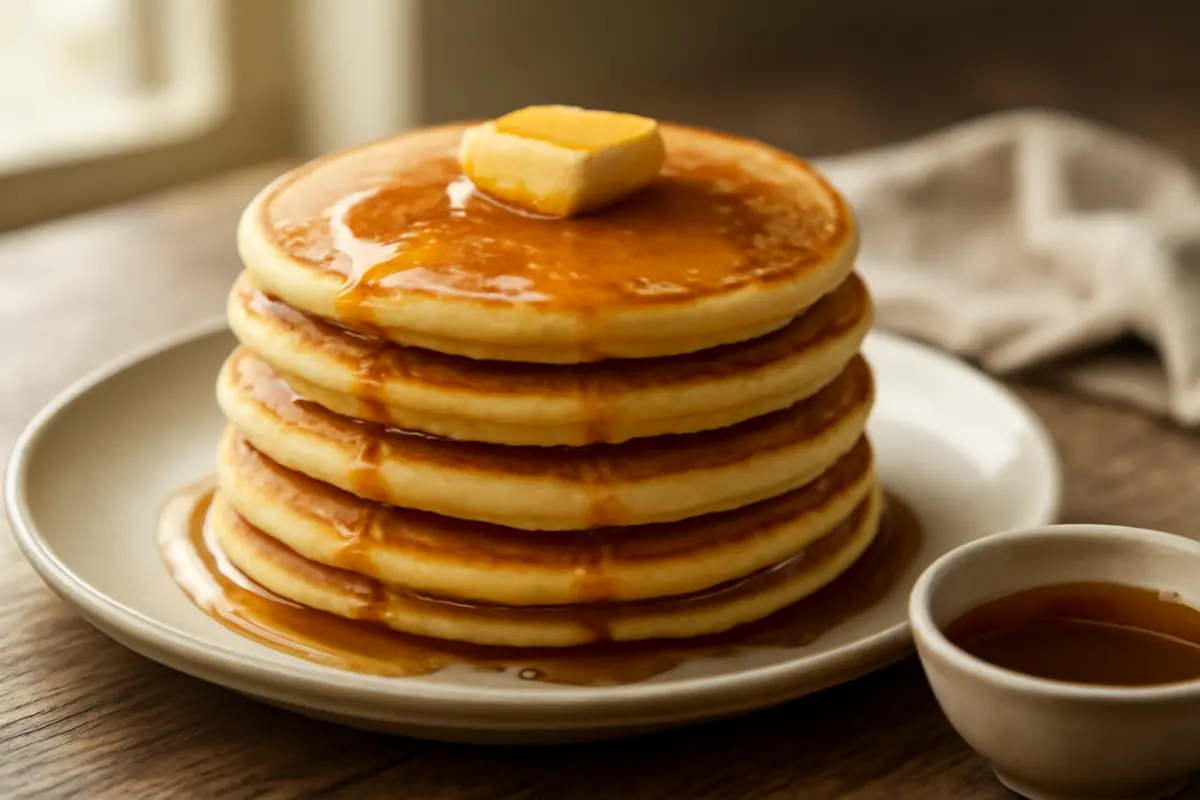
Hotcakes and pancakes are usually two names for a similar breakfast: a pourable batter cooked in rounds on a hot griddle or skillet. In many parts of the United States, the words are interchangeable, along with flapjacks and griddle cakes.
The difference is more often regional or recipe-specific than technical. “Pancake” is the broader term, while “hotcake” may suggest a thicker, sweeter, smaller, or more cake-like version. The name alone does not guarantee a particular texture, so check the ingredient list and cooking method when comparing recipes.
Ingredients
Use this batter for eight 4-inch pancakes or hotcakes:
- 1 1/2 cups (188 g) all-purpose flour
- 2 tablespoons granulated sugar for standard pancakes, or 3 tablespoons for sweeter hotcakes
- 2 teaspoons baking powder
- 1/2 teaspoon fine salt
- 1 large egg
- 1 1/4 cups (300 ml) buttermilk or milk
- 3 tablespoons (42 g) unsalted butter, melted and cooled slightly
- 1 teaspoon vanilla extract, optional
- 1 teaspoon neutral oil or additional butter, for the pan
The same batter can produce either style. For thicker hotcakes, use buttermilk, the larger amount of sugar, and a slightly smaller amount of batter per round so the cakes cook up tall. For lighter, more familiar pancakes, use milk and spread each portion gently into a wider circle.
How to make it
Mix the dry ingredients. Whisk the flour, sugar, baking powder, and salt in a medium bowl until evenly combined. Breaking up visible baking powder now helps prevent bitter pockets later.
Combine the wet ingredients. In a second bowl, whisk the egg, buttermilk or milk, melted butter, and vanilla if using. The butter should be warm and liquid, not hot enough to cook the egg.
Make the batter. Pour the wet mixture into the dry ingredients. Stir with a whisk or spatula just until no large dry patches remain. A few small lumps are fine; overmixing develops gluten and can make the cakes chewy rather than tender.
Rest briefly. Leave the batter for 5 minutes. It should look thick but pourable, with bubbles beginning to form at the surface. If it is difficult to scoop, stir in milk 1 tablespoon at a time. If it runs like cream, add flour 1 tablespoon at a time.
Heat the pan. Set a nonstick skillet or well-seasoned griddle over medium heat. Lightly brush it with oil or butter. The surface is ready when a drop of water sizzles briefly and evaporates; if it skitters aggressively or the butter browns immediately, lower the heat.
Cook the first side. For standard pancakes, pour about 1/4 cup of batter for each round. For thicker hotcakes, use 3 tablespoons and leave the batter mostly undisturbed. Cook for about 2 to 3 minutes, until bubbles appear across the surface, the edges look set, and the underside is golden brown.
Flip once. Slide a wide spatula fully underneath and turn the cake in one confident motion. Cook the second side for 1 to 2 minutes. It is done when the center springs back lightly when pressed and no wet batter shows at the edge. If the outside browns before the center sets, reduce the heat.
Continue in batches. Wipe out any burnt butter between batches and add only a thin film of fat. Keep finished pancakes or hotcakes on a plate in a single layer, or in a low oven at 200°F (95°C) for up to 20 minutes. Do not stack them tightly while they are steaming if you want crispier edges.
Serve immediately. Add butter and maple syrup for a classic finish. Fresh fruit, yogurt, jam, toasted nuts, or a dusting of powdered sugar also work well. Sweeter hotcakes may need less syrup than a plain pancake.
What the names usually imply
- Pancakes: The broadest term, covering thin crêpe-like versions as well as fluffy American-style breakfast cakes.
- Hotcakes: Often used as a synonym for pancakes, but some recipes use the name for thicker, sweeter, smaller cakes with a more cake-like crumb.
- Flapjacks: Another regional synonym in the United States, although the word can mean a different oat-based bar in the United Kingdom.
- Regional recipes: In some countries, “hotcake” refers to a distinct local style, so size, color, sweetness, and toppings can vary considerably.
Troubleshooting
- The batter is lumpy: Small lumps are harmless. For large dry pockets, fold the batter a few more times, then stop; do not whisk until perfectly smooth.
- The cakes are flat: Check that the baking powder is active and avoid letting the mixed batter sit for a long time. A loose batter can also spread too much, so add 1 tablespoon of flour if needed.
- The centers are raw: The pan is probably too hot or the cakes are too large. Lower the heat to medium-low and use smaller portions so the middle cooks before the crust becomes dark.
- The pancakes are tough: The batter was likely overmixed, or the cakes were pressed down while cooking. Stir only until combined and flip once.
- The first batch is pale or uneven: The pan may not have finished heating. Give it another minute, then adjust the heat before cooking the next batch.
Expert tips
- Buttermilk gives a tangier flavor and usually makes a thicker, tender cake; milk produces a milder batter that is easier to spread.
- Melted butter adds flavor, while a small amount of neutral oil in the pan is less likely to burn during several batches.
- Measure flour by weight when possible. If using cups, spoon it into the measuring cup and level it rather than packing it down.
- Do not judge doneness by color alone. The center should be set, and the cake should lift cleanly from the pan.
- If you want distinct hotcakes, make them smaller and thicker rather than simply adding more sugar. Extra sugar can make the outside brown before the inside cooks.
Serving and storage
Serve pancakes or hotcakes warm. Refrigerate leftovers in an airtight container within 2 hours of cooking and use them within 3 days. Reheat in a toaster, toaster oven, or dry skillet until hot throughout. For longer storage, freeze them in a single layer, then transfer them to a freezer bag for up to 2 months; reheat from frozen in a toaster or microwave until warmed through.
Frequently asked questions
Are hotcakes and pancakes the same thing?
Usually, yes. In many places, hotcake is simply another name for pancake. Some recipes use hotcake to mean a smaller, thicker, sweeter, or more cake-like pancake, but there is no single universal definition.
Which is thicker, a hotcake or a pancake?
A hotcake is often described as thicker, but the name does not guarantee it. Batter thickness, leavening, pan temperature, and the amount of batter used have more influence than the label.
Can I use pancake mix to make hotcakes?
Yes. Use slightly less liquid than the package directs to create a thicker batter, then cook smaller rounds over medium-low heat so the centers set before the outside becomes too dark.
Why are my pancakes dark outside but raw inside?
The pan is too hot, the portions are too large, or the batter is unusually thick. Lower the heat to medium-low, use smaller scoops, and cook until bubbles form and the edges set before flipping.