Recipes
Jambalaya Recipe
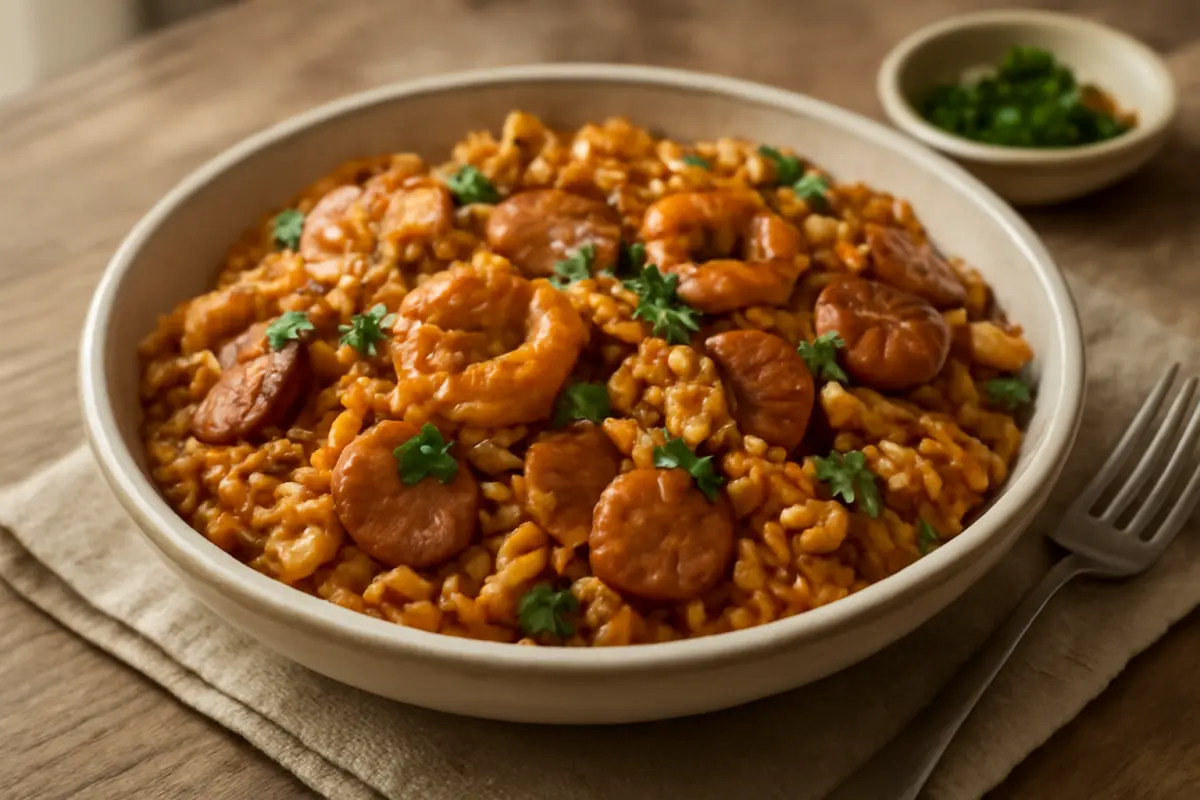
This jambalaya recipe combines browned chicken, smoky sausage, tender shrimp, aromatic vegetables, and seasoned long-grain rice in one flavorful pot. The method includes practical timing cues so the rice cooks evenly without becoming mushy.
Overview
This jambalaya recipe makes a hearty one-pot meal with chicken, smoked sausage, shrimp, vegetables, and long-grain rice. Browning the meat first builds a savory base, while the rice simmers in seasoned broth with tomatoes and aromatic vegetables.
Add the shrimp near the end rather than at the beginning. They need only a few minutes to become pink, opaque, and springy; cooking them too long can make them rubbery. Serve the jambalaya hot, with sliced green onions or a few dashes of hot sauce if you like.
Ingredients
- 1 tablespoon olive oil
- 1 pound boneless, skinless chicken thighs, cut into 1-inch pieces
- 8 ounces smoked andouille sausage, sliced into ¼-inch rounds
- 1 medium yellow onion, finely diced
- 1 medium green bell pepper, finely diced
- 2 celery stalks, finely diced
- 3 garlic cloves, minced
- 1½ cups long-grain white rice, uncooked; do not use instant or quick-cooking rice
- 1 can (14½ ounces) diced tomatoes, with their juices
- 3 cups low-sodium chicken broth
- 1 tablespoon tomato paste
- 2 teaspoons paprika
- 1 teaspoon dried oregano
- 1 teaspoon dried thyme
- ½ teaspoon kosher salt, plus more to taste
- ½ teaspoon black pepper
- ¼ teaspoon cayenne pepper, or more for a spicier jambalaya
- 1 bay leaf
- 1 pound large raw shrimp, peeled and deveined, tails removed or left on
- 2 green onions, thinly sliced
- 2 tablespoons chopped fresh parsley
- 1 tablespoon fresh lemon juice, optional
How to make it
Brown the chicken. Pat the chicken dry and season it with a small pinch of the measured salt and pepper. Heat the oil in a large heavy-bottomed Dutch oven or deep skillet over medium-high heat. Add the chicken in a single layer and cook for 4–5 minutes, turning occasionally, until browned on the outside. It does not need to be cooked through yet. Transfer it to a plate.
Cook the sausage and vegetables. Add the sliced sausage to the same pot and cook for 2–3 minutes, until lightly browned and some fat has rendered. Add the onion, bell pepper, and celery. Cook for 6–8 minutes, stirring occasionally, until the vegetables soften and the onion looks translucent. Scrape up any browned bits from the bottom as the vegetables release moisture.
Add the garlic and seasonings. Stir in the garlic, tomato paste, paprika, oregano, thyme, remaining salt, black pepper, and cayenne. Cook for 1 minute, stirring constantly, until the garlic smells fragrant and the tomato paste darkens slightly. Do not let the garlic brown.
Toast the rice briefly. Stir in the uncooked rice and cook for 1–2 minutes, coating the grains with the seasoned mixture. This helps the rice absorb the savory flavors before the liquid is added.
Simmer the jambalaya. Pour in the diced tomatoes and chicken broth, then add the bay leaf and return the browned chicken and any accumulated juices to the pot. Stir once to distribute the rice, then bring the liquid to a gentle boil. Reduce the heat to low, cover tightly, and simmer for 20 minutes. Keep the lid closed as much as possible so steam does not escape.
Check the rice. After 20 minutes, taste a few grains from the center. The rice should be tender but not wet, with no hard white core. If it is still firm and the pot looks dry, add ¼ cup hot broth or water, cover, and cook for 5–8 minutes more. If the rice is tender but a little soupy, remove the lid and cook over low heat for 2–4 minutes, watching closely.
Cook the shrimp. Nestle the shrimp into the hot rice and cover the pot again. Cook for 4–6 minutes, turning the shrimp once halfway through, until they are opaque throughout, pink on the outside, and curled into a loose “C” shape. Avoid cooking until they curl tightly into an “O,” which is a sign they may be overdone.
Rest and finish. Remove the bay leaf, turn off the heat, and leave the pot covered for 5 minutes. Gently fluff the jambalaya with a fork, then fold in the green onions and parsley. Taste and adjust the salt, pepper, cayenne, or lemon juice before serving.
Expert tips
- Use the right rice: Long-grain white rice gives the best separate, fluffy grains. Short-grain rice becomes stickier, while brown rice needs substantially more liquid and cooking time.
- Do not constantly stir: Stirring repeatedly releases starch and can make the jambalaya gummy. One stir after adding the liquid is enough.
- Adjust the heat for your pot: A very vigorous simmer can scorch the bottom before the rice is tender. You should see only occasional bubbles beneath the lid.
- Swap the proteins carefully: Boneless chicken breast can replace thighs, but add it back with the rice and avoid overcooking it. Kielbasa can replace andouille. For a seafood version, use firm white fish in 1-inch pieces and add it with the shrimp.
- If using frozen shrimp: Thaw them completely and pat them dry before adding them. Excess ice can dilute the seasoning and lower the cooking temperature.
- If the bottom starts sticking: Move the pot off the heat immediately. Do not scrape burnt rice into the rest; transfer the unburned jambalaya to a clean pot and finish gently.
Serving and storage
Serve the jambalaya hot in shallow bowls with extra sliced green onions, parsley, or hot sauce. A simple green salad or steamed vegetables can balance the rich, smoky main dish.
Cool leftovers promptly in shallow containers and refrigerate within 2 hours. Store for up to 3–4 days. Reheat individual portions in the microwave or reheat the whole dish gently in a covered skillet with a splash of broth or water, stirring occasionally until steaming hot. Because the rice can dry out during storage, add liquid gradually rather than all at once. Jambalaya can also be frozen in airtight portions for up to 2 months; thaw it in the refrigerator before reheating.
Frequently asked questions
What kind of rice is best for jambalaya?
Use uncooked long-grain white rice. It stays relatively separate as it simmers and cooks in about 20–25 minutes. Avoid instant rice, which can turn soft, and do not substitute brown rice without changing the liquid and cooking time.
Can I make jambalaya without shrimp?
Yes. Leave out the shrimp for a chicken-and-sausage jambalaya, or replace it with 1 pound of peeled crawfish tails or firm white fish. If omitting seafood, the rice method and broth quantity remain the same.
Why is my jambalaya rice still hard?
The pot may have lost too much steam, the heat may have been too low, or the rice may need a few extra minutes. Add ¼ cup hot broth or water, cover tightly, and simmer for 5–8 minutes before checking again.
Why did my jambalaya turn mushy?
Too much liquid, overcooking, or frequent stirring can soften the rice excessively. Use the specified rice and broth, keep the lid on during simmering, and stir only once after adding the liquid.
Can I make jambalaya ahead of time?
Yes, but the rice is best on the day it is made. For the best texture, cook the chicken, sausage, vegetables, and seasonings ahead, refrigerate them, then add the broth and rice when you are ready to finish the dish. Cook the shrimp fresh at the end.