Desserts
Lemon Blueberry Pound Cake Recipe
This lemon blueberry pound cake is buttery, tender, and packed with bright lemon flavor and juicy blueberries. A simple lemon glaze adds a fresh finish to every slice.
Overview
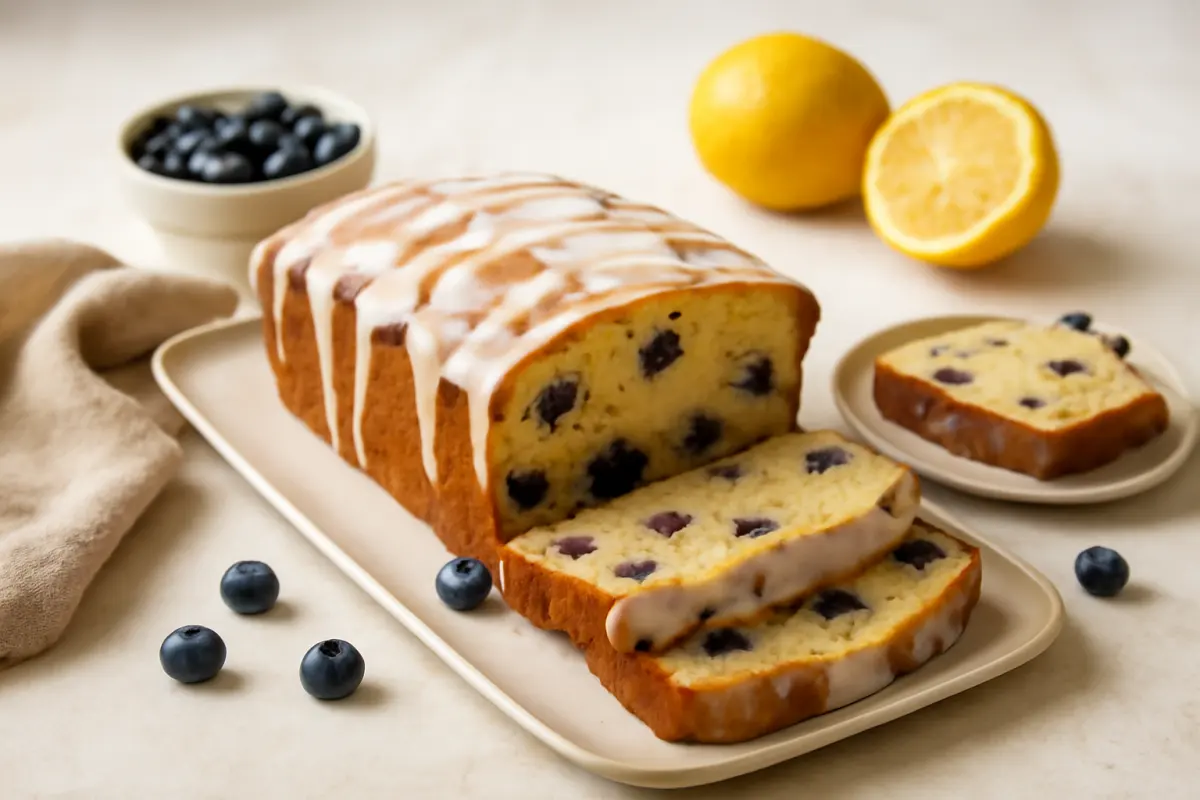
This lemon blueberry pound cake has a fine, buttery crumb, plenty of lemon zest, and pockets of blueberries throughout. Sour cream keeps the loaf moist without making it heavy, while a short rest before slicing helps the texture set.
Bake the cake in a 9-by-5-inch loaf pan until the top is deeply golden and a skewer inserted in the center comes out clean or with a few moist crumbs. Finish it with a lemon glaze once the loaf has cooled so the glaze stays bright and visible.
Ingredients
- 2 cups (240 g) all-purpose flour, plus 1 tablespoon for coating the blueberries
- 1 teaspoon baking powder
- 1/2 teaspoon fine salt
- 1 cup (226 g) unsalted butter, softened to cool room temperature
- 1 1/4 cups (250 g) granulated sugar
- 2 tablespoons finely grated lemon zest, from about 2 large lemons
- 3 large eggs, at room temperature
- 1 teaspoon vanilla extract
- 1/2 cup (120 g) full-fat sour cream, at room temperature
- 1 1/2 cups (225 g) fresh blueberries, rinsed and thoroughly dried
For the lemon glaze
- 1 cup (120 g) powdered sugar
- 2 tablespoons fresh lemon juice, plus more if needed
- 1 teaspoon finely grated lemon zest, optional
How to make it
Prepare the pan and oven. Heat the oven to 350°F (175°C). Grease a 9-by-5-inch loaf pan and line it with parchment paper, leaving enough overhang to lift out the baked cake. If your pan is smaller than 9 by 5 inches, the batter may rise above the rim and need extra baking time.
Combine the dry ingredients. Whisk the 2 cups flour, baking powder, and salt in a medium bowl. Set aside. Toss the dried blueberries with the remaining 1 tablespoon flour in a separate small bowl. The light coating helps limit sinking, but it will not prevent it if the batter is too warm or thin.
Cream the butter, sugar, and zest. Put the softened butter, granulated sugar, and 2 tablespoons lemon zest in a large bowl. Beat with a hand mixer on medium speed for 3 to 4 minutes, or with a stand mixer for about 3 minutes, until the mixture is pale, fluffy, and noticeably lighter in texture. Scrape down the bowl once or twice. This step helps create the cake's fine crumb, so do not rush it.
Add the eggs and vanilla. Beat in the eggs one at a time, mixing well after each addition. Add the vanilla. If the mixture looks slightly curdled, continue; it will come together when the flour is added. Scrape the sides and bottom of the bowl before moving on.
Alternate the flour and sour cream. Add one-third of the dry ingredients and mix on low just until nearly combined. Add half of the sour cream and mix briefly. Repeat with another third of the flour, the remaining sour cream, and the last third of the flour. Stop mixing as soon as no dry streaks remain. Overmixing at this stage can make the loaf dense.
Fold in the blueberries. Use a flexible spatula to fold in the flour-coated blueberries with three or four gentle turns. A few streaks of flour are fine; they will disappear as you fold. Transfer the batter to the prepared pan and smooth the top, making a shallow lengthwise dip down the center if desired. This encourages a more even rise.
Bake until set. Bake for 60 to 75 minutes. Start checking at 60 minutes, but do not rely on the clock alone. The loaf is done when the top is golden brown, the center springs back lightly when pressed, and a skewer inserted into the highest part of the cake comes out clean or with a few moist crumbs. If the top is browning quickly while the center is still wet, loosely cover it with foil for the remaining baking time.
Cool before glazing. Let the cake cool in the pan for 15 minutes. Use the parchment to lift it onto a rack and cool completely, about 1 hour. A warm loaf can make the glaze run off and may crumble when sliced.
Make and apply the glaze. Whisk the powdered sugar, 2 tablespoons lemon juice, and optional lemon zest in a small bowl until smooth. The glaze should fall from the whisk in a thick ribbon. Add lemon juice a few drops at a time if it is too thick; add 1 tablespoon powdered sugar at a time if it is too thin. Spoon or drizzle the glaze over the cooled cake and let it set for 15 to 20 minutes before slicing.
Expert tips
- Dry the blueberries well. Excess water can loosen the batter and create damp streaks around the fruit. If using frozen berries, do not thaw them; toss them with flour while still frozen and fold them in carefully.
- Use room-temperature ingredients. Cold eggs or sour cream can make the creamed butter seize, leading to a less even crumb. Set them out for about 30 minutes before mixing.
- Measure flour by weight when possible. If measuring by cups, spoon the flour into the cup and level it rather than scooping directly from the bag.
- Prevent a sunken center. A dipped middle usually means the loaf needed more baking time, the oven runs cool, or the batter was overmixed. Bake until the center reaches the stated doneness cues rather than removing it when only the edges look finished.
- Make a practical substitution. Plain full-fat Greek yogurt can replace the sour cream in the same quantity. The cake may have a slightly tangier flavor and a fractionally firmer crumb.
- Avoid bottled lemon juice for the glaze. Fresh juice gives the cleanest flavor. If you have only one lemon, reserve its zest for the batter and use bottled juice only for the glaze if necessary.
Serving and storage
Serve the cake in thick slices at room temperature, with the glaze fully set. It is especially good with tea, coffee, or a spoonful of softly whipped cream. For another fruit-and-cream dessert, see this strawberry shortcake recipe.
Store the glazed cake in an airtight container at room temperature for up to 3 days. For longer storage, refrigerate it for up to 5 days, then let slices come to room temperature before serving. You can freeze the unglazed, fully cooled loaf tightly wrapped for up to 2 months. Thaw it overnight in the refrigerator or for several hours at room temperature, then glaze before serving.
Frequently asked questions
Can I use frozen blueberries in lemon blueberry pound cake?
Yes. Use the blueberries straight from the freezer, do not thaw them, and toss them with the tablespoon of flour before folding them into the batter. Frozen berries may add 5 to 10 minutes to the baking time.
Why did my blueberries sink to the bottom?
The batter may have been too thin, the blueberries may have been wet, or the cake may have been underbaked. Dry the berries thoroughly, coat them lightly with flour, fold them in gently, and bake until the center is fully set.
Can I bake this recipe in a Bundt pan?
Yes, but the baking time will change. Grease and flour a 10-cup Bundt pan, fill it no more than about two-thirds full, and begin checking after 45 minutes. Bake until a skewer comes out with a few moist crumbs.
How do I know when pound cake is done?
The top should be deeply golden, the center should spring back lightly when pressed, and a skewer inserted into the center should come out clean or with a few moist crumbs. Wet batter on the skewer means the cake needs more time.
Can I make this lemon blueberry cake without the glaze?
Yes. The loaf has lemon flavor from the zest and does not depend on the glaze for structure. You can dust the completely cooled cake with powdered sugar instead, or serve it plain.