Recipes
Minestrone Recipe
This minestrone recipe makes a hearty, vegetable-packed soup with beans, tomatoes, pasta, and a savory broth. It is flexible enough for seasonal vegetables but structured so every ingredient cooks properly.
Overview
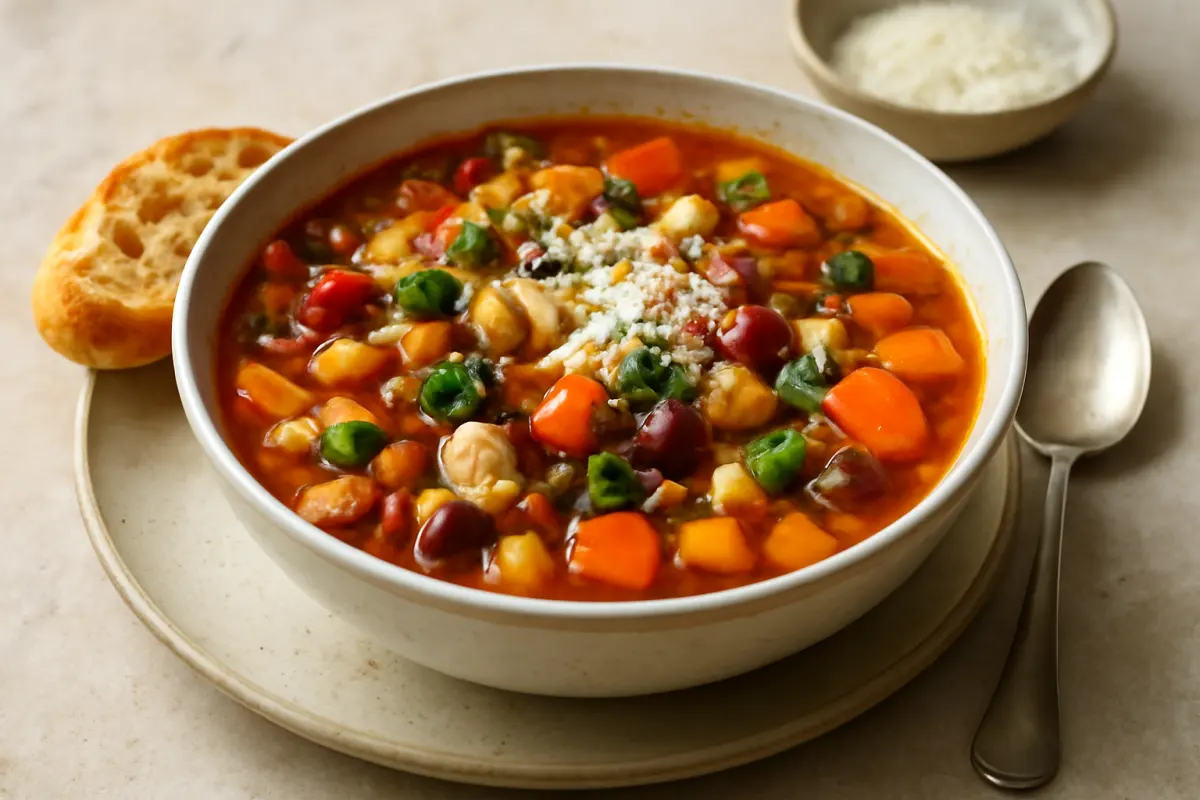
This minestrone recipe combines tender vegetables, creamy beans, small pasta, tomatoes, and herbs in a flavorful broth. The vegetables are sautéed first so the soup develops a deeper savory base before the broth and tomatoes are added.
The recipe makes about 10 cups, or 6 generous servings. For the best texture, cook the pasta just until tender and serve the soup soon after it is ready; pasta continues to absorb broth as it sits.
Ingredients
- 2 tablespoons extra-virgin olive oil
- 1 medium yellow onion, finely diced, about 1 1/2 cups
- 2 medium carrots, peeled and diced, about 1 cup
- 2 celery stalks, diced, about 3/4 cup
- 1 medium zucchini, diced, about 1 1/2 cups
- 3 garlic cloves, finely chopped
- 1 teaspoon dried Italian seasoning
- 1/2 teaspoon kosher salt, plus more to taste
- 1/4 teaspoon freshly ground black pepper, plus more to taste
- 1 can (28 ounces) crushed tomatoes
- 6 cups low-sodium vegetable broth
- 1 can (15 ounces) cannellini beans, drained and rinsed
- 1 cup small pasta, such as ditalini, small shells, or elbow macaroni
- 1 cup frozen green beans, cut into bite-size pieces if large
- 2 cups lightly packed chopped kale or baby spinach
- 1 tablespoon red wine vinegar or fresh lemon juice
- 2 tablespoons chopped fresh parsley, plus more for serving
- Finely grated Parmesan, optional, for serving
How to make it
Prepare the vegetables. Dice the onion, carrots, celery, and zucchini into pieces no larger than 1/2 inch. Keeping the pieces a similar size helps them cook evenly. Drain and rinse the beans.
Build the vegetable base. Warm the olive oil in a large Dutch oven or heavy-bottomed pot over medium heat. Add the onion, carrots, celery, salt, and pepper. Cook for 7 to 9 minutes, stirring occasionally, until the onion is translucent and the carrots have started to soften. The vegetables should smell sweet and savory, but they should not be browned or sticking to the pot.
Add the zucchini and aromatics. Stir in the zucchini, garlic, and Italian seasoning. Cook for 2 minutes, stirring often, until the garlic is fragrant and the zucchini begins to soften. Do not let the garlic turn dark brown, which can make it taste bitter.
Simmer the soup base. Add the crushed tomatoes and vegetable broth. Scrape the bottom of the pot with a wooden spoon to loosen any flavorful bits. Bring the soup to a boil, then reduce the heat to maintain a gentle simmer. Cook uncovered for 15 minutes. The carrots should be nearly tender when pierced with a fork, while the zucchini should still hold its shape.
Cook the pasta and beans. Stir in the beans, pasta, and green beans. Simmer according to the pasta package directions, usually 8 to 10 minutes, stirring once or twice so the pasta does not settle and stick. The pasta is ready when it is tender through the center but still has a slight firmness when bitten. If the soup becomes thicker than you prefer, add 1/2 cup water or broth at a time.
Finish with greens and acidity. Stir in the kale and cook for 2 to 3 minutes, until wilted and tender. If using baby spinach, cook it for about 1 minute instead. Remove the pot from the heat and stir in the vinegar or lemon juice and parsley. Taste and add more salt, pepper, or acidity as needed. The finished broth should taste savory and bright, not flat.
Serve. Ladle the minestrone into bowls and top with Parmesan and a drizzle of olive oil, if desired. Let very hot soup stand for a minute before eating so the flavors settle and the pasta does not burn your mouth.
Expert tips
- For firmer pasta: Cook the pasta separately in salted water and add it to each bowl. This is especially useful if you expect leftovers.
- For a thicker soup: Mash about 1/2 cup of the beans against the side of the pot before adding the pasta. Stir the mashed beans into the broth.
- For a gluten-free version: Use certified gluten-free small pasta, or replace the pasta with 1 cup cooked rice added with the greens. Rice added too early can become mushy.
- Vegetable substitutions: Replace the zucchini with 1 1/2 cups diced summer squash, or replace the frozen green beans with 1 cup frozen peas. Add quick-cooking vegetables near the end so they remain colorful and intact.
- If the soup tastes flat: Add salt first, then a small amount of vinegar or lemon juice. Acid should sharpen the flavor without making the broth noticeably sour.
- If the pasta absorbs too much broth: Stir in hot vegetable broth just before serving. For future batches, cook the pasta separately or reduce the pasta to 3/4 cup.
Serving and storage
Serve minestrone with crusty bread, a green salad, or grated Parmesan. It is also substantial enough to serve as a light main course.
Refrigerate leftovers in shallow, airtight containers within 2 hours of cooking and use them within 3 to 4 days. Reheat gently on the stovetop or in the microwave until steaming hot, adding broth or water to loosen the soup. For longer storage, freeze the soup without the pasta for up to 3 months; thaw it in the refrigerator, reheat it, and add freshly cooked pasta before serving. If the pasta is already in the soup, it will soften further after freezing and reheating.
Frequently asked questions
Can I make minestrone ahead of time?
Yes. The soup base can be made up to 3 days ahead and refrigerated. For the best pasta texture, cook the pasta separately and add it when serving, or prepare the pasta only shortly before the soup is served.
Why did my minestrone become too thick?
Pasta and beans continue to absorb broth as the soup cools. Stir in hot vegetable broth or water a little at a time until the soup reaches the consistency you want, then adjust the seasoning.
Can I use fresh tomatoes instead of canned tomatoes?
Yes, but the flavor and liquid level will vary. Replace the canned tomatoes with about 2 1/2 cups peeled, chopped ripe tomatoes and add another 1 to 2 cups of broth if needed while the soup simmers.
What beans work best in minestrone?
Cannellini beans are creamy and mild, but great northern beans, navy beans, or red kidney beans also work. Drain and rinse canned beans before adding them.