Recipes
Miso Glazed Eggplant Recipe
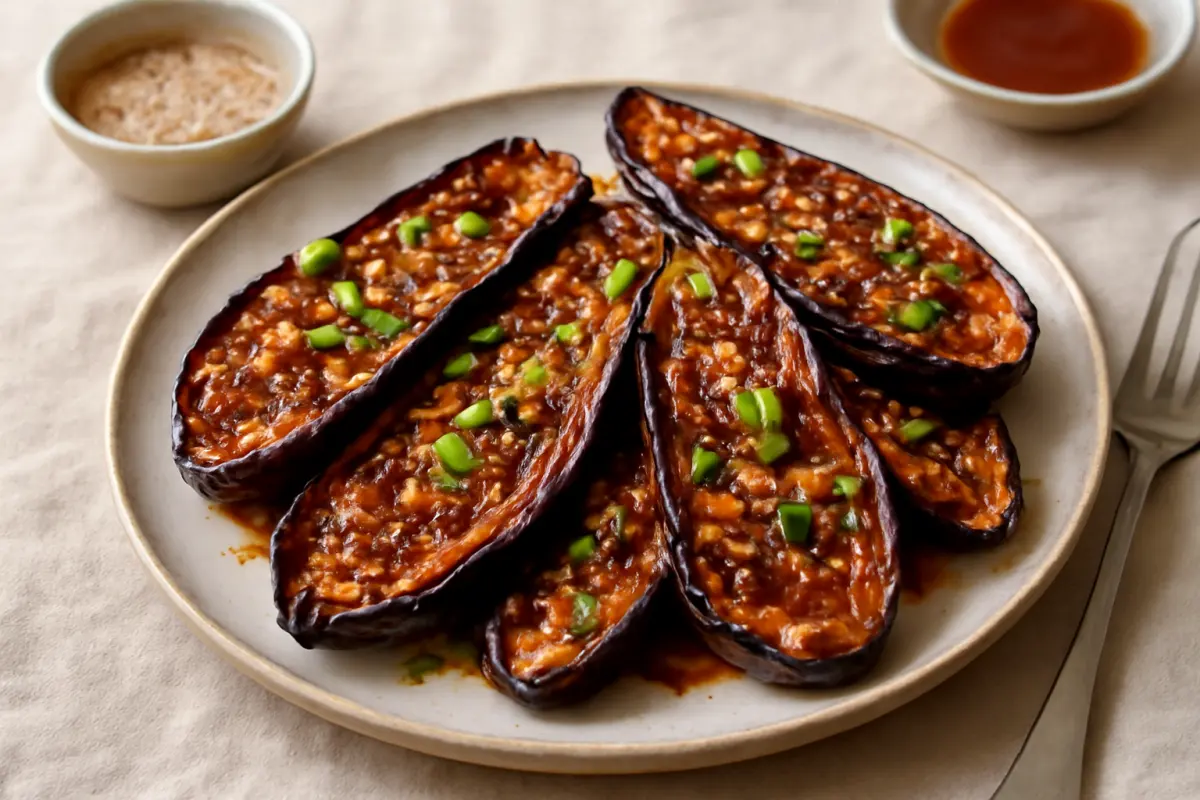
This miso glazed eggplant is roasted until the flesh is silky and tender, then brushed with a glossy white miso glaze and broiled until bubbling and caramelized.
Overview
This miso glazed eggplant combines meltingly tender roasted eggplant with a salty-sweet glaze made from white miso, mirin, soy sauce, garlic, and ginger. The glaze goes on near the end so it caramelizes without scorching while the eggplant finishes softening.
Use Japanese or Chinese eggplants if you can find them; their thinner skins and smaller seeds cook evenly. Globe eggplant also works—cut it into thick wedges or rounds so the pieces do not collapse before the centers are tender.
Ingredients
- 2 medium Japanese or Chinese eggplants, about 1½ pounds (680 g) total
- 1½ tablespoons neutral oil, plus more for the pan
- 3 tablespoons white miso
- 2 tablespoons mirin
- 1 tablespoon low-sodium soy sauce
- 1 tablespoon water
- 2 teaspoons packed light brown sugar
- 1 teaspoon toasted sesame oil
- 1 garlic clove, finely grated or minced
- 1 teaspoon finely grated fresh ginger
- 2 scallions, thinly sliced
- 1 teaspoon toasted sesame seeds
- Optional: thinly sliced red chile or shichimi togarashi, for serving
How to make it
Heat the oven to 425°F (220°C). Line a rimmed baking sheet with parchment or lightly oil it. If using globe eggplant, cut it lengthwise into 1-inch-thick wedges. Halve Japanese or Chinese eggplants lengthwise.
Score the cut side of each eggplant in a crosshatch pattern, making cuts about ½ inch apart and stopping before reaching the skin. Do not cut all the way through. Brush the cut sides and skins with the neutral oil, concentrating most of the oil on the cut sides.
Arrange the eggplant cut-side up on the prepared baking sheet. Roast for 20 to 25 minutes, until the flesh looks collapsed and glossy and a fork slides into the thickest part with only slight resistance. Larger globe eggplant pieces may need 5 to 10 extra minutes.
While the eggplant roasts, whisk the white miso, mirin, soy sauce, water, brown sugar, sesame oil, garlic, and ginger in a small bowl. The mixture should be thick enough to coat a spoon. If it seems stiff, whisk in another teaspoon of water.
Remove the eggplant from the oven. Spread about 1 tablespoon of glaze over the cut surface of each half or wedge, working it into the scored cuts. Keep the glaze mostly on the flesh; excess glaze on the baking sheet can burn.
Return the eggplant to the oven for 5 minutes. Switch the oven to broil and broil 1 to 2 minutes, watching constantly, until the glaze bubbles and develops a few dark caramelized spots. It should look glossy, not blackened. If your broiler is very strong, place the tray on a lower rack.
Let the eggplant stand for 3 to 5 minutes. Scatter over the sliced scallions and sesame seeds, and add chile or shichimi if desired. Serve warm, spooning any soft flesh and glaze from the skin as you eat.
Expert tips
- White miso gives the mildest, sweetest glaze. Yellow or awase miso can replace it, but the result will be saltier and more savory; reduce the soy sauce to 2 teaspoons.
- Mirin adds sweetness and shine. For a substitute, use 1 tablespoon rice vinegar plus 1 teaspoon extra brown sugar, or use 1 tablespoon sake with 1 extra teaspoon brown sugar.
- Do not skip scoring: the cuts help heat and glaze reach the thick center. Stop before the skin so each piece stays intact.
- If the flesh is still firm when the glaze is ready, keep roasting at 425°F for 5-minute increments before broiling. Broiling browns the topping but will not reliably cook a hard center.
- If the glaze darkens too quickly, move the pan farther from the broiler or cover the darkest areas loosely with foil. A few brown spots add flavor; a fully black glaze will taste bitter.
- For globe eggplant with a particularly thick or seedy center, salt the cut surfaces lightly and leave them for 15 minutes. Pat dry before oiling. This is optional, not necessary for most small eggplants.
Serving and storage
Serve the eggplant as a side dish with steamed rice, noodles, or a simple protein. It also works well as part of a vegetable spread alongside baked eggplant Parmesan or roasted eggplant dip, though the eggplant is best served warm.
Refrigerate leftovers in a covered container within 2 hours of cooking and use them within 3 days. Reheat in a 375°F (190°C) oven for 8 to 12 minutes, or microwave gently until warmed through. The glaze will soften in storage, so finish with fresh scallions or sesame seeds if desired.
Frequently asked questions
Can I make miso glazed eggplant with regular globe eggplant?
Yes. Cut a medium globe eggplant into lengthwise wedges about 1 inch thick, score the flesh, and roast until a fork enters easily. Globe eggplant is denser, so it may need 5 to 10 minutes longer than Japanese or Chinese eggplant.
Why is my miso glaze burning?
Miso and sugar brown quickly under high heat. Roast the eggplant until tender before glazing, keep the glaze on the flesh rather than the pan, and broil only 1 to 2 minutes while watching closely. Move the tray lower if the top darkens too fast.
Can I use red miso instead of white miso?
You can, but red miso is stronger and saltier. Replace the white miso with 2 tablespoons red miso and reduce the soy sauce to 1 teaspoon, then taste the glaze before spreading it on the eggplant.
How do I know when the eggplant is done?
The flesh should look collapsed and glossy, and a fork should slide through the thickest part with little resistance. If the center still feels spongy or firm, roast it longer before adding or broiling the glaze.