Recipes
Coconut Curry Noodles Recipe
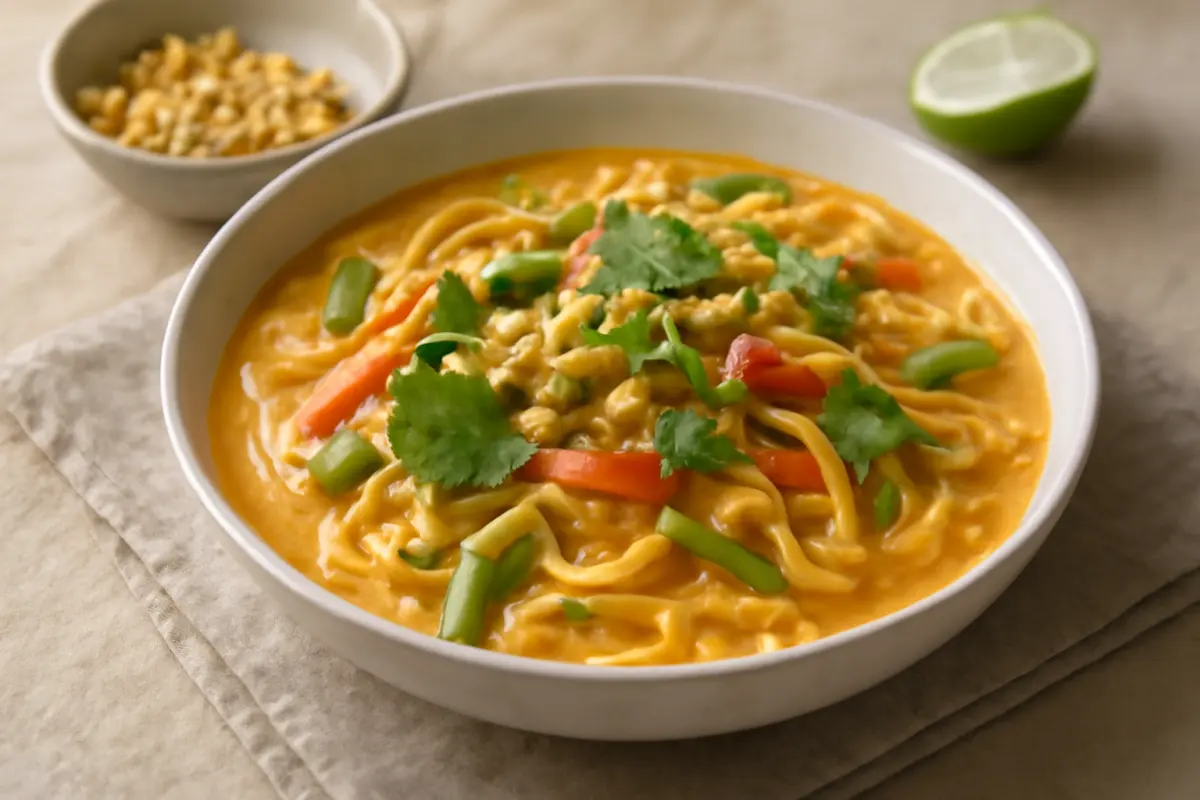
These coconut curry noodles combine springy rice noodles, crisp-tender vegetables, creamy coconut sauce, and bright lime. Tofu makes the dish satisfying, while the vegetables and curry paste keep each bowl lively and flavorful.
Overview
These coconut curry noodles are a quick, saucy dinner made with rice noodles, coconut milk, red curry paste, vegetables, and tofu. The sauce is creamy without being heavy, with lime juice added at the end to sharpen the coconut and curry flavors.
Cook the noodles separately so they stay springy, then add them to the simmered sauce just long enough to coat them. Serve the bowls with fresh herbs, sliced scallions, and extra lime. For another colorful, vegetable-forward side, try this white bean pesto salad.
Ingredients
- 8 ounces dried rice noodles, preferably medium-width
- 1 tablespoon neutral oil, such as avocado, canola, or vegetable oil
- 14 ounces extra-firm tofu, pressed and cut into ¾-inch cubes
- 1 small yellow onion, thinly sliced
- 1 red bell pepper, thinly sliced
- 1 medium carrot, cut into matchsticks
- 2 garlic cloves, finely chopped
- 1 tablespoon finely grated fresh ginger
- 2 tablespoons Thai red curry paste
- 1 can (13.5 ounces) full-fat coconut milk
- 1 cup low-sodium vegetable broth
- 2 tablespoons soy sauce
- 1 tablespoon packed light brown sugar
- 1 tablespoon smooth peanut butter, optional
- 2 cups baby spinach, loosely packed
- 1 tablespoon fresh lime juice, plus lime wedges for serving
- ¼ cup chopped fresh cilantro or Thai basil
- 2 scallions, thinly sliced
- 1 tablespoon chopped roasted peanuts, optional
How to make it
Prepare the noodles. Bring a large saucepan of water to a boil. Remove the pan from the heat, add the rice noodles, and soak according to the package directions, usually 4 to 6 minutes. Stir once or twice so they do not clump. Drain when the noodles are flexible but still slightly firm in the center, then rinse briefly under cool water. Toss with a teaspoon of oil if they will sit for more than a few minutes.
Brown the tofu. Pat the tofu dry. Heat the oil in a large, deep skillet or Dutch oven over medium-high heat. Add the tofu in one layer and cook for 7 to 9 minutes, turning every couple of minutes, until several sides are golden and the cubes feel firm. Transfer the tofu to a plate.
Soften the vegetables. Reduce the heat to medium. Add the onion, bell pepper, and carrot to the same pan. Cook for 4 to 5 minutes, stirring occasionally, until the onion begins to turn translucent and the vegetables are crisp-tender rather than soft. Add the garlic and ginger and cook for 30 seconds, just until fragrant.
Bloom the curry paste. Stir in the curry paste and cook for 1 minute. It should coat the vegetables and smell aromatic; do not let it scorch. Pour in about ¼ cup of the coconut milk and scrape the bottom of the pan to loosen any browned bits.
Simmer the sauce. Add the remaining coconut milk, vegetable broth, soy sauce, brown sugar, and peanut butter if using. Stir until smooth. Bring the sauce to a gentle simmer, then cook uncovered for 5 minutes. It should lightly coat a spoon but still be loose enough to cover the noodles.
Finish the curry. Return the tofu to the pan and stir in the spinach. Cook for 1 to 2 minutes, until the spinach is wilted and the tofu is hot. Add the drained noodles and toss gently with tongs for 1 to 2 minutes, just until they are coated and warmed through. If the noodles have absorbed too much sauce, add warm water or broth 1 tablespoon at a time.
Balance and serve. Turn off the heat and stir in the lime juice. Taste before adding more soy sauce, since curry paste and soy sauce vary in saltiness. Divide the noodles among bowls and finish with cilantro or Thai basil, scallions, chopped peanuts, and lime wedges.
Expert tips
- Keep the noodles slightly underdone: They continue softening when tossed in the hot sauce. If they are already completely tender before entering the pan, they can become sticky or break.
- For a milder bowl: Start with 1 tablespoon curry paste and add more after the sauce simmers. For more heat, add another ½ tablespoon or sliced fresh chile.
- For a protein swap: Use 1 pound of peeled shrimp instead of tofu. Sear the shrimp for 1 to 2 minutes per side, remove them, and return them during the final minute of cooking. Chicken can also work, but cook thinly sliced pieces until they reach 165°F in the thickest piece.
- If the sauce is too thin: Simmer it uncovered for 2 to 3 additional minutes before adding the noodles. If it is too thick, loosen it with warm broth or water.
- If the sauce tastes flat: Add lime juice a teaspoon at a time. If it needs more savory depth, add 1 teaspoon soy sauce; if it is too sharp or spicy, stir in another teaspoon of brown sugar or coconut milk.
- Coconut milk substitution: Light coconut milk will produce a thinner sauce. You can use it, but simmer the sauce a little longer and expect less richness. Do not substitute cream of coconut, which is sweetened.
- Noodle substitution: Thin wheat noodles, soba, or cooked spaghetti can replace rice noodles. Cook them separately and add them only at the end so they do not overcook in the curry.
Serving and storage
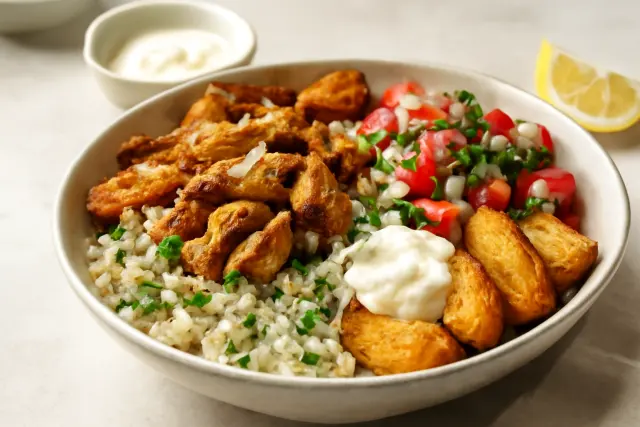
Serve the noodles immediately, while the sauce is glossy and the vegetables still have a little bite. Lime wedges, herbs, scallions, and peanuts add freshness and crunch. If you want a different complete meal with similar warm spices, see this chicken shawarma bowl recipe.
Cool leftovers promptly and refrigerate them in a covered container for up to 3 days. The noodles will absorb some sauce as they sit. Reheat gently in a skillet or microwave with 1 to 2 tablespoons of water or broth per serving, stirring halfway through, until steaming hot. For the best texture, keep the garnishes separate and add them after reheating.
Frequently asked questions
Can I make coconut curry noodles ahead of time?
You can prepare the sauce and vegetables up to 2 days ahead, then cook the noodles and combine everything just before serving. Fully assembled noodles are still suitable for leftovers, but they become softer as they absorb the sauce.
Why are my rice noodles sticky?
They were likely over-soaked, crowded while cooling, or left sitting without a little oil. Cook them only until flexible with a slight firm center, rinse briefly, and add them to the sauce at the very end.
Can I use green or yellow curry paste?
Yes. Green curry paste is often brighter and hotter, while yellow curry paste is usually warmer and more mellow. Start with the same quantity, then adjust after tasting the simmered sauce.
How can I make this recipe without tofu?
Leave out the tofu and add another 1 to 2 cups of vegetables, such as mushrooms, broccoli, snap peas, or zucchini. You can also use shrimp or cooked shredded chicken, adding either during the final minutes so it does not overcook.