Recipes
Moroccan Chicken Tagine Recipe
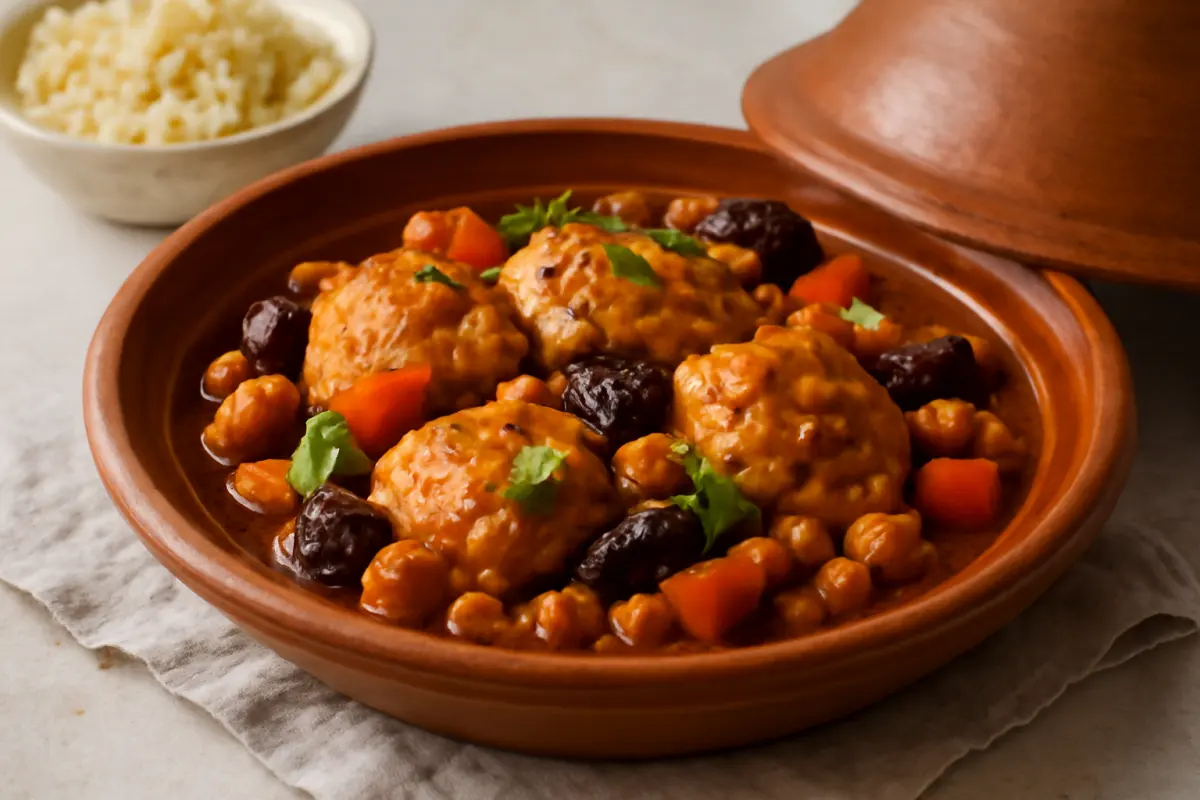
This Moroccan chicken tagine combines tender bone-in chicken thighs with fragrant spices, sweet onion, preserved lemon, and briny green olives. It simmers gently until the chicken is tender and the sauce is rich enough to spoon over couscous or crusty bread.
Overview
This Moroccan chicken tagine is a gently simmered one-pot meal made with bone-in chicken thighs, onion, garlic, warm spices, preserved lemon, and green olives. The chicken stays tender while the sauce reduces into a savory, fragrant coating.
You do not need a traditional tagine pot to make it. A wide Dutch oven or heavy, lidded skillet works well; keep the heat low so the liquid simmers quietly rather than boiling hard.
Ingredients
- 2 tablespoons olive oil, divided
- 8 bone-in, skin-on chicken thighs, about 3 pounds total
- 1 1/2 teaspoons kosher salt, divided, plus more to taste
- 1 medium yellow onion, finely chopped, about 1 1/2 cups
- 4 garlic cloves, finely chopped
- 1 teaspoon ground ginger
- 1 teaspoon ground cumin
- 1 teaspoon ground coriander
- 1 teaspoon sweet paprika
- 1/2 teaspoon ground turmeric
- 1/4 teaspoon ground black pepper
- 1 cup low-sodium chicken broth or water
- 1 small preserved lemon, rinsed, pulp removed, and peel finely chopped, about 3 tablespoons
- 1 cup pitted green olives, such as Castelvetrano or Moroccan-style green olives
- 1/2 cup chopped fresh cilantro, divided
- 1/4 cup chopped fresh parsley, divided
- 1 tablespoon fresh lemon juice, optional, for finishing
How to make it
Season the chicken. Pat the chicken thighs dry with paper towels. Season them with 1 teaspoon of the salt, rubbing it over both sides. Let them sit for 10 minutes while you prepare the aromatics.
Brown the chicken. Heat 1 tablespoon of the olive oil in a wide Dutch oven or heavy, lidded skillet over medium-high heat. Arrange the chicken skin-side down without crowding the pan. Cook for 6 to 8 minutes, until the skin is deeply golden and releases fairly easily from the pan. Turn and cook the other side for 2 minutes. Transfer the chicken to a plate. It will not be cooked through yet.
Soften the onion. Reduce the heat to medium and add the remaining 1 tablespoon olive oil. Add the onion and the remaining 1/2 teaspoon salt. Cook for 5 to 7 minutes, stirring often, until the onion is soft and translucent but not browned. If the pan looks dry or the onion begins to catch, add 1 tablespoon of water.
Bloom the spices. Stir in the garlic, ginger, cumin, coriander, paprika, turmeric, and black pepper. Cook for 30 to 45 seconds, just until the garlic smells fragrant and the spices coat the onion. Do not let the garlic turn dark brown.
Start the braise. Pour in the chicken broth and scrape the browned bits from the bottom of the pan. Stir in half of the chopped preserved lemon, half of the cilantro, and half of the parsley. Return the chicken to the pan skin-side up, along with any juices on the plate. The liquid should come about one-third to halfway up the chicken, not cover it.
Simmer gently. Bring the liquid just to a simmer, then reduce the heat to low. Cover and cook for 30 minutes. The sauce should show occasional lazy bubbles. If it is boiling rapidly, lower the heat; a hard boil can make the chicken fibers firm and cause the sauce to reduce too quickly.
Add the olives and finish cooking. Scatter the olives and remaining preserved lemon around the chicken. Cover and simmer for 10 to 15 minutes more, until the thickest part of the chicken reaches at least 165°F and the meat feels tender when pierced near the bone. If the chicken is cooked but the sauce is thin, transfer the chicken to a plate, uncover the pan, and simmer the sauce for 3 to 5 minutes until it lightly coats a spoon.
Adjust and serve. Stir in the remaining cilantro and parsley. Taste before adding more salt because preserved lemon and olives are both salty. Add the fresh lemon juice if the sauce needs a brighter finish. Spoon the sauce over the chicken and serve hot.
Expert tips
- No preserved lemon: Use the finely grated zest of 1 lemon plus 1 tablespoon lemon juice. Add the juice only at the end; fresh lemon does not provide the same salty, fermented flavor, but it gives the dish useful brightness.
- Using boneless thighs: Substitute 2 pounds boneless, skinless thighs and begin checking them after 20 minutes of covered simmering. They are done at 165°F and may become dry if cooked for the full bone-in timing.
- Skin texture: The skin will soften during the covered braise. For crisper skin, place the cooked chicken skin-side up under a broiler for 2 to 4 minutes, watching closely, then serve it with the sauce spooned around rather than over the skin.
- Sauce too salty: Do not add extra salt early. If the finished sauce is too salty, remove the chicken and dilute the sauce with 2 to 4 tablespoons unsalted broth or water, then simmer briefly to bring it back together.
- Sauce too thin: Uncover the pan and simmer gently after removing the chicken. This concentrates the sauce without overcooking the meat.
- Sauce too thick: Stir in warm broth or water 1 tablespoon at a time until it is loose enough to spoon over the chicken.
Serving and storage
Serve the tagine with couscous, warm flatbread, or rice to absorb the sauce. A simple cucumber, tomato, or herb salad adds a fresh contrast. Garnish with extra cilantro or parsley if desired.
Cool leftovers promptly and refrigerate them in a covered container within 2 hours of cooking. Store for up to 3 to 4 days. Reheat gently in a covered saucepan with a splash of broth or water until the chicken and sauce are steaming hot. Freeze the chicken and sauce for up to 2 months, then thaw overnight in the refrigerator and reheat gently; the olives and sauce may soften slightly after freezing.
Frequently asked questions
Can I make Moroccan chicken tagine without a tagine pot?
Yes. Use a wide Dutch oven or heavy, lidded skillet with a close-fitting lid. Keep the heat low and maintain a gentle simmer; the shape of the vessel matters less than steady, moist cooking.
What kind of chicken is best for tagine?
Bone-in, skin-on chicken thighs give the richest flavor and stay moist during the longer simmer. Boneless thighs also work, but they cook faster and should be checked earlier.
What can I use instead of preserved lemon?
Use the finely grated zest of one lemon and add 1 tablespoon of lemon juice at the end. The substitute will be fresher and less salty than preserved lemon, so taste before adding any extra salt.
Why is my tagine sauce too salty?
Preserved lemons and olives both contribute salt. Dilute the sauce with a few tablespoons of unsalted broth or water, then simmer briefly. Serve with plain couscous, rice, or bread rather than adding more salty ingredients.
How do I know when the chicken tagine is done?
The thickest part of the chicken should reach at least 165°F on an instant-read thermometer. The meat should also feel tender when pierced near the bone, and the sauce should lightly coat a spoon.