Recipes
Mushroom Risotto Recipe
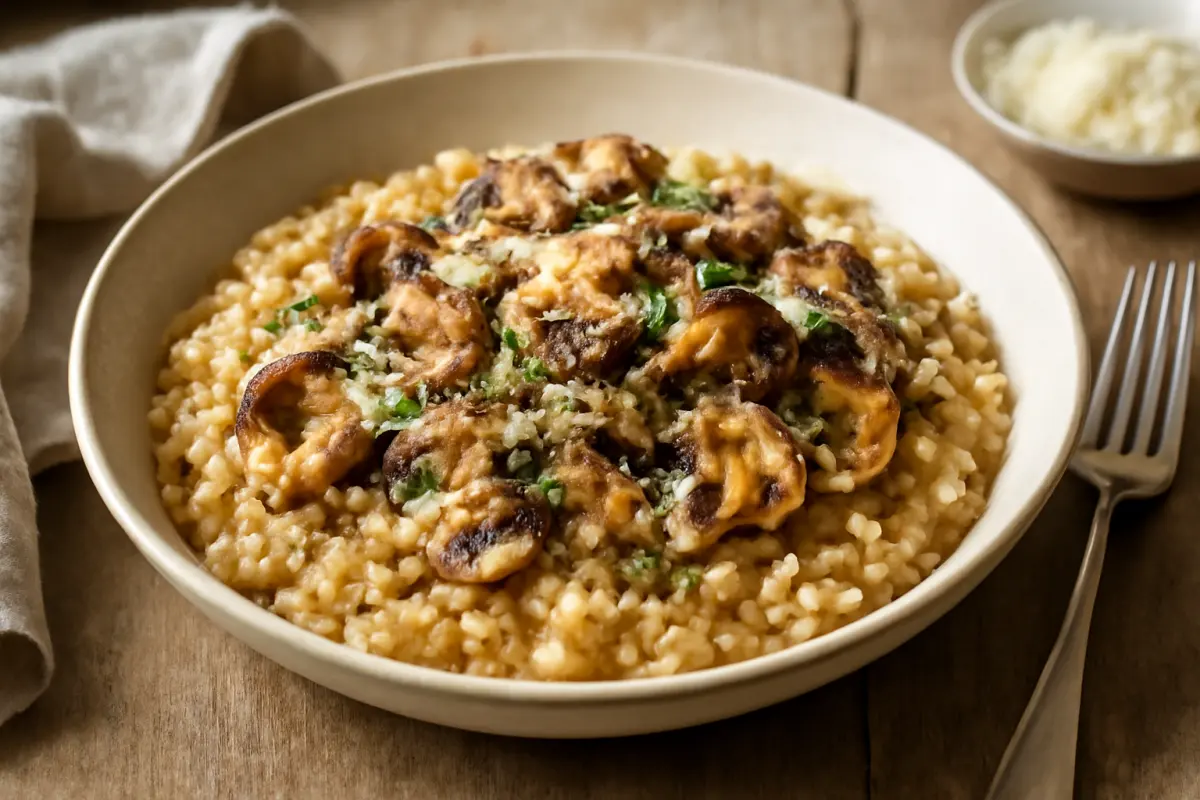
This mushroom risotto is creamy without being heavy, with golden mushrooms, Parmesan, white wine, and tender rice that still has a slight bite. Add warm stock gradually and stir as the rice cooks for a smooth, restaurant-style finish at home.
Overview
This mushroom risotto serves four as a main course or six as a side. The rice becomes creamy as it releases starch into warm stock, while browned mushrooms add savory flavor and a meaty texture. The finished risotto should spread slowly on a plate rather than sit in a stiff mound.
The method is steady rather than difficult: brown the mushrooms first, keep the stock warm, and add it to the rice one ladleful at a time. Most batches take 25 to 30 minutes once the onion and rice are in the pan.
Ingredients
- 1 tablespoon olive oil
- 8 ounces (225 g) cremini or white button mushrooms, wiped clean and sliced
- 3 tablespoons unsalted butter, divided
- 1 small yellow onion, finely diced, about 1 cup
- 2 garlic cloves, finely chopped
- 1 1/2 cups (300 g) Arborio rice
- 1/2 cup (120 ml) dry white wine, or use additional stock
- 5 cups (1.2 liters) low-sodium chicken or vegetable stock, kept warm
- 1/2 teaspoon fine salt, plus more to taste
- 1/4 teaspoon freshly ground black pepper
- 1/2 cup (45 g) finely grated Parmesan cheese
- 2 tablespoons chopped fresh parsley
- 1 teaspoon fresh thyme leaves, or 1/2 teaspoon dried thyme
- 1 teaspoon lemon juice, optional
How to make it
Warm the stock. Pour the stock into a saucepan and keep it just below a simmer over low heat. It should be hot and steaming, not boiling vigorously. Warm stock helps the rice cook evenly without cooling the main pan.
Brown the mushrooms. Heat the olive oil and 1 tablespoon of the butter in a wide, heavy-bottomed skillet or sauté pan over medium-high heat. Add the mushrooms in a mostly even layer. Cook for 5 to 8 minutes, stirring occasionally, until their moisture has evaporated and the slices are golden at the edges. Season with a small pinch of salt and the pepper, then transfer the mushrooms to a plate.
Soften the aromatics. Reduce the heat to medium and add another tablespoon of butter to the same pan. Add the onion and cook for 4 to 5 minutes, stirring often, until translucent and soft but not browned. Stir in the garlic and thyme and cook for 30 seconds.
Toast the rice. Add the Arborio rice and stir continuously for 1 to 2 minutes. The grains should look glossy, with some edges turning translucent, and should smell lightly nutty. Do not rinse the rice; its surface starch is what gives the dish its creamy texture.
Add the wine. Pour in the wine and stir, scraping the bottom of the pan. Cook for 2 to 3 minutes, until the wine has almost completely evaporated and the rice looks nearly dry. If you are not using wine, skip this step and add the first ladleful of stock instead.
Add the stock gradually. Add about 3/4 cup of warm stock and stir until most of it has been absorbed. Continue adding stock 1/2 to 3/4 cup at a time, stirring every 20 to 30 seconds and waiting until the previous addition is nearly absorbed before adding more. Keep the heat at medium or medium-low so the rice simmers gently.
Check the rice. After about 18 minutes of adding stock, taste a grain. Properly cooked risotto should be creamy on the outside but have a slight firm bite in the center. If it is still hard, continue adding stock a little at a time. You may not need every drop, or you may need a small amount of water if the rice remains firm after the stock is used.
Finish the pan. Stir the cooked mushrooms back into the rice and cook for 1 to 2 minutes to warm them through. Turn off the heat and stir in the remaining 1 tablespoon butter and the Parmesan. Add the lemon juice, if using, and taste for salt. The risotto should be loose enough to slowly flow when the pan is tilted; stir in a splash of warm stock if it looks thick.
Rest and serve. Cover the pan for 2 minutes, then stir once more. Sprinkle with parsley and serve immediately. The rice continues absorbing liquid as it sits, so serve it while it is still soft and fluid.
Expert tips
- Use a wide pan rather than a deep saucepan. More surface area helps the stock absorb evenly and gives you room to stir without crushing the rice.
- Do not crowd the mushrooms. If they overlap heavily, they will steam instead of brown. Cook them in two batches if necessary.
- Stir regularly, but not aggressively. Frequent gentle stirring releases starch; constant vigorous stirring can make the texture gluey.
- For a richer result, replace 1/2 cup of the stock with an additional 1/2 cup of dry white wine, added in the same way as the stock. Do not use sweet wine.
- If using shiitake mushrooms, remove and discard their tough stems before slicing. Oyster mushrooms can be torn into pieces and cooked using the same method.
- For a vegetarian version, use vegetable stock and Parmesan made without animal rennet if that is important to you. For a dairy-free version, use olive oil instead of butter and a dairy-free Parmesan-style topping; the flavor and texture will be slightly different.
- If the risotto tastes flat, it usually needs salt, Parmesan, or a small squeeze of lemon rather than more cooking time.
Serving and storage
Serve the risotto as soon as it is finished, with extra Parmesan, black pepper, and parsley if desired. A simple green salad or roasted vegetables make useful accompaniments without competing with the mushrooms.
Cool leftovers promptly in a shallow container and refrigerate within 2 hours. Store for up to 3 days. Reheat gently in a saucepan with a splash of stock or water, stirring until hot and creamy; the rice will be softer than when freshly made. Do not leave cooked risotto at room temperature for extended periods, and reheat only the portion you plan to eat.
Frequently asked questions
Can I make mushroom risotto without white wine?
Yes. Replace the 1/2 cup of wine with 1/2 cup of warm chicken or vegetable stock. Add it as the first liquid and continue with the recipe. A teaspoon of lemon juice at the end can add some of the brightness that wine would otherwise provide.
Why is my risotto still hard after all the stock is gone?
Keep the heat gentle and add hot water or more warm stock 1/4 cup at a time. Continue stirring and tasting until the center of the rice has a slight bite rather than a crunchy core. Pan size, heat level, and the age of the rice can change how much liquid it needs.
Why did my risotto turn out gummy?
The rice may have been stirred too vigorously, cooked at too high a heat, or left sitting too long before serving. Next time, stir gently and regularly, keep the simmer moderate, and finish with enough liquid that the risotto moves slowly when the pan is tilted.
Can I use regular long-grain rice for risotto?
You can cook it with the same general method, but it will not release as much starch and will not have the characteristic creamy texture. Arborio is the easiest option to find; Carnaroli or Vialone Nano also work well.
How can I make leftover risotto creamy again?
Warm it gently with a few tablespoons of stock or water, stirring until loosened and heated through. Avoid high heat, which can dry the rice and make the texture tough.